


Balesh Baleshan, Anne Kovachevich, Alex Ward, Taryn McQueen and Richard Fairhead examine why a building system that controls safety, energy, comfort and durability still lacks a clearly recognised professional pathway in Australia, and what earlier specialist involvement could change.
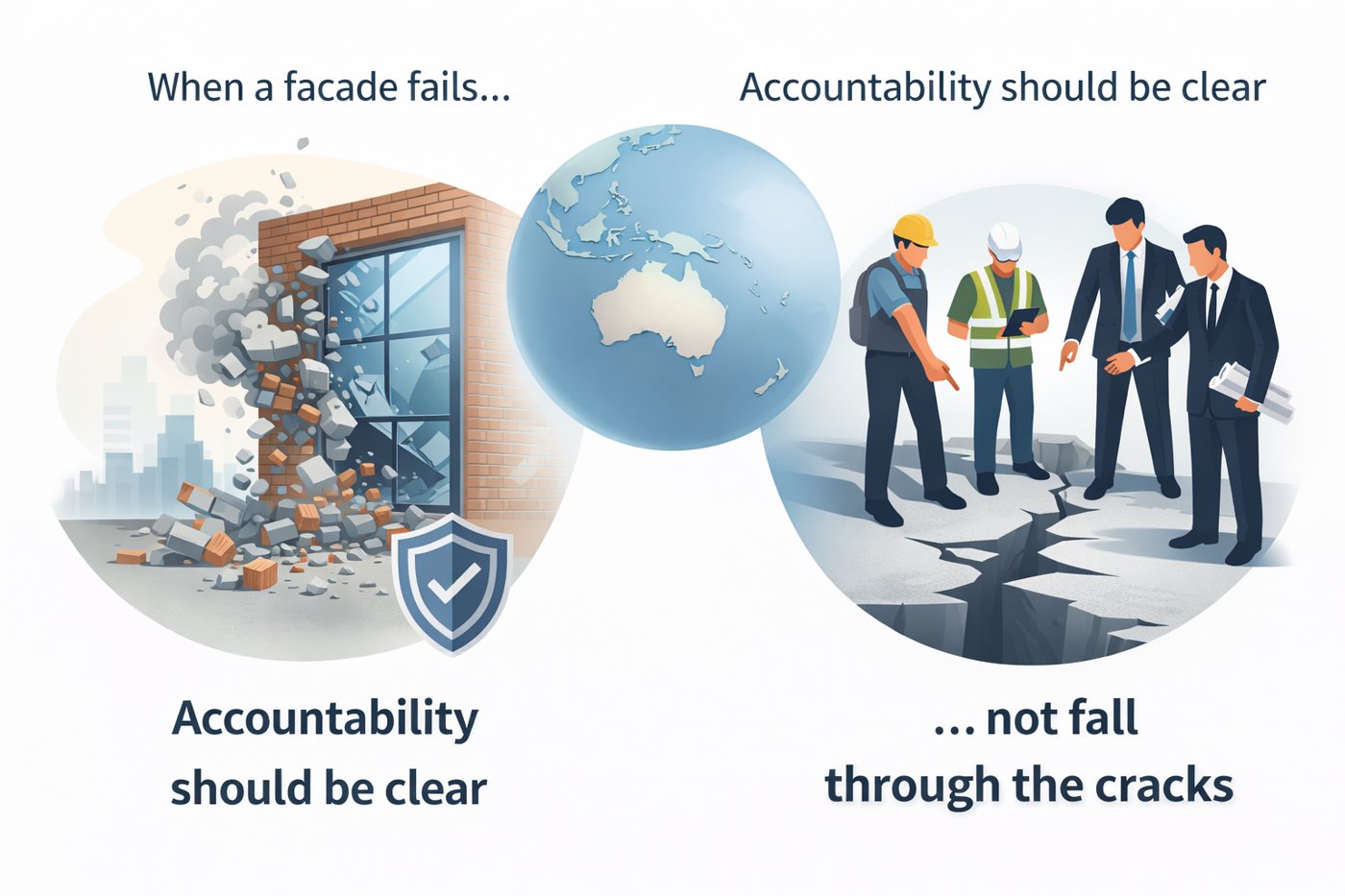
Façades can represent a substantial share of construction cost while controlling some of a building’s most consequential outcomes: weather resistance, fire spread, structural safety, energy use, daylight, comfort, durability and embodied carbon. Baleshan’s starting question is therefore institutional rather than technical. If the envelope carries so much risk, why does façade engineering in Australia still lack the nationally recognisable professional framework that exists around other engineering disciplines? The discussion that follows does not argue for another approval layer. It makes the case for clearer competency, earlier specialist involvement and accountability that follows design decisions through procurement and construction instead of dispersing responsibility across packages.
McQueen approaches the issue from architecture. For her, the façade “is the architecture” because it is where environmental performance, cultural response, material expression and public identity are made visible at once. That makes it difficult to draw a clean boundary between architectural intent and technical envelope design. The need for specialist input became especially obvious to her when working across different Australian climates: what performs in subtropical Queensland is not automatically appropriate in colder Victoria or high-wind regions. Façade competence therefore includes understanding local climate and building physics as well as the ability to detail glass, metal or concrete.
Performance starts before the façade package
Ward saw specialist involvement as most valuable when it can influence the hierarchy of a design. On tall buildings and large refurbishments, not every part of the façade deserves the same level of material or geometric complexity. Investment can be concentrated where people interact closely with the building, podiums, entries and public levels, while upper elevations become more efficient and repetitive. That balance depends on knowing early what the envelope must achieve. If performance requirements arrive after the form is fixed, the project is more likely to pay for complicated remediation or value engineering that weakens the original idea.
He also argued for performance-based briefing as a way to use industry knowledge without surrendering design control. A clear specification can establish weather, structural, thermal, acoustic and visual outcomes while giving fabricators enough latitude to refine how those outcomes are achieved. This is particularly useful where contractors can prototype, test and optimise details that an architect or consultant may not be able to develop alone. Early contractor involvement works best when it is not used simply to reduce first cost, but to combine fabrication knowledge with an explicit design and life-cycle intent.
Fairhead placed the façade engineer inside that collaboration as the person who helps turn architectural language into a buildable envelope. His concern is that failures can be created at any point: concept design, detailed engineering, procurement, substitution, installation or maintenance. A sound original detail can be weakened when a product is changed without reconsidering interfaces; a high-performing system can fail if trades do not understand its sequence; a contractor can optimise cost in a way that removes a durability feature whose value only becomes visible years later. Accountability therefore cannot end when drawings are issued.
The envelope is wider than glass and aluminium
Professional definitions matter because façade engineering is already broader than the image many people have of the discipline. Fairhead argued for an envelope mindset that includes opaque walls, membranes, insulation, waterproofing and interfaces with roofs and adjacent construction, not only structural glass and curtain wall. Kovachevich extended that breadth into sustainability. The façade regulates energy and comfort, but it also determines how occupants connect to outside conditions. A high-performance envelope should not become a sealed barrier that solves energy use at the cost of daylight, fresh air or human experience. The engineering task is to balance those requirements rather than optimise one metric in isolation.
Existing buildings make that balance even more difficult. Kovachevich described reuse as one of the major opportunities for reducing embodied carbon, citing project work in which retaining existing fabric could avoid a substantial proportion of the carbon associated with replacement. The challenge is that reuse may require different performance expectations from a new-build façade. An older system may not meet the newest benchmark in every respect, yet upgrading it selectively can still produce a better whole-life outcome than demolition and replacement. Professional judgement is needed to decide which deficiencies are unacceptable, which can be improved and which are reasonable to retain.

That kind of judgement is difficult to regulate if there is no recognised competency pathway. Several speakers noted that façade engineers often arrive from structural engineering, architecture, building physics or specialist contracting. The diversity is useful because the discipline depends on several knowledge bases, but it also means job titles alone say little about competence. A structural engineer may understand movement and load paths but have limited experience with water management or sealant chemistry; an architect may understand material expression and interfaces but not have the engineering registration required for particular calculations. A competency framework would need to recognise both breadth and limits rather than assume one background automatically covers the entire envelope.
Accountability needs continuity
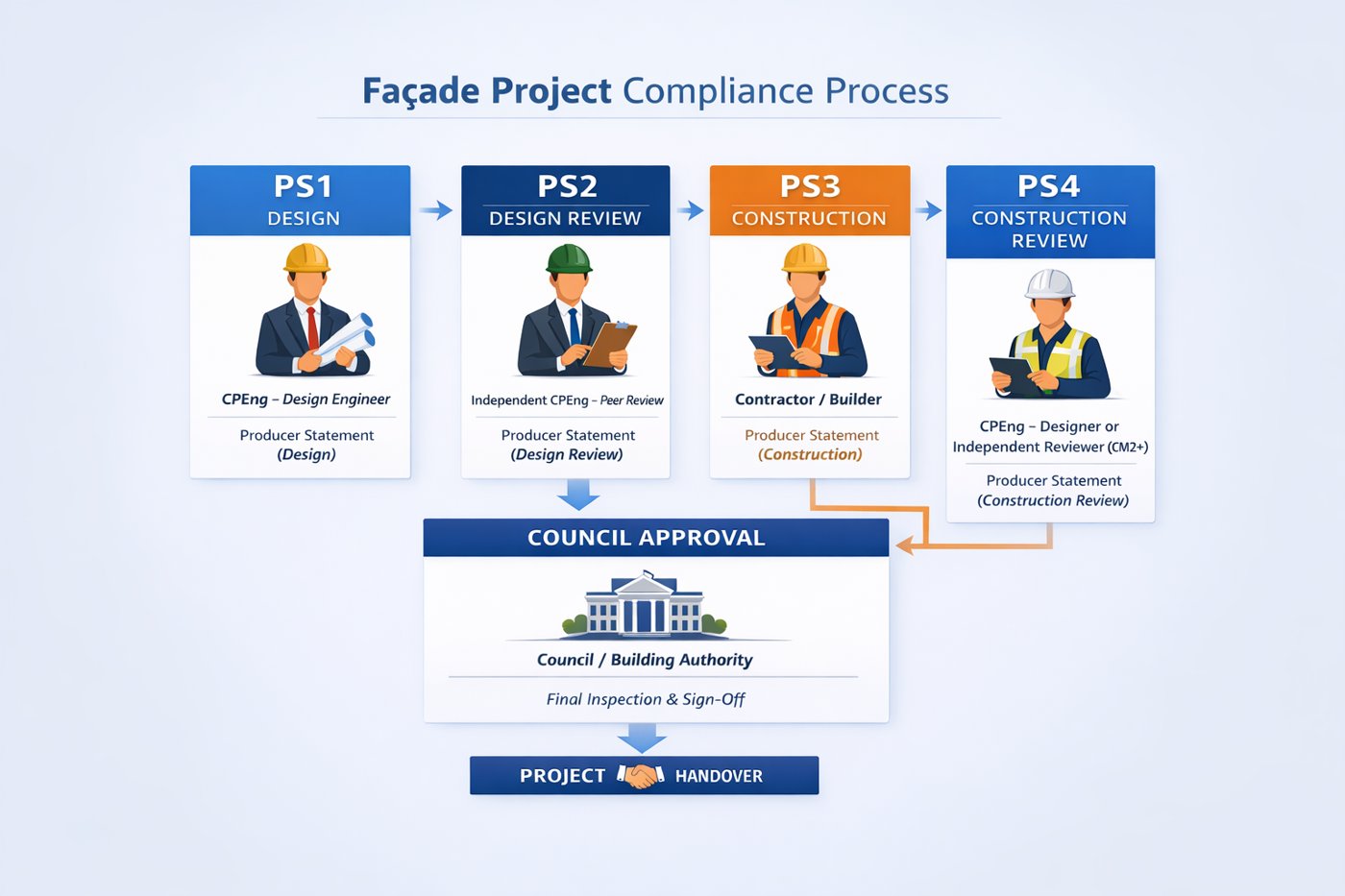
Fairhead pointed to New Zealand’s producer-statement and competency culture as one model for maintaining professional accountability. The details of regulatory systems differ, but the principle is that practitioners should demonstrate continuing competence and take responsibility for the work they certify. In Australia, he saw gaps where independent checking or certification can become detached from the specialist who understands the complete façade. Recent requirements around weatherproofing performance solutions are beginning to push responsibility towards clearer evidence, but the panel saw a need for more consistent professional recognition.
Baleshan’s framing also raises a procurement issue: when responsibility is ambiguous, it can “fall through the cracks” between consultants and contractors. Design-and-construct models are not inherently the problem. They become risky when performance intent is underdefined, specialist advice is novated without continuity or substitutions are accepted without reopening the assumptions behind testing. Early façade engineering can make those assumptions explicit before procurement pressure increases. The specialist can identify where project-specific testing is essential, where proprietary systems are sufficient and which interfaces need to remain protected from later simplification.
Climate-specific knowledge is part of the same accountability. Queensland façades need to manage intense sun, humidity and wind-driven rain; southern climates introduce different condensation and comfort conditions; cyclonic regions add much higher pressure and debris demands. The panel repeatedly returned to the danger of reusing a familiar detail simply because it worked elsewhere. A recognised façade profession would need to be competent not only in products and standards but in reading exposure, orientation, occupancy and local construction practice. The envelope is always attached to a particular building in a particular climate.
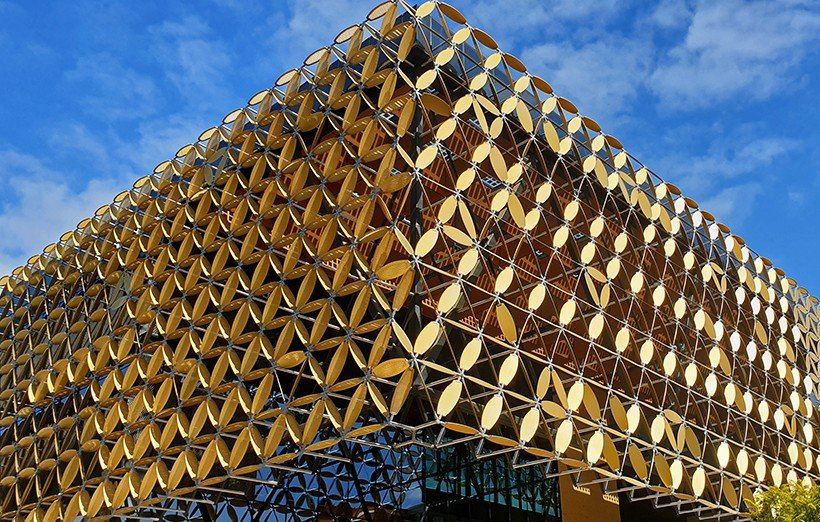
The group’s closing priorities converge around education, recognition and earlier action. Architects and engineers need better façade literacy; governments and professional bodies need clearer recognition of the discipline; codes should become more proactive rather than waiting for failures; and younger practitioners need visible career pathways into specialist envelope work. None of those changes removes the need for collaboration. A competency framework should make it clearer when a façade engineer is required and what that person is responsible for, while still allowing architects, fire engineers, sustainability specialists, contractors and manufacturers to contribute their own expertise.
The most compelling argument for formalising façade engineering is not that façades are unusually complicated. It is that their failures cross conventional professional boundaries. Water can enter at an architectural joint and damage structure; a fire barrier can obstruct drainage; a thermal bridge can become a condensation defect; a cost substitution can alter structural movement or durability. Someone has to understand how those interactions add up. The panel’s case was that the profession should make that responsibility explicit before a failure forces the question after the fact.