


Newly rebranded from Kawneer, Novastruct used a Manchester cancer-research building to make a narrow, useful point, that on a moving structure, the façade's real problem is deflection, and it has to be solved early.
Andrew Bird stood in for a technical director who could not travel, which set the tone for a short slot with one technical idea in it. Kawneer Europe has rebranded as Novastruct, carrying the same business across France, the Netherlands and the UK as a systems house whose speciality is aluminium curtain walling, windows and doors. Few people would recognise the new name, Bird conceded, while most would recognise the buildings behind it.
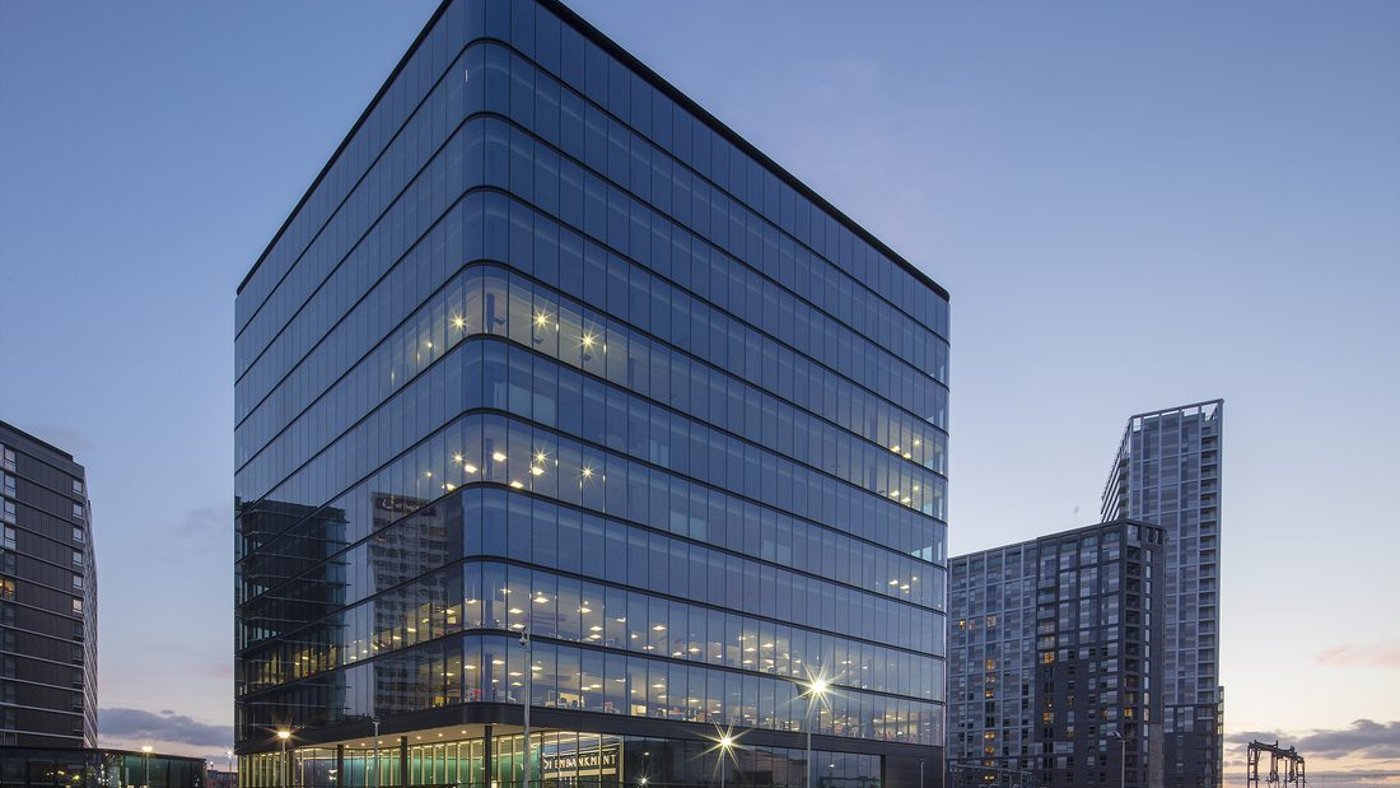
He framed the city first. Manchester has become the UK's most active proving ground outside London for ambitious, higher-density, design-led façades: not simply growing, Bird argued, but becoming more architecturally demanding, with the façade more complex, more performance-led and more central to a building's identity than it was. He asked for restraint with it, though. The city remains a hotspot for period film and television precisely because its façades still tell the story, so its character wants enhancing rather than erasing. What a city on that trajectory needs, he argued, is ambition matched by façades that are practical and fit for purpose. The work behind the claim, delivered as Kawneer, runs from the Etihad north stand extension and Manchester Airport to Vox, Circle Square, Embankment, First Street and a run of build-to-rent towers.
Not one movement, several at once
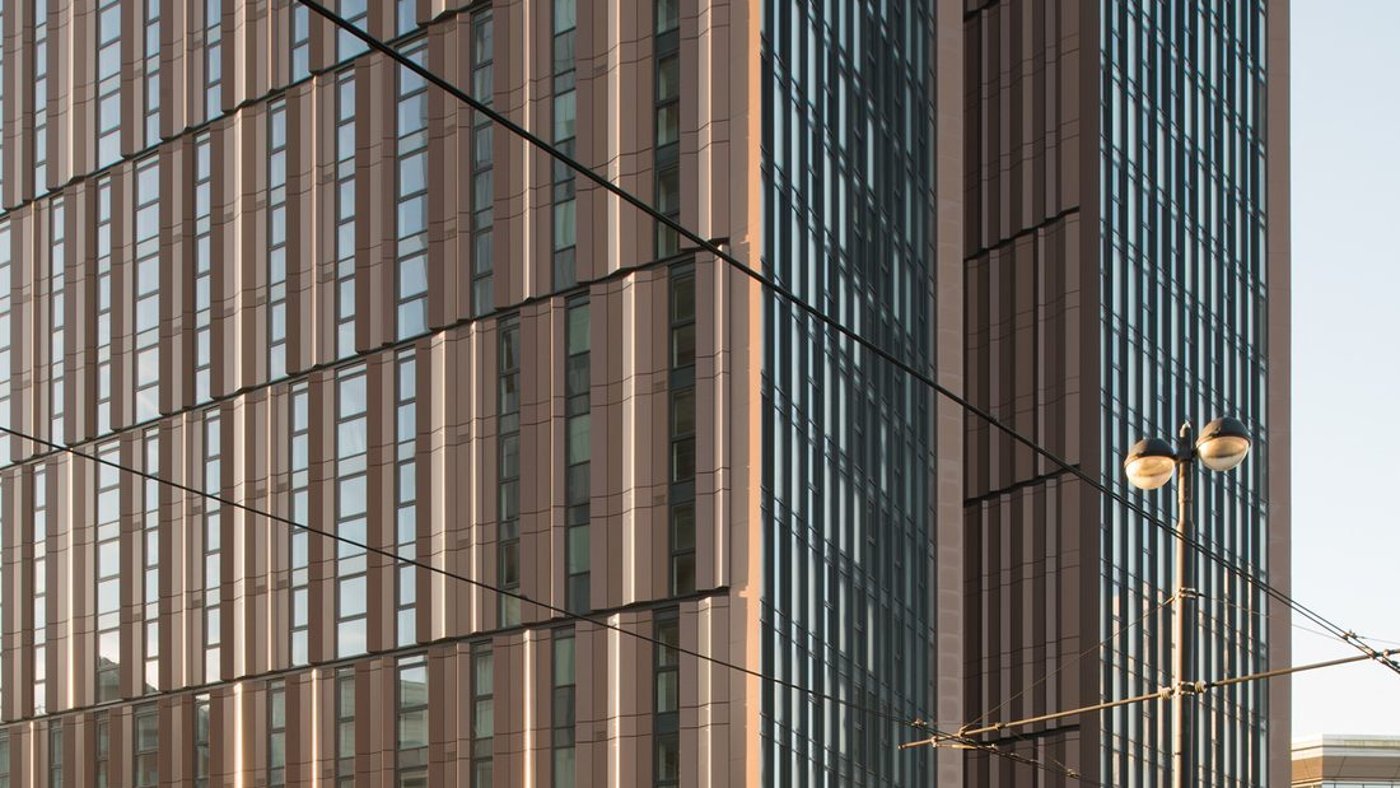
The case study was the Christie Paterson Cancer Research Centre, by BDP. The envelope had to perform technically while carrying the architectural intent, and the difficulty was not any single movement but the combination arriving together. Every building moves: floors deflect, structures sway, and aluminium expands and contracts on a British thermal cycle that can hand you thirty degrees one week and fifteen the next. Through all of it the façade has to keep performing.
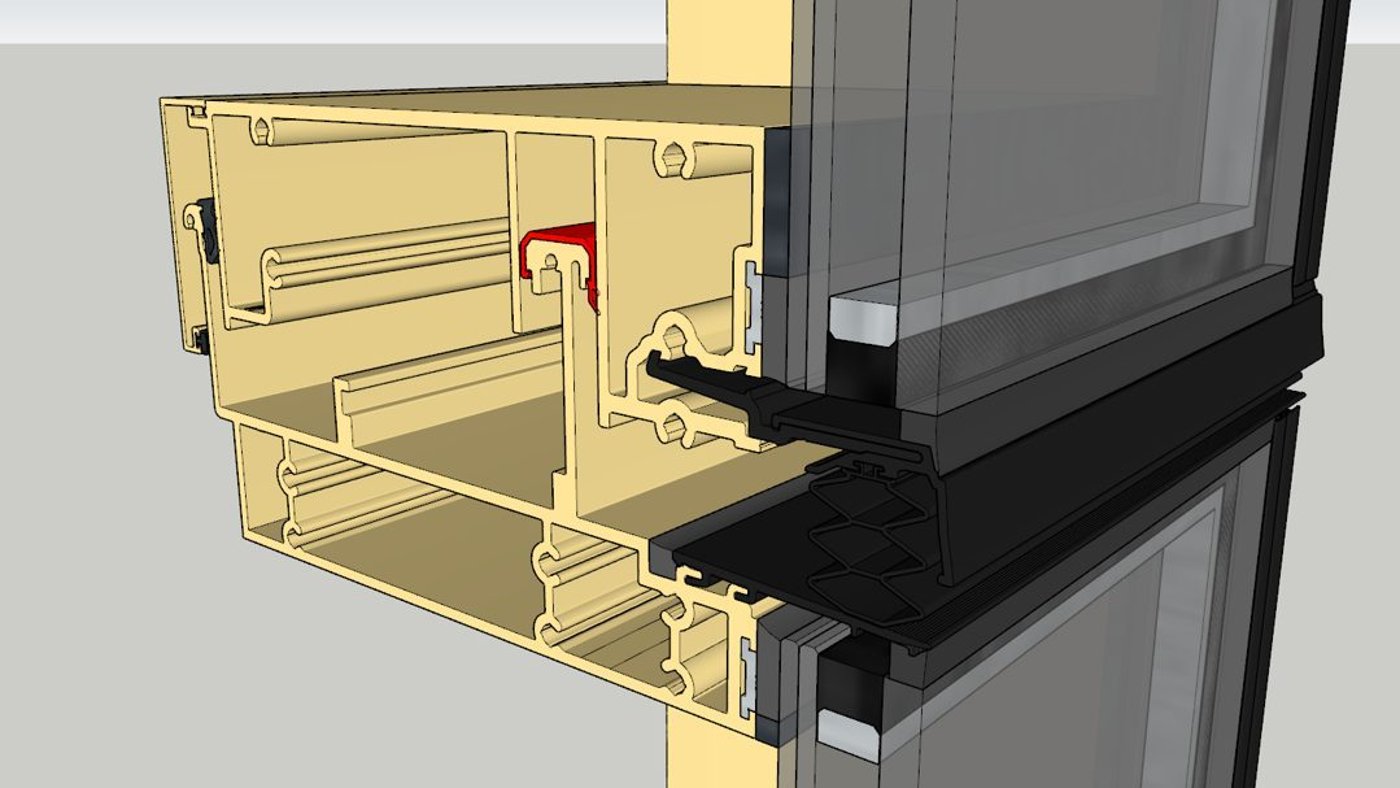
The answer was a unitised curtain wall with an enhanced movement joint, each unit connecting securely to its neighbour while still allowing controlled movement where the structure demands it. Bird's image for it was armour rather than tiling: a fixed tiled wall has no give, while engineered armour locks plate to plate and lets the joint take the movement without opening a gap in the protection. On this building that came to roughly plus or minus 19 mm, enough to let the structure breathe over time.
Layers, not a single line of defence
The second half of the detail is that nothing depends on one seal. The build-up runs outer rainscreen gasket, stack joint air seal, internal air seal, so wind-driven rain or pressure that gets past the outer zone still meets further lines behind it, worked back into the box of the transom. Movement is absorbed without protection being lost anywhere along the way.
The conclusion Bird drew from it was about how systems get bought rather than how they get made. A façade system is worth more than a catalogue of products, and the value sits in reading the conditions of the particular project and helping the design team arrive at an envelope that works in the real world rather than on paper.