


Ferran Figuerola presents glass as a material that can carry graphics, colour, mesh, bird-safe treatments and extreme curvature. Cricursa’s project catalogue shows how manufacturing choices can turn glazing from a neutral sheet into a façade surface, cladding material and architectural sculpture.
Ferran Figuerola’s recorded contribution is unusually short, so the presentation carries much of the technical story. Its message is clear: glass stops being a neutral flat sheet once printing, lamination, scale and bending are treated as design tools. Cricursa’s examples move from fritted surfaces and bird-safe treatments to coloured cladding, XXL panels and free-form curved assemblies, showing how fabrication changes the role the material can play in a façade.
Glass can be a canvas before it becomes a window
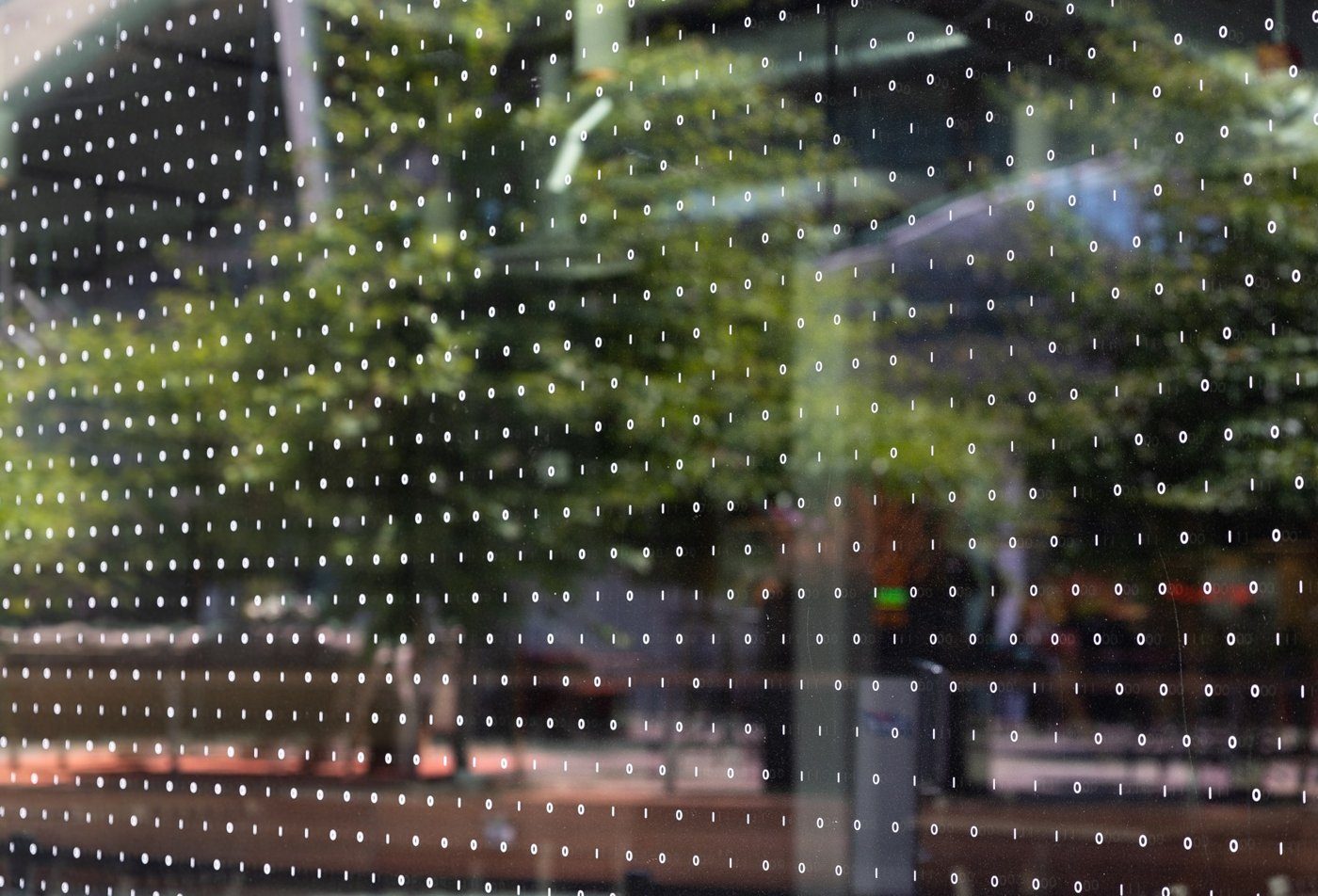
The first sequence treats ceramic frit as an architectural layer. Hospital Juan Carlos I in Madrid uses ceramic frit, while Shinhan Bank in Seoul combines a wave-shaped annealed surface with printed pattern. Digital frit then expands the graphic freedom further in projects such as the Hilton Persight in Paris, Nuages 13 and The Spine at the Royal College of Physicians in Liverpool. Figuerola’s deck also shows metallic-colour frit at Casa Seat in Barcelona and Doha Airport, followed by dual ceramic frit for one-way visual effects at Sede Telefónica, Iris in Madrid and Domino Sugar in New York. The point is not simply that more patterns are available. Printing can tune transparency, privacy, colour and solar response while remaining part of one glass build-up.
A safety treatment can still belong to the architecture
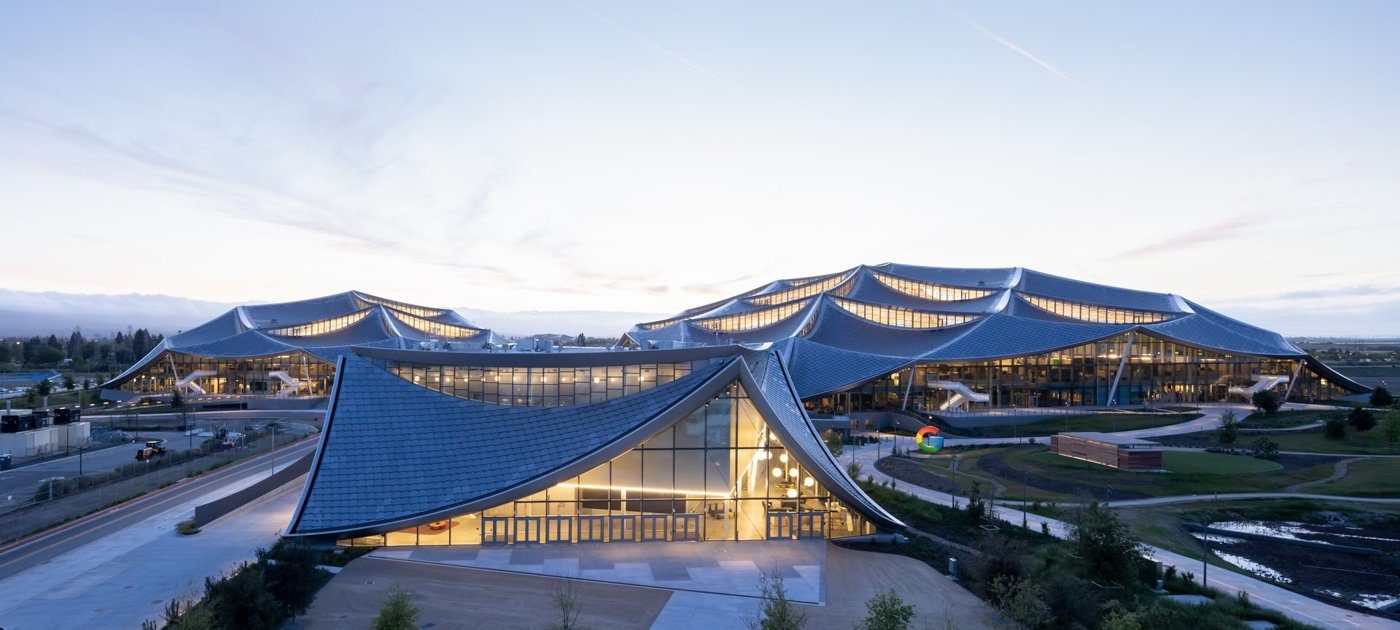
Bird protection is presented as another surface-design problem. At Google’s Bay View and Gradient Canopy campus in Mountain View, frit patterns make extensive glazing more visible to birds while remaining integrated with the architecture. The presentation places this alongside anti-slip treatments, forced-entry and ballistic glazing, patterned surfaces that refract light, dichroic glass and internal blind systems.
Colour and opacity expand glass beyond curtain walling
The catalogue then moves into ventilated façades, using glass as opaque cladding at projects including 11 Yorkville in Toronto, Miyako in Plano and the Triada complex in Madrid. Transparent colour creates a different effect at Maestro Nicolau in Barcelona, Emporia in Malmö and Pangu Retail in Beijing, while One Wilton Park in Dublin incorporates metal mesh within the glass composition. These examples broaden the specification question. Instead of asking only for visible-light transmission and coating performance, the designer can use glass to carry colour, texture or embedded material while still controlling weathering and surface precision.
XXL glass changes handling, support and visual rhythm
Figuerola’s spoken section focuses on very large and curved units. Once panels approach the scale of a room or a façade bay, reducing mullions becomes visually powerful, but manufacturing, transport, lifting and support strategy become inseparable from the architectural idea. The presentation lists Torre Antares in Barcelona and K11 Victoria Dockside in Hong Kong among its XXL examples. The consequence is a different kind of coordination. A conventional module can often absorb minor changes through repetition; an oversized bespoke panel concentrates risk in a small number of expensive elements. Geometry must be frozen early enough for forming and lamination, while tolerances, replacement routes and site handling have to be understood before production.
Curvature makes glass a manufactured sculpture
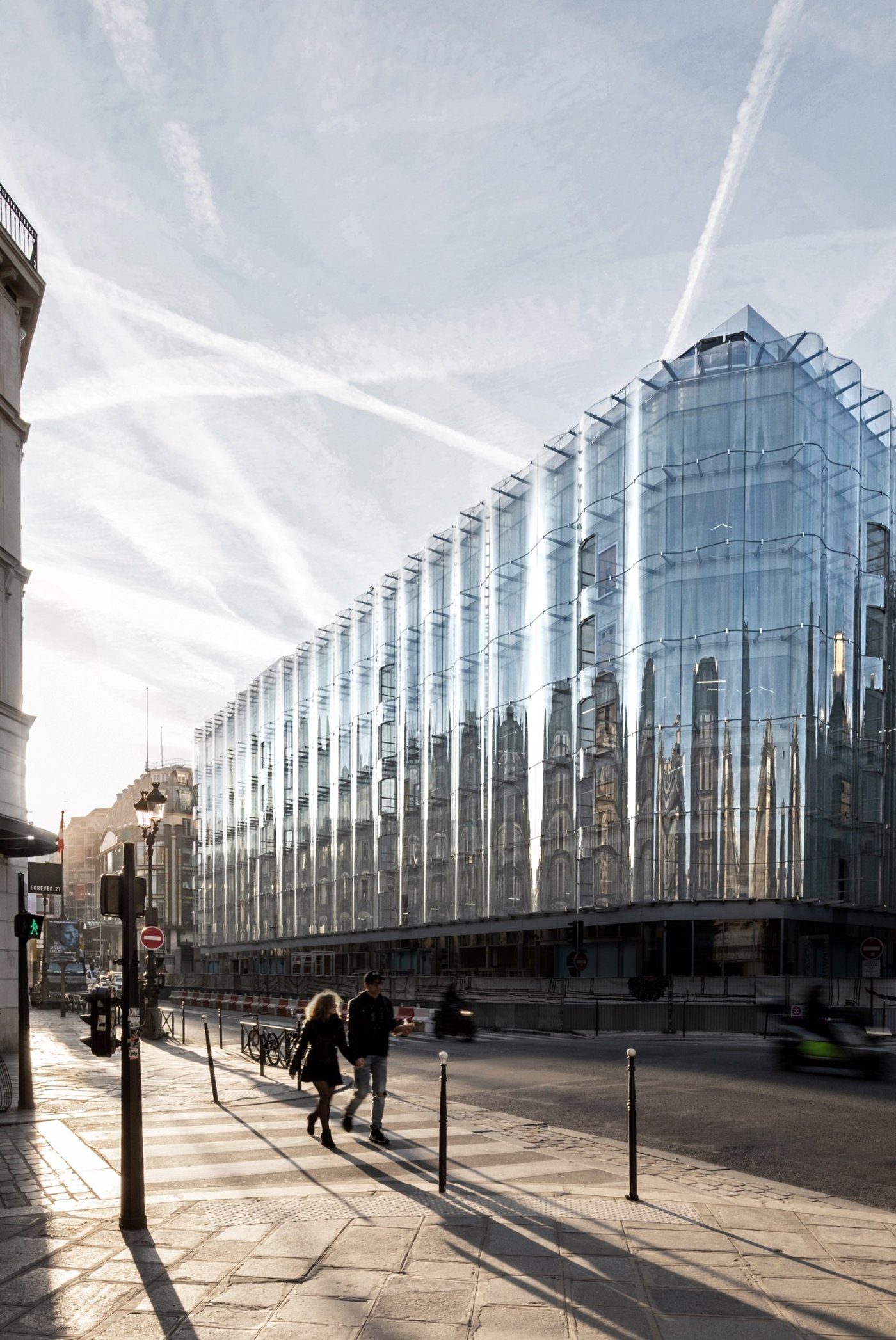
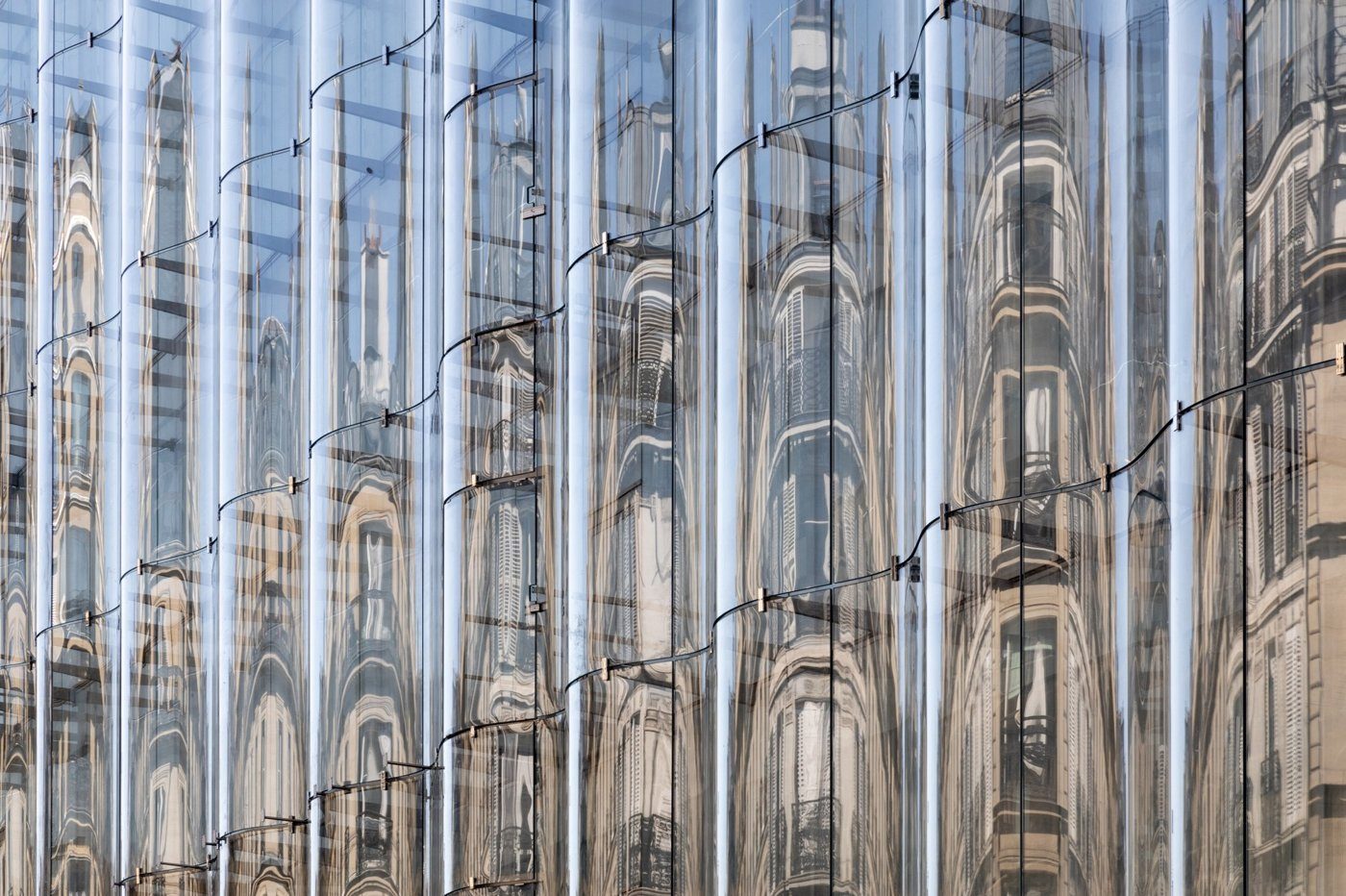
La Samaritaine in Paris is one of the clearest examples. Cricursa describes a sinuous façade made from hundreds of curved glass pieces, including distinctive omega-shaped profiles. The project demonstrates that free-form appearance depends on repeatable industrial control: the sculptural effect is produced through carefully defined families of curved units rather than uncontrolled uniqueness.
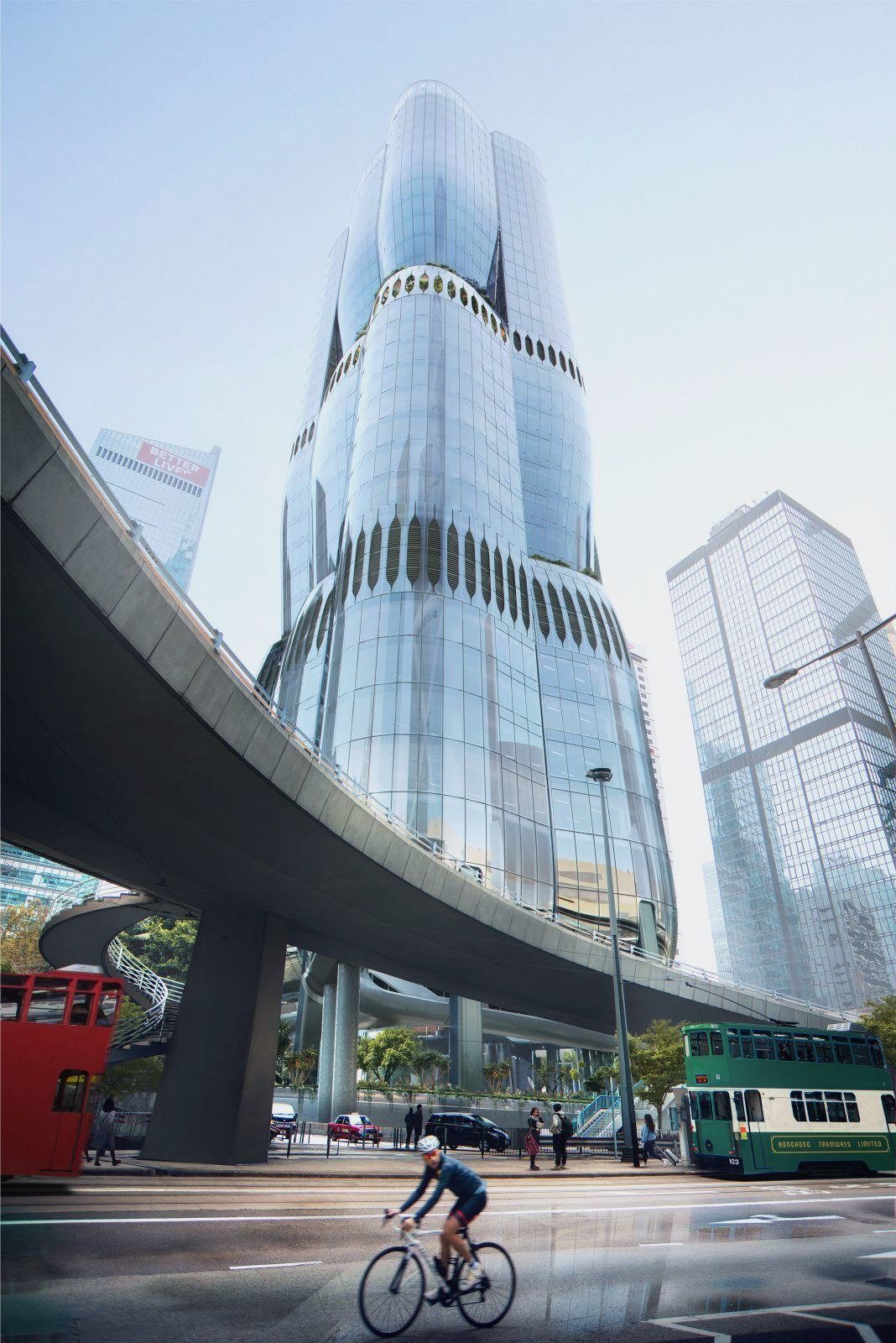
The Henderson in Hong Kong pushes the same idea toward a highly complex high-rise envelope, while the deck also cites Manhattan West, Nuevas Torres Colón, Nike’s House of Innovation, Bombay Sapphire Distillery and Sagrada Família. These are not variations of one curved-glass trick; they show how annealed bending, lamination, scale and support strategy can be combined differently for each geometry.
Figuerola’s catalogue therefore supports a simple conclusion: the more architects ask glass to do, the earlier manufacturing knowledge has to enter the design. Printing, colour, bird safety, scale and curvature are not decorative extras. Each changes how the façade is fabricated, handled, supported and replaced, and that is precisely what allows glass to move from transparent infill to an active architectural material.