Ravishankar Subramanian traced structural silicone glazing from its first project in 1971 through to carbon-neutral chemistry and façade reuse, arguing that durability rests as much on design calculation, testing and site supervision as it does on the sealant itself.
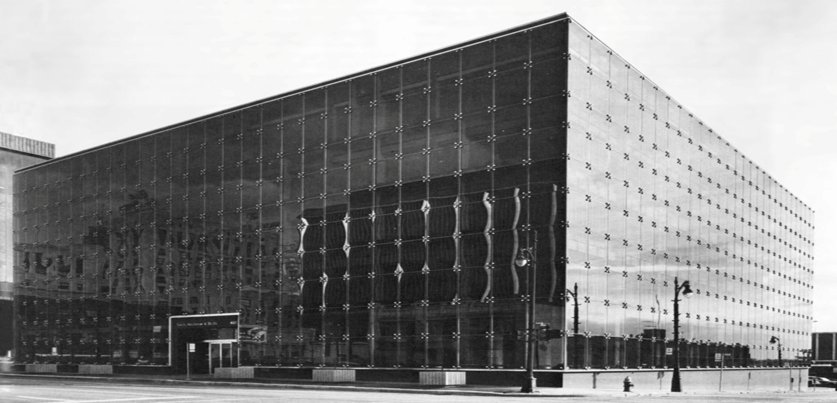
Structural silicone glazing is old enough now to be judged on evidence rather than on promise, and that was the starting point for Ravishankar Subramanian, a principal scientist who has spent close to two decades with Dow. The first building bonded with the company's structural sealant went up in 1971, the PPG building in Detroit, and Subramanian noted that it is still standing after 54 years, a case history he compared in length to the service life expected of any civil structure. The paradigm shift, as he described it, began with architects who wanted to change the way glass was fixed to a façade. In India the record is shorter but comparable in kind: the first project, SR House in Mahalaxmi, dates from 1992-93 and is now 32 years old.
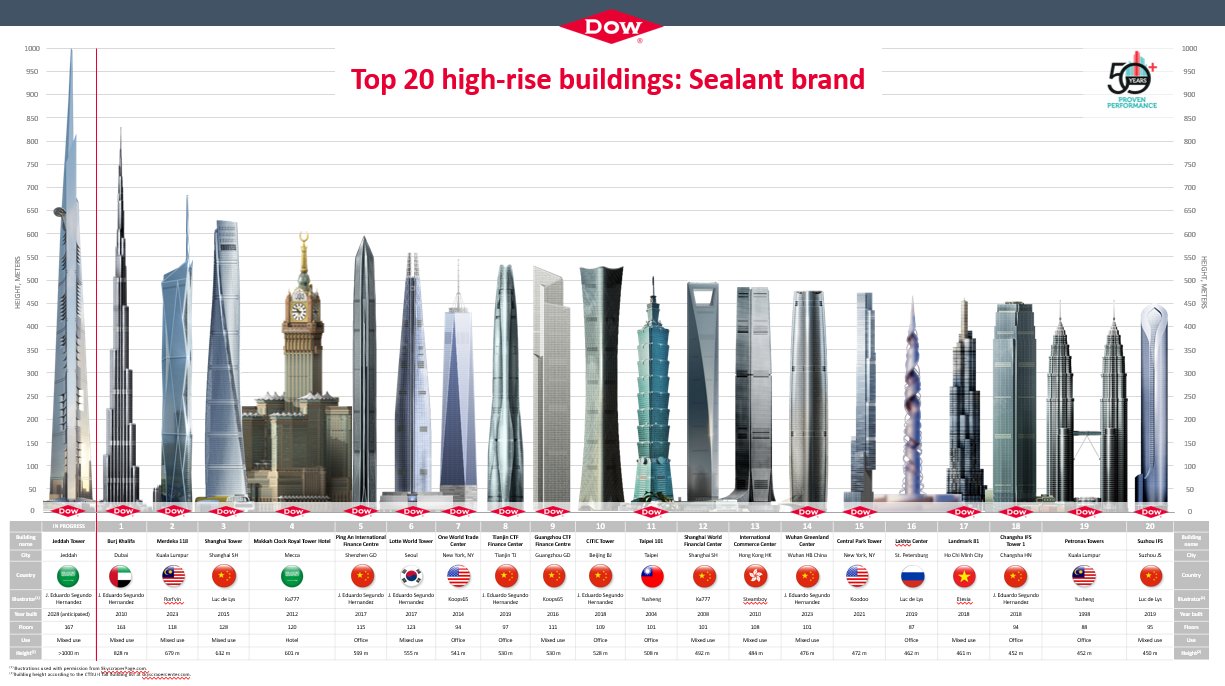
Subramanian pointed to the top twenty tall buildings in the world, from the Burj Khalifa to the Kingdom Tower now under construction in Saudi Arabia, and said more than 70 per cent of them use the company's products. What sits behind that, he argued, is not the chemistry alone. Design services and design calculations, laboratory testing of project samples, site-based quality checks and a warranty that carries a liability for the sealant not failing are all part of what specifiers are buying. An approved applicator programme audits fabrication and installation facilities and certifies them, closing the loop between the material supplied and the way it is actually used on a building.
A widening set of applications
The traditional territory remains the curtain wall: glass bonded to frame with structural silicone, insulating glass units sealed at the edge for thermal and acoustic performance, and watertight weather seals at exterior joints. But Subramanian described a market moving beyond glass, with thin tile, high pressure laminate and stone all needing joints sealed between them, and building-integrated photovoltaics emerging as a further area of work. Because silicones derive from quartz, he added, they carry an inherent stability to fire and do not propagate it, which brings fire-resistant glazing into the same family of solutions. The same chemistries extend down to windows, doors, infrastructure joints and domestic applications such as fixing mirrors or sealing sanitaryware and tiling.
Several of the newer products answer problems of buildability rather than performance. A two-part repair kit cures in one to two days, so a glass replacement at height no longer ties up scaffolding or a gondola while a single-part sealant slowly cures. A transparent structural silicone strip is in commercial trials. An EPDM membrane, bonded with a hybrid sealant, seals copings and façade corners where leakage risk concentrates, and the hybrid chemistry answers a long-standing shortcoming of silicone, that water-based paint will not wet it. A temporary protection film, applied by roller to glass and aluminium, lasts twelve months where conventional polyethylene films last 45 to 60 days before transferring adhesive and leaving a permanent stain.
Cold bending and the stresses it transfers
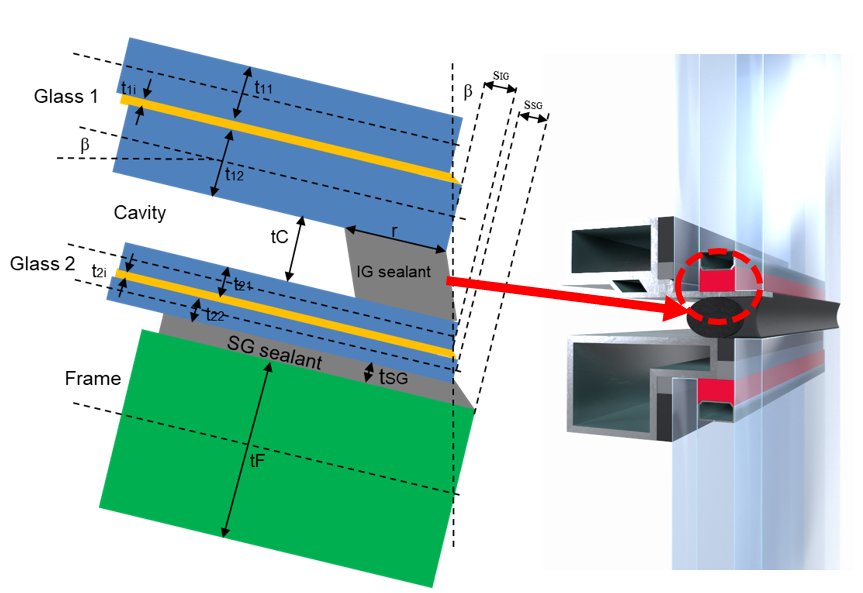
Cold bending, Subramanian said, is picking up worldwide as a cheaper way of curving glass, achieved on site through edge lifting or central bending. The consequence is that considerable stress is transferred into the sealant holding the assembly together, whether at the insulating glass edge or at the bond to the frame. Because that stress is permanent, it produces creep behaviour that has to be understood before the detail is signed off, which is why a finite element analysis team is involved in such projects; some of the work has been published through the Glass Performance Days papers.
Carbon, and getting façades back
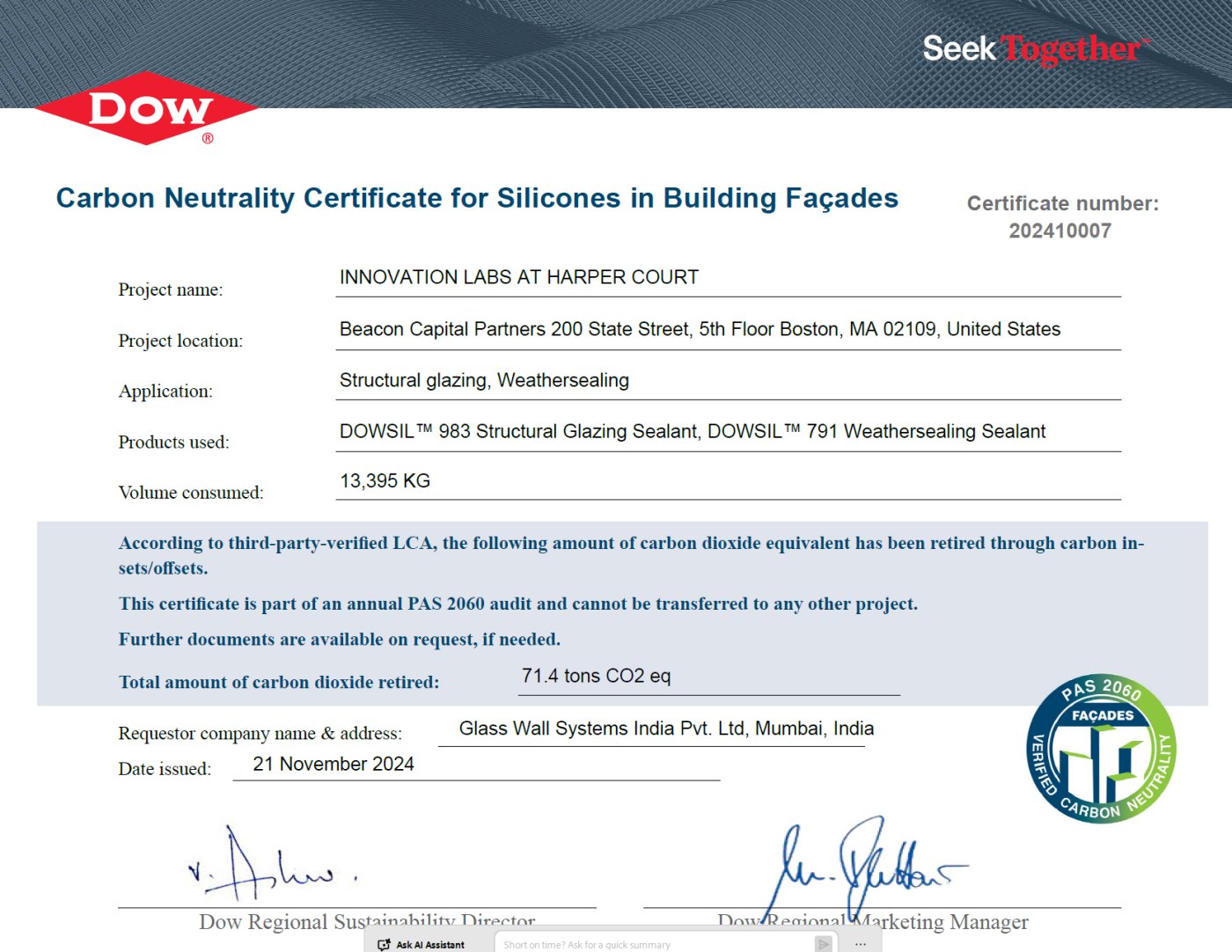
Subramanian set out the route to a carbon-neutral silicone sealant for structural, insulating glass and weather seal use. The audit identified polydimethylsiloxane and silicon metal production as the energy-intensive steps; those are now made using clean energy, and the residual kilograms of CO2 are sequestered through a REDD+ mechanism. A two-year collaboration with Glass Wall Systems sees the fabricator buy all of its structural and weather sealant on that basis. On a 25-year-old Citibank building in London, worked on with Permasteelisa, a hot knife technique removed thousands of glass units from their frames for rebonding with fresh silicone; the original sealant was found still to be performing, and both glass and frames were reused with an added internal frame. As Indian façades reach twenty and thirty years, he suggested, that question of how to refurbish responsibly becomes the live one.
Whatever the application, Subramanian reduced durability to three conditions: the right design, so that the amount of silicone matches the loads; the right application; and the right product. Only when all three hold, he said, can service life be assured. The Indian operation supports that with a corporate office in Mumbai, a technology centre in Navi Mumbai, three manufacturing sites including Taloja and Chennai, and three centres of excellence, with around 1,500 people. The Mumbai laboratory tests some 250 projects a year against roughly 6,000 globally, and six further construction products, among them PU foams, high-strength adhesives and PU sealants, were due to launch at the end of October.