Florian Ebner presented seeleKinetic as a move from static envelope components toward façade elements that respond to users and environmental conditions while remaining testable and maintainable.
Kinetic architecture is a façade discipline in its own right. Once an envelope element moves, the problem stops being only about glass, structure and weatherproofing: drive technology, controls, safety, interfaces, sound and maintenance become equally architectural. seeleKinetic’s work brings those systems together so a moving door, screen or entire building envelope can be designed and tested as one operational assembly rather than a spectacular mechanism added after the façade is resolved.
Moving elements combine two engineering cultures
Ebner described kinetic façades as the merger of automation and classical façade construction. On one side sit motors, intelligent controls, safety concepts, user interfaces and acoustic behaviour. On the other are structural engineering, glass and surface quality, weather performance and architectural appearance. If either side is treated as secondary, the element may move but fail as a façade, or perform as a façade but be unusable as a machine. The work therefore begins with concept development and continues through applicable standards, in-house or third-party testing, manufacture, quality control and installation. Operation is designed from the start rather than left to commissioning.
Scale changes the meaning of a door
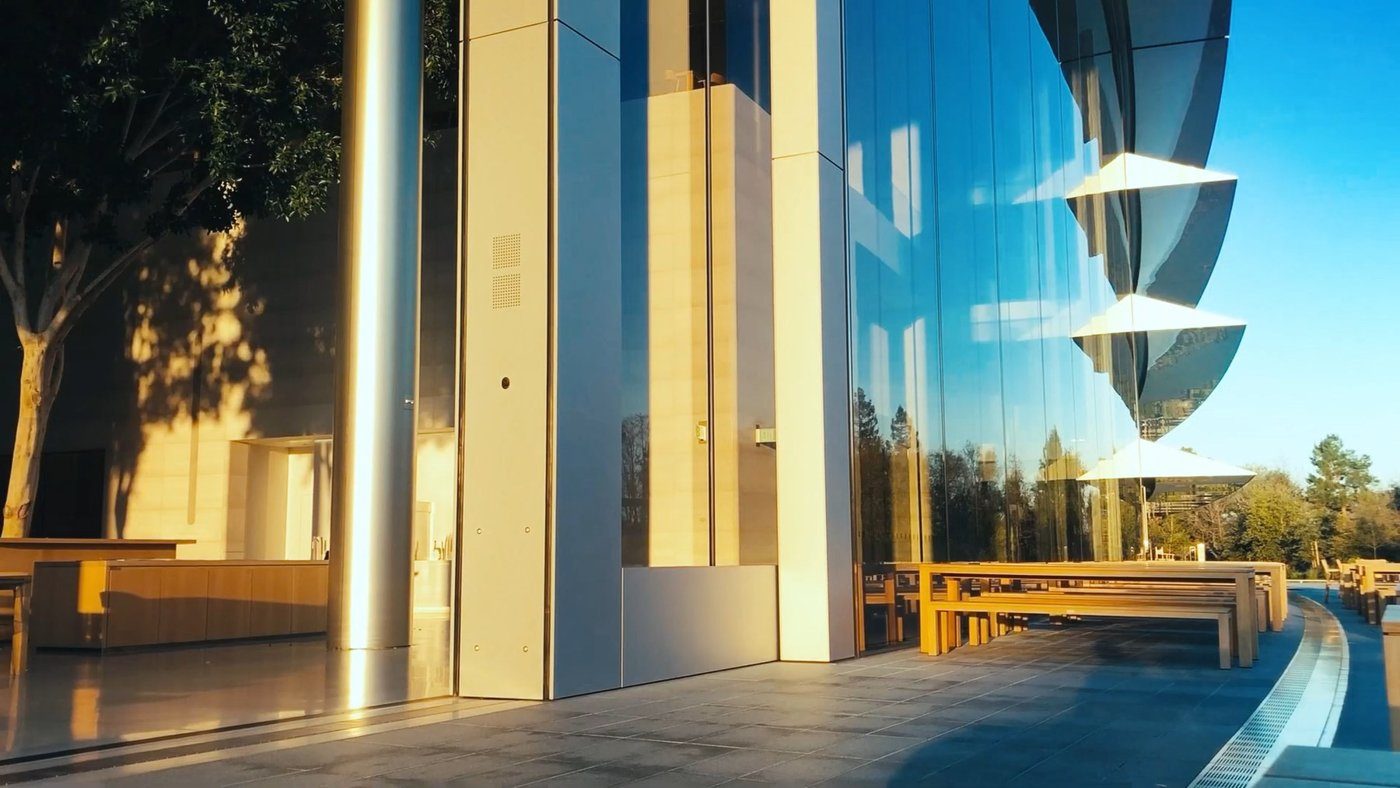
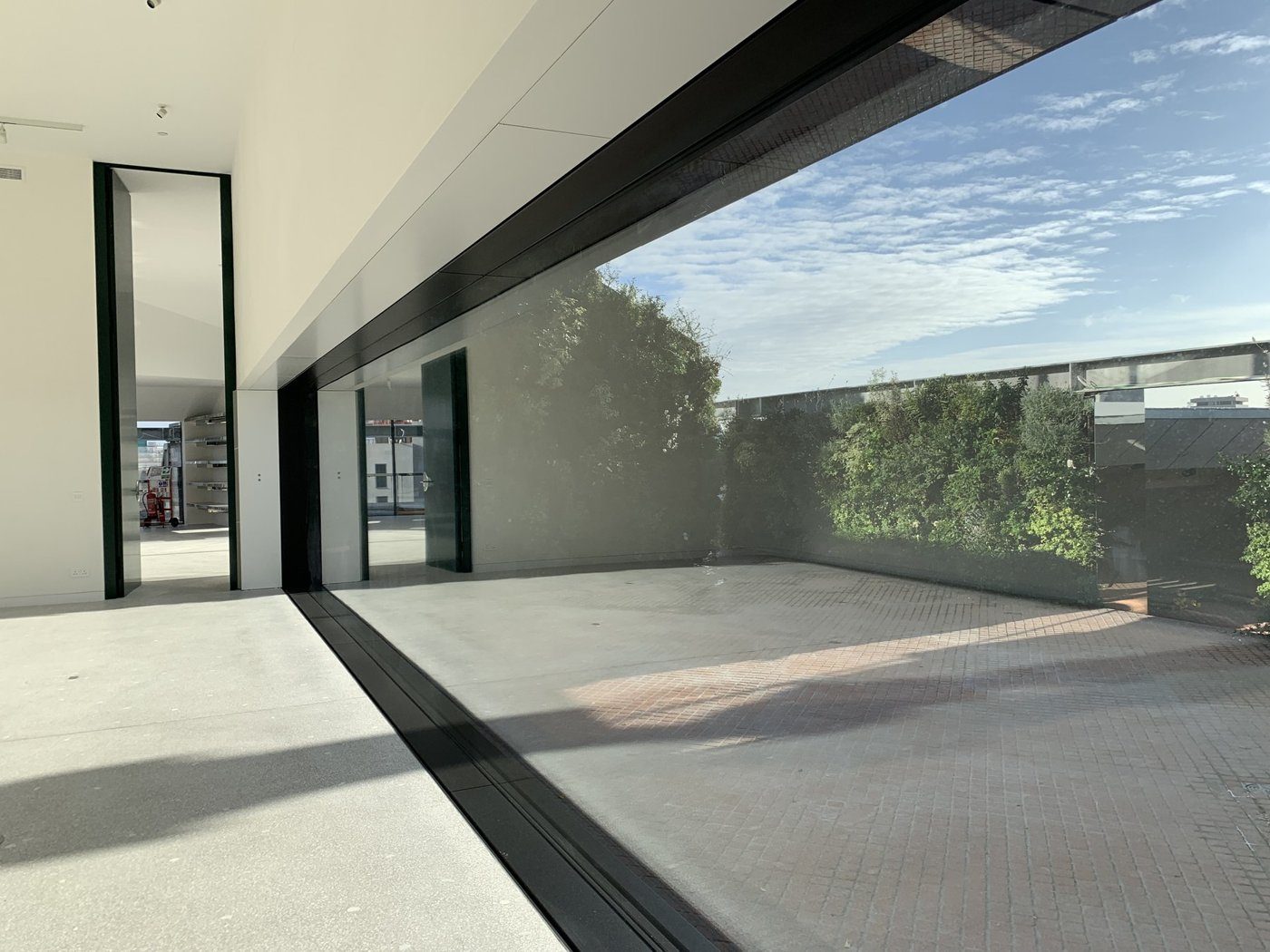
At Apple Park, individual restaurant sliding elements were described at roughly 16 by 28 metres and about 180 tonnes, taking around 12 minutes to open or close. At that size, acceleration, stopping, alignment and user safety are no longer hardware details. They shape the building’s structure and the way the opening is perceived. UK House in London takes a different approach: a lift-up façade around 10.7 metres by 2.2 metres, using an electromechanical drive and active pneumatic sealing, with an opening or closing cycle of about two minutes. The seal is especially important because movement cannot be allowed to weaken everyday air and water performance.
Precision has to repeat every cycle
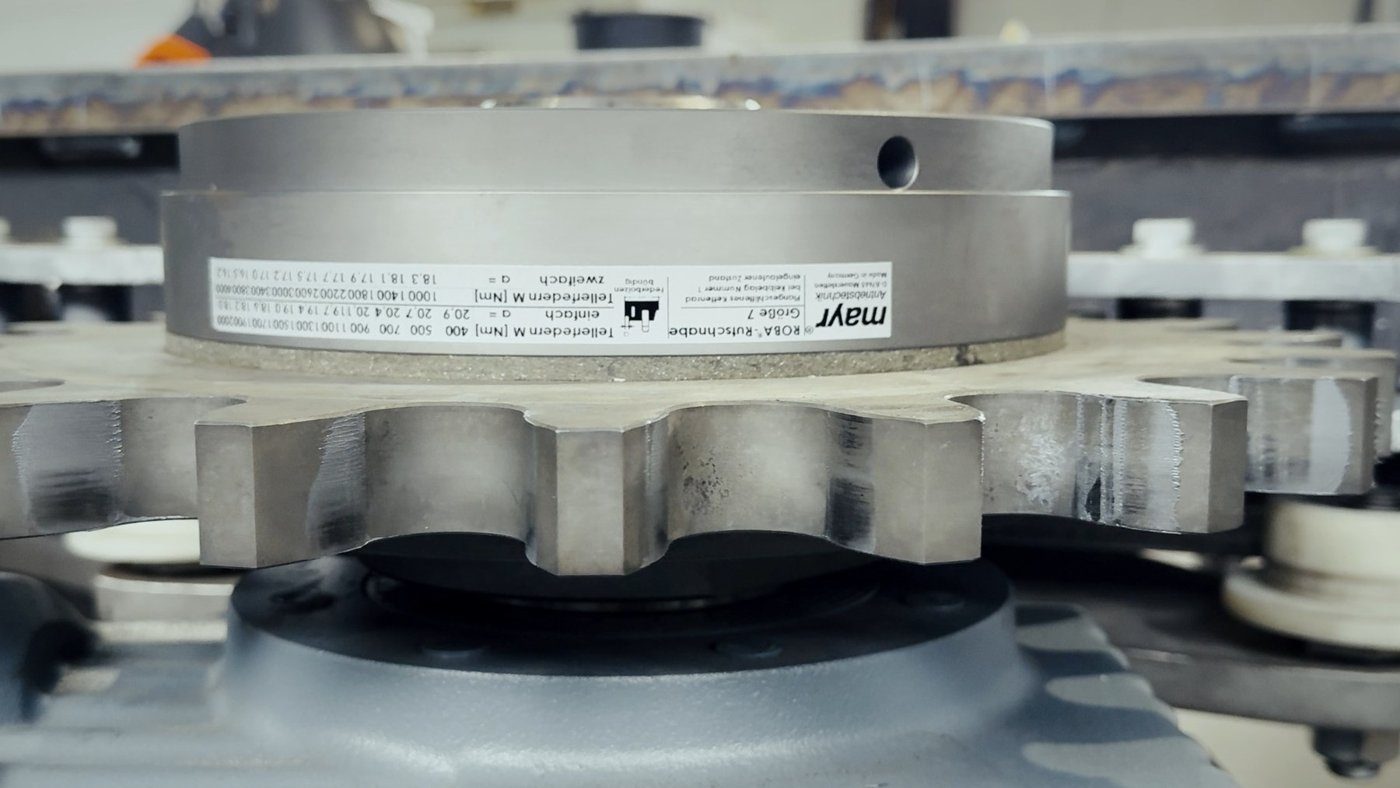
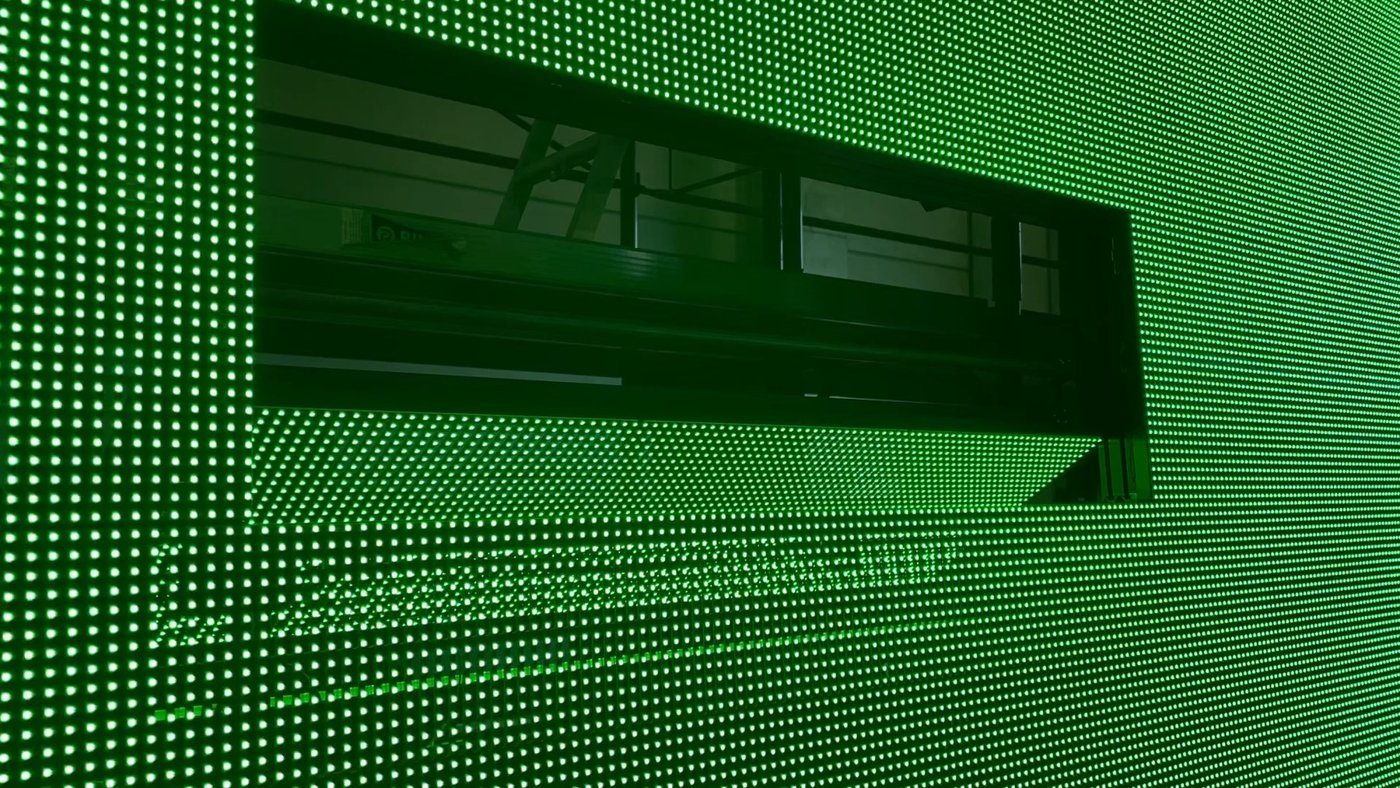
Moving architecture is not judged only by whether it works once. Bearings, guides, drives and sensors have to return large elements to the right position repeatedly while tolerances remain compatible with glass, seals and adjacent finishes. The Sphere in Las Vegas illustrates that demand: its proscenium screen and rigging hatches use moving LED elements where the reported positional tolerance is around ±0.5 mm. Some hatches open in under 15 seconds. That combination of speed and precision makes control logic, interlocks and maintenance access part of the façade specification rather than separate theatre equipment.
Prototypes test the operation, not just the appearance
A Florida drop-down façade was developed through a full-scale performance mock-up approximately 14 by 11 metres and 30 tonnes, moving into a basement on a rope-drum drive in about six minutes. Testing at that scale lets the team observe deflection, sealing, drive behaviour, safety and the transition between open and closed states under realistic geometry. For kinetic systems, a visual mock-up alone cannot answer those questions. The prototype has to behave like the final mechanism because dynamic loads and repeated movement are part of performance.
The envelope can follow the environment
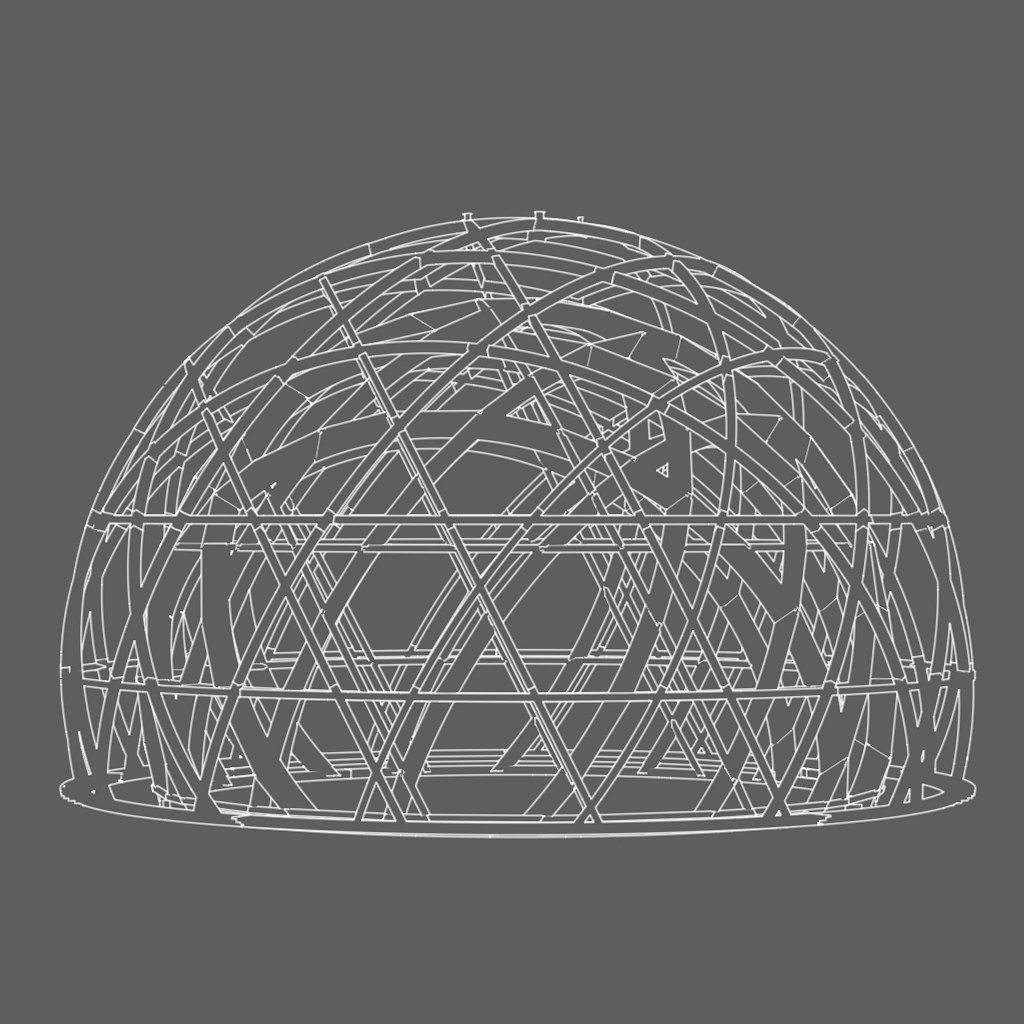
The Ellison Institute of Technology in Oxford pushes the idea to a rotating outer dome around 19.7 metres in diameter and approximately 80 tonnes. Ebner described a full rotation in about ten minutes and a half-hourly sun-tracking function driven by four geared units. The mechanism is therefore not movement for spectacle alone; it lets architecture respond over time. That shift makes maintenance and controls inseparable from long-term façade design. A dynamic envelope must still be inspectable, repairable and safe after years of operation. Kinetic architecture becomes credible when the choreography is backed by the same discipline expected of any permanent building system.
Ebner also made usability part of the engineering scope. A moving façade has to communicate when it is safe to approach, what happens during a power or control fault, and how operators regain access for maintenance. Sound matters too: motors, gears and sealing systems that are acceptable in an industrial setting may be intrusive in a restaurant, gallery or workplace. Kinetic design therefore succeeds when the mechanism disappears into everyday use, not when occupants have to accommodate the machine.