


Joan Tarrús presented a manufacturing route intended to make complex, heat-treated curved glass more repeatable, faster to evaluate and less dependent on one-off bending moulds.
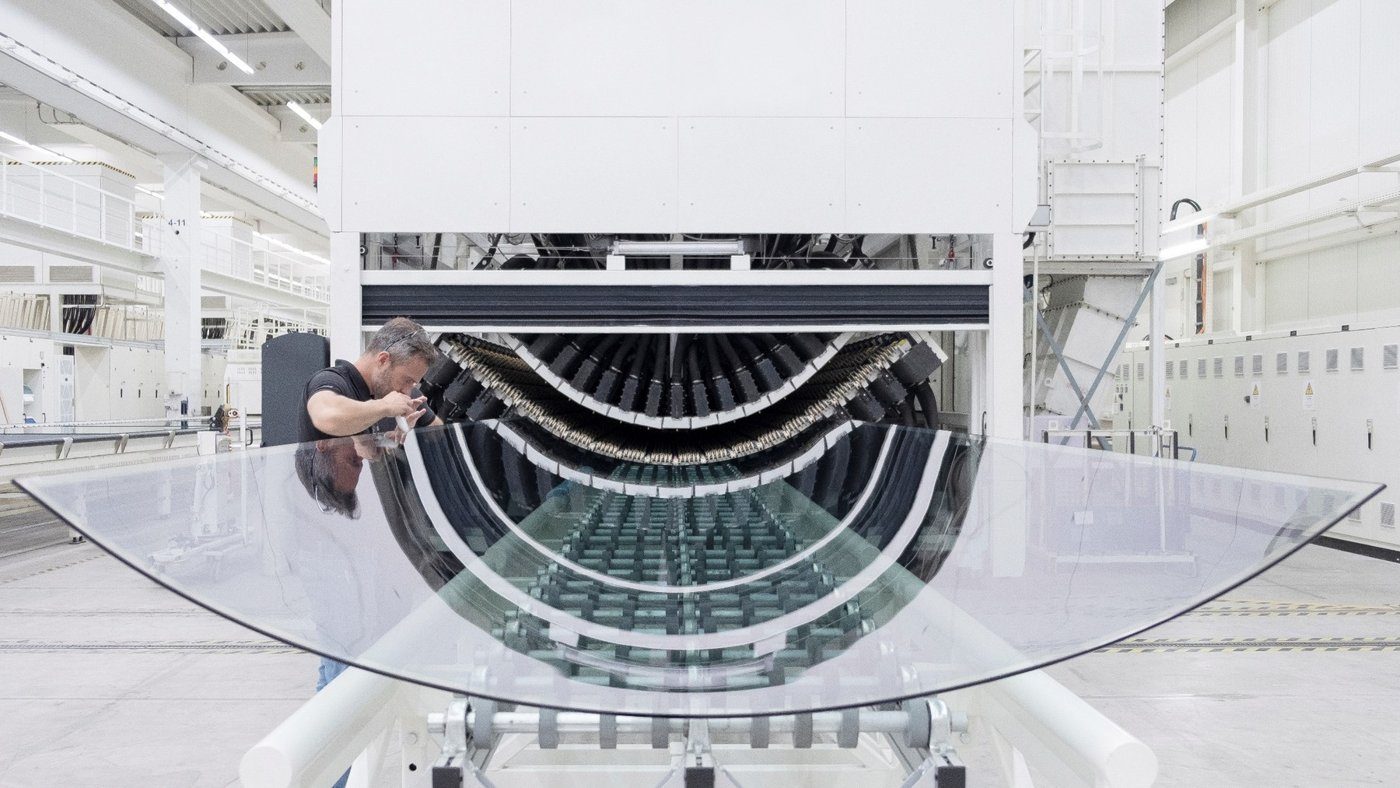
Complex curved glass has traditionally forced designers to choose between geometric freedom, strength, optical quality, cost and production speed. Joan Tarrús presented a manufacturing route intended to loosen that trade-off. Sedak's new equipment combines heat treatment with multi-directional bending and a digital feasibility workflow, allowing freeform toughened or heat-strengthened units to move closer to ordinary production rather than remaining dependent on slow, one-off mould making. The significance is not curvature for its own sake, but faster feedback between architectural geometry and what a factory can actually make.
Traditional bending delivers quality at a price
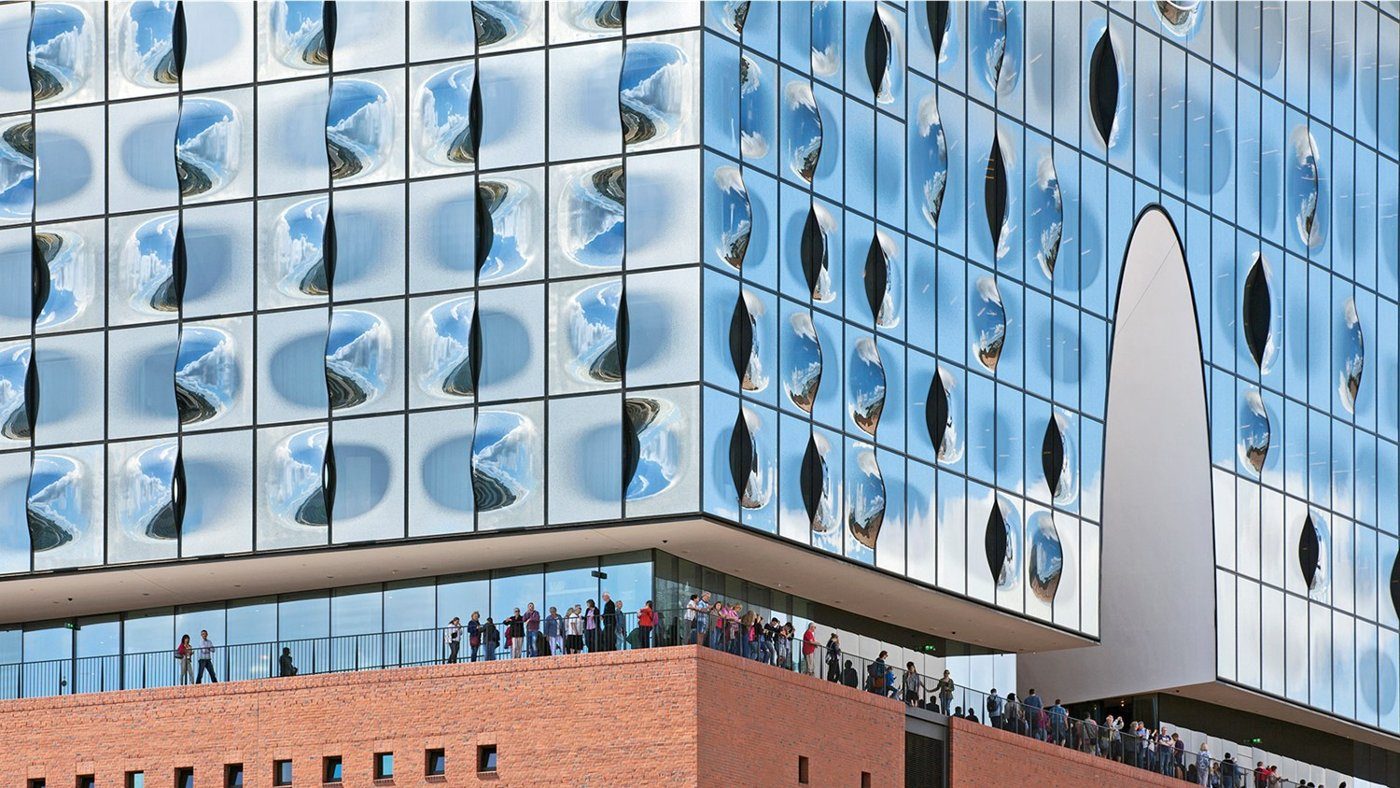
Tarrús began with gravity bending, still the established answer for highly complex shapes. Glass is heated and slumped over a bespoke steel mould, producing tight tolerances and high optical quality. The difficulty is repetition: every distinct geometry can require its own tooling and a long furnace cycle. Projects such as Hamburg's Elbphilharmonie demonstrated what the method can achieve, but they also show why complex façades quickly become manufacturing programmes in their own right. When every panel is unique, design development, mould fabrication and glass processing are inseparable from architectural form-making.
Strength narrows the available options
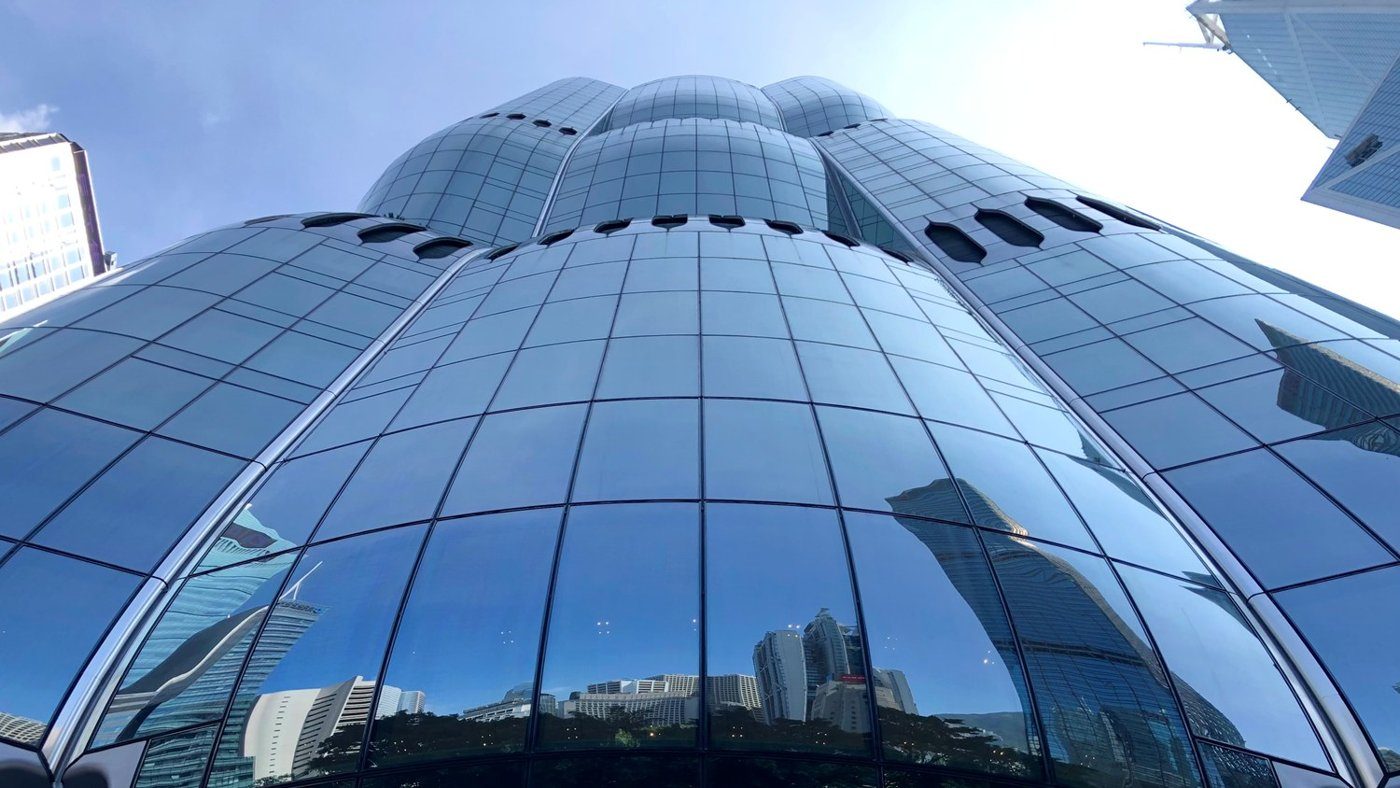
Geometry becomes more difficult when annealed glass cannot carry the required loads. Tarrús used point-fixed applications as an example: a curved pane may also need chemical strengthening, which means processing each ply after bending through an ion-exchange treatment. That can solve a structural problem, but it adds time and cost. Machine bending is faster and generally more economical, yet conventional equipment is constrained by its quench system and normally favours cylindrical or limited double curvature. Even ambitious projects such as The Henderson in Hong Kong required equipment development to deliver the most demanding panels.
New hardware changes the design envelope
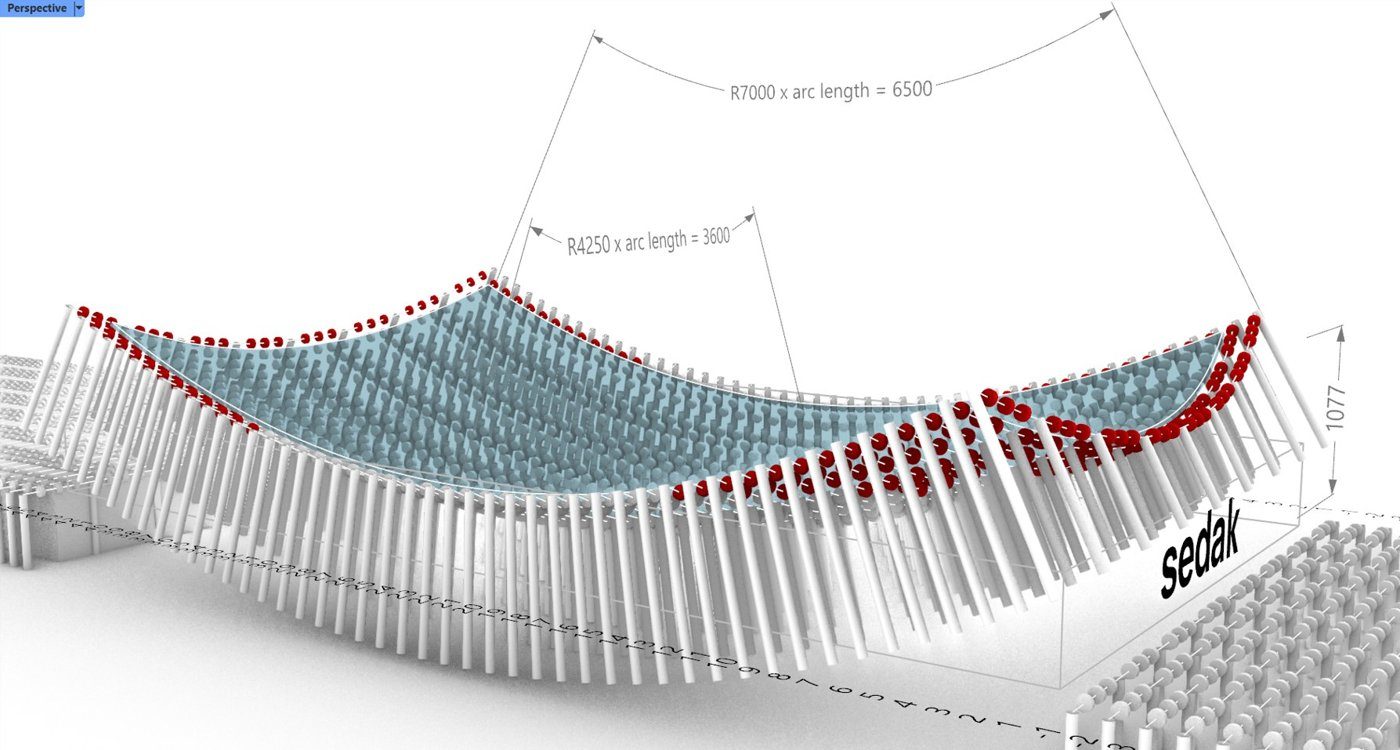
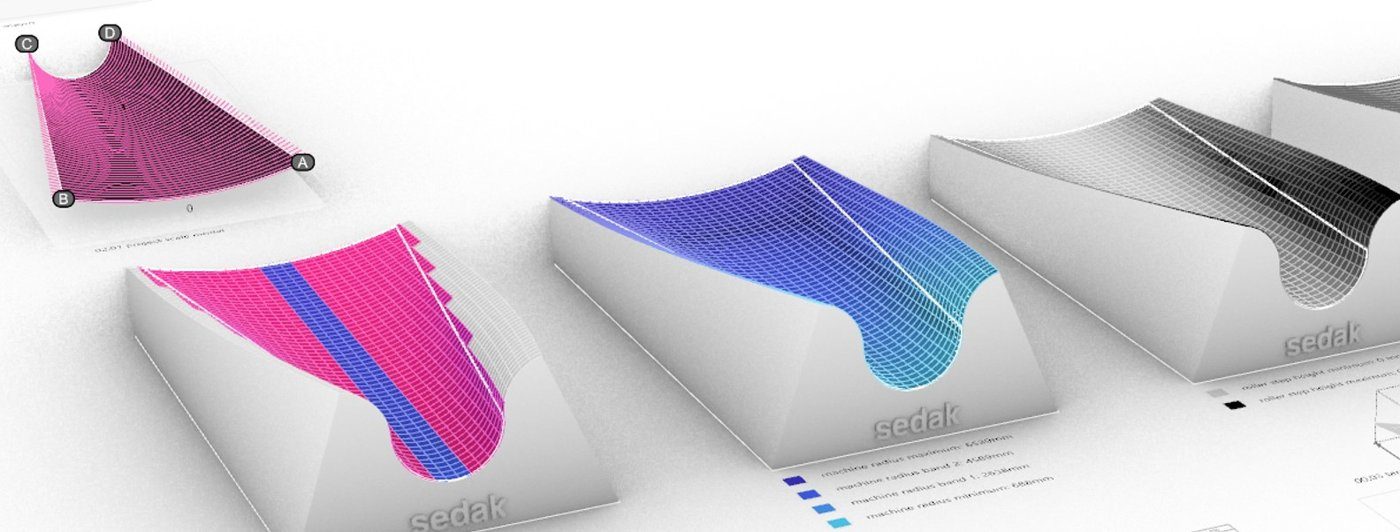
The new machine described by Tarrús is larger than jumbo format, with a stated capacity up to 8.5 metres, and doubles the bending pitch available in sedak's machine process to 1.2 metres. Tarrús presented that scale as important because architectural glass rarely becomes simpler as panels get larger: transport, tempering, optical quality and geometric tolerance all have to remain compatible. The equipment is intended to make more of those decisions repeatable. Instead of treating every unusual pane as a special laboratory exercise, the production system is being organised around a wider but defined family of manufacturable shapes. More importantly, it is designed to produce synclastic and saddle-like freeform geometries in toughened or heat-strengthened glass. Because the system bends in a different orientation, coatings and ceramic frits are no longer restricted to the same surfaces as in earlier processes. That gives façade designers more freedom to coordinate appearance, solar performance and build-up without having to redraw the geometry around the furnace.
Software moves feasibility upstream
Hardware alone would not shorten design cycles if architects still had to wait for factory trials. Sedak therefore developed bespoke software to assess proposed surfaces, confirm whether they are feasible in toughened or heat-strengthened form and simulate production before the glass reaches the machine. Tarrús framed this as a feedback tool for designers as much as a factory-control system. A geometry can be challenged early, when changing it is still inexpensive, rather than after procurement has committed the project to a difficult shape.
The new process also changes when feasibility can be tested. Because the production route is coupled to bespoke software, a designer can explore whether a freeform pane can be heat treated within the machine’s bending limits before committing to a mould-led solution. Tarrús presented that feedback loop as essential: complex geometry becomes useful only when the architect can understand what is manufacturable, what tolerances will result and how coatings, frit and orientation affect the final glass build-up.
The comparison with earlier landmark projects makes the development tangible. A façade such as the Elbphilharmonie once had essentially one route for its most complex glass: annealed panes formed by traditional slumping. Tarrús argues that a comparable problem can now be approached with faster cycles, stronger heat-treated glass and a much earlier understanding of feasibility. The innovation therefore lies in connecting design geometry, software and manufacturing as one process.