


Moujehed Neffoussi linked coating innovation with product-specific environmental data, arguing that façade decisions increasingly need performance, carbon and traceability to arrive together.
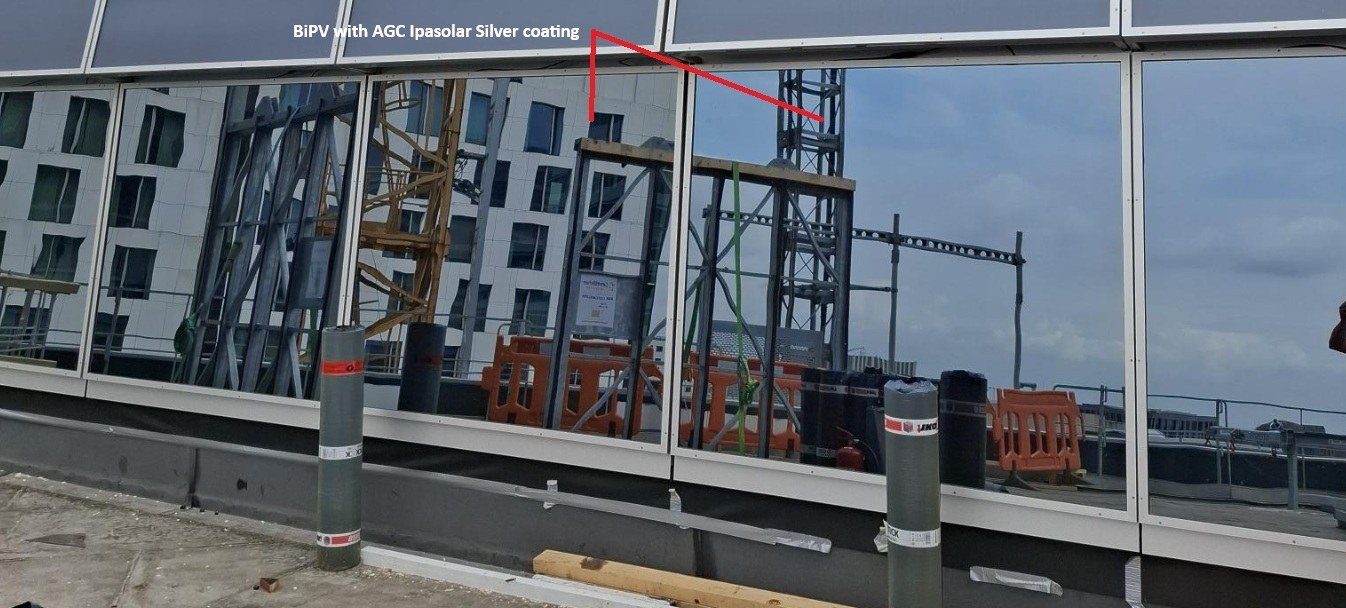
Moujehed Neffoussi linked three developments that are often discussed separately: decorative glass, building-integrated photovoltaics and environmental product data. His argument was that façade innovation now has to solve appearance, performance and circularity at the same time. A coating that creates the right colour but prevents recycling, or a photovoltaic glass that looks acceptable but sacrifices too much electrical output, simply moves the problem. The specification increasingly needs to carry design intent and environmental evidence together.
Coatings can replace harder-to-recycle finishes
The first example came from bespoke magnetron coatings developed for projects that need opaque or highly reflective effects. Neffoussi described work for Studio Gang's St Regis Chicago, where several tailored coatings were used to achieve the intended appearance. The wider significance is that a coating can sometimes replace ceramic frit for certain visual functions while leaving the glass more compatible with furnace recycling at end of life. The technology therefore treats colour as part of the glass-production system rather than as a decorative layer with no consequence for circularity.
Coloured BIPV needs optical engineering
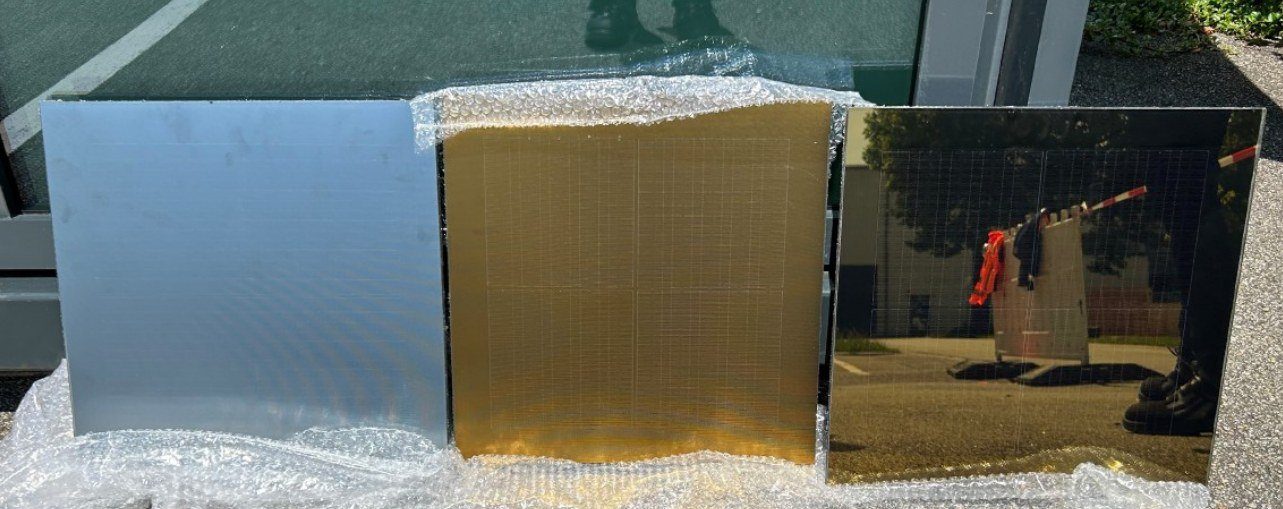
The same coating expertise is being applied to building-integrated photovoltaics. Full-colour solar façades can lose efficiency when the layer that creates the architectural appearance also blocks useful solar energy from reaching the cell. Neffoussi presented a coating range designed to manage that trade-off, including a gold finish applied to acid-etched glass to create a matte surface. The façade can therefore be visibly coloured without treating the photovoltaic layer as a hidden technical compromise. For architects, that opens a wider palette; for engineers, it makes spectral behaviour part of the aesthetic decision.

Testing connects design to performance
Advanced coatings only become useful when project teams can understand how they behave in real assemblies. Neffoussi's examples moved between full-size façade applications, laboratory development and sample comparison, reflecting a workflow in which colour, reflectance and energy performance are checked together. That is particularly important for bespoke coatings because a small shift in optical properties can change both the visual result and the energy balance. Early samples allow the design team to make those trade-offs deliberately rather than discovering them after large quantities of glass have been ordered.
Product-specific data reduces generic assumptions
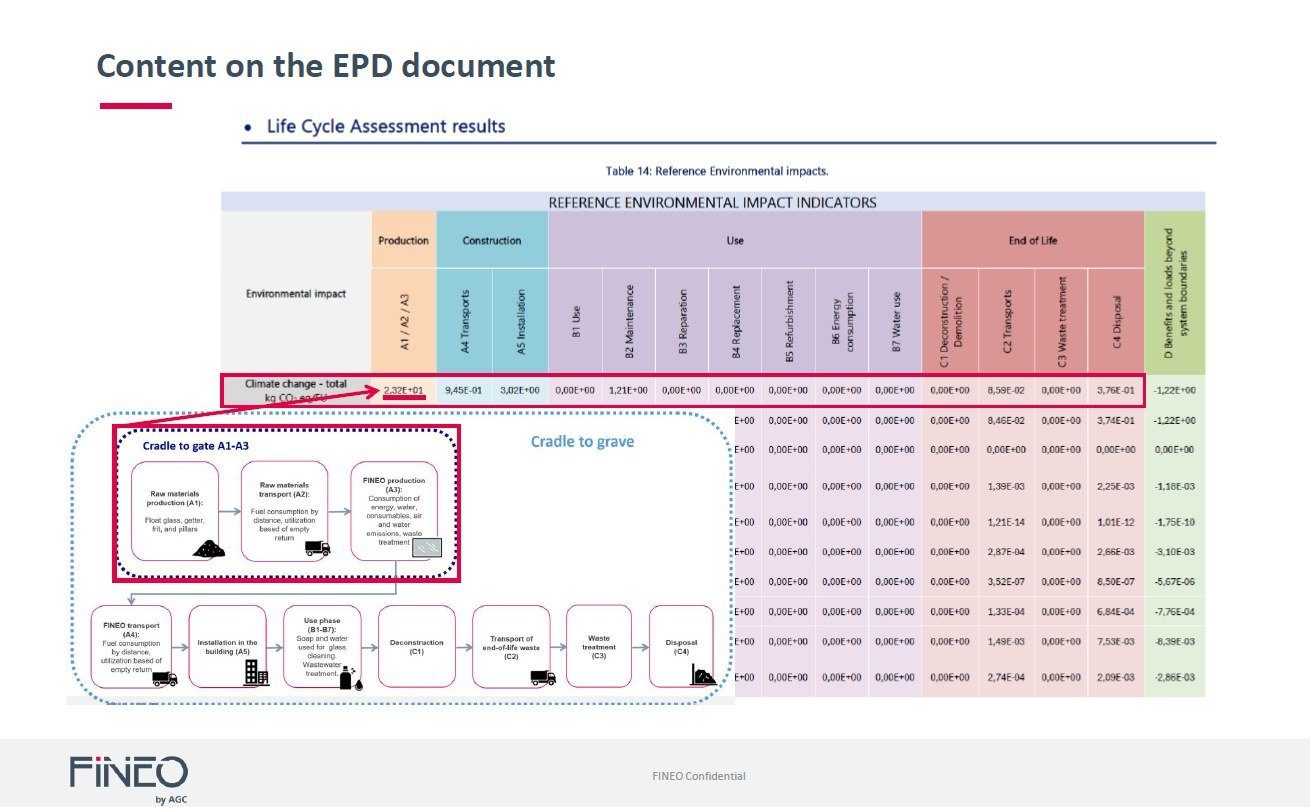
The third strand was an online EPD generator that provides third-party-verified information for specific glass configurations. Neffoussi framed this as a response to a common design problem: environmental calculations often rely on broad averages that do not reflect the actual thickness, coating or processing selected for the project. Product-specific data makes it easier to compare options on a consistent basis and to update carbon calculations when the specification changes. It also turns environmental performance into something that can be traced to the same product identity as the technical data sheet.

Neffoussi also showed how product data is becoming more specific. AGC’s online EPD generator was presented as a way to produce third-party-verified environmental information for particular glass configurations instead of relying only on broad family averages. Vacuum glazing pushes the same data problem into a different performance range: a unit can reach around 0.4 W/m²K when incorporated in an insulating build-up while remaining recyclable back into glass production. For the designer, coatings, BIPV colour and thermal performance increasingly arrive with environmental metadata that can be carried into project carbon calculations.
The result is a more accountable material specification, with performance and carbon information travelling together.
Neffoussi also pointed to vacuum glazing with its own verified EPD and a build-up capable of reaching a U-value around 0.4 W/m²K when incorporated into a double-glazed unit. The broader message is consistent across all three examples: better façade decisions require finer-grained information. When colour, energy generation, thermal performance and carbon are all tied to the actual product, design and decarbonisation stop being parallel conversations.