


In the keynote, James Tan, the Singapore practice behind the Mandai Rainforest Resort, argued that architecture is ecology, and that the façade should stop being the line that separates people from nature and become the place where the two connect. Through three projects he traced three ecologies: of place, where a resort casts the memory of a felled forest into its precast panels; of coexistence, where a guest room opens fully onto the rainforest and a Chennai tower turns its façade into shared gardens; and of regeneration, where a building is not finished when it is built but when nature, people and time begin to share it.
James Tan opened on a paradox: as our cities rise, the living systems that sustain them keep disappearing, nowhere more sharply than in Southeast Asia, home to some of the planet’s richest tropical ecosystems and among its fastest-urbanising regions. The question, he argued, is no longer whether we should build but how our buildings can become part of the ecological systems they replace. For more than a century we have treated architecture and ecology as separate disciplines, one builds cities, the other protects nature, and that separation is itself the problem, a crisis of disconnection. His thesis was blunt: architecture is ecology, where ecology means not forests but the study of relationships, between species, climate, culture, memory, emotion and time. And the façade, long understood as the line dividing a controlled interior from an unpredictable exterior, is exactly where those relationships can be created, restored and regenerated. Not a boundary, then, but a living interface: a threshold where architecture exchanges with life, trading light, air, views, energy, biodiversity, culture and memory the way a living organism exchanges energy and nutrients with its surroundings.
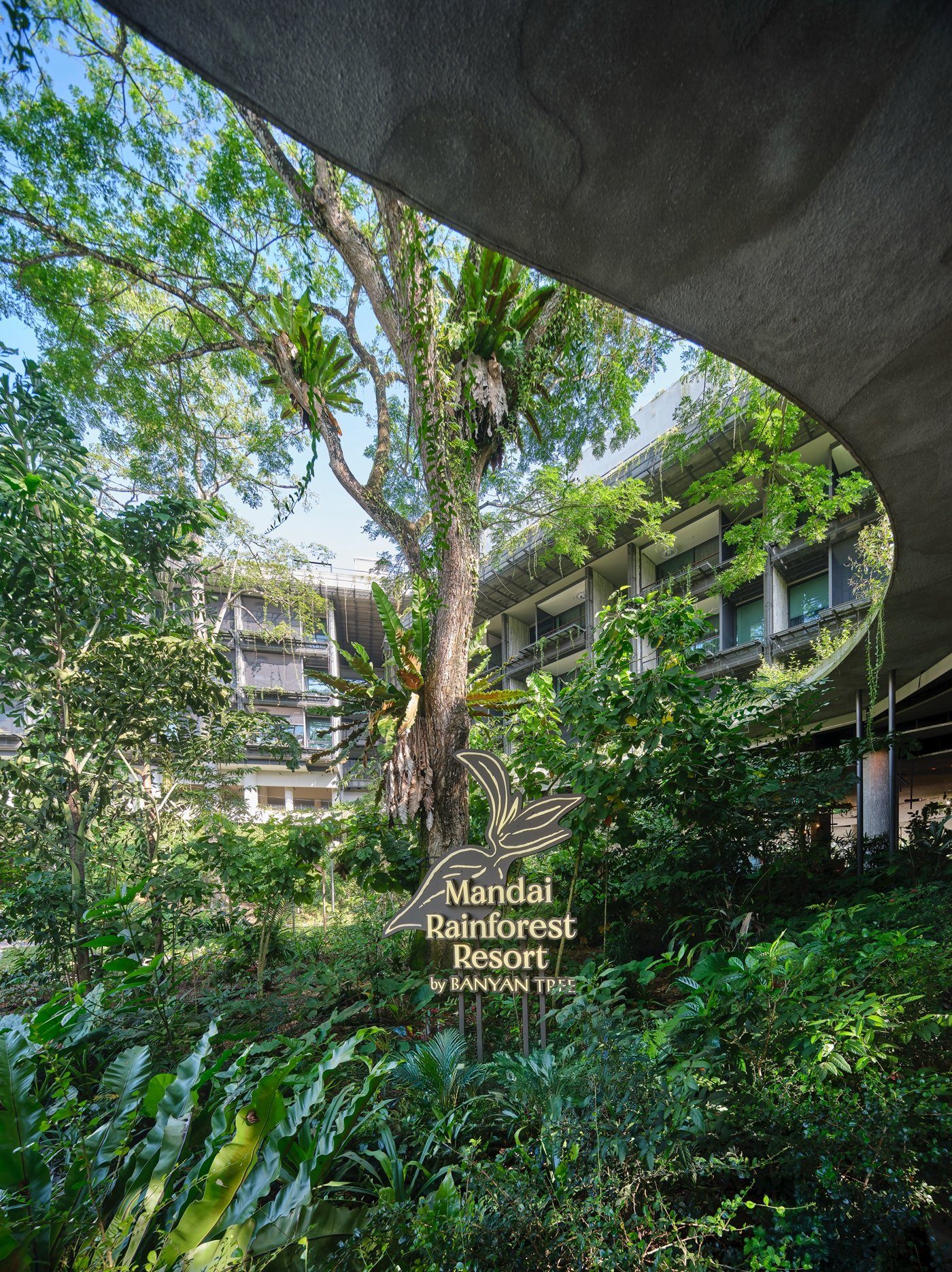
He traced three aspects of that idea through three projects, beginning with the ecology of place. The Mandai Rainforest Resort by Banyan Tree sits beside Singapore’s Mandai Wildlife Reserve and the Upper Seletar Reservoir, the nation’s drinking water, within a 126-hectare rejuvenation into an eco-tourism hub. Most projects, Tan noted, begin with building efficiency; Mandai began with ecology. Rather than clearing the site, WOW first understood its existing ecological systems and designed around them, letting the architecture weave through the forest like a liana, threading, bridging and linking the spaces between existing trees and habitats, with no single dominant form. Every one of the site’s 25-metre signature trees was conserved, each of which takes ten to fifty years to reach that height: rather than asking the forest to make way for architecture, they asked architecture to make way for the forest.
For the trees that could not be saved, each was given a second life, upcycled into façade elements, interior finishes and furniture. Most strikingly, their bark and liana were composed into patterns and cast as full-scale moulds for the resort’s precast concrete panels, every one prototyped and refined in Singapore, with the practice’s founder and project director treating each panel almost as a piece of art. The intent, Tan stressed, was never decoration but memory: to carry forward the textures, scars and stories of the trees that once stood there. This is not biomimicry, not imitating nature but preserving it, so that the façade becomes a living archive of the forest, which was never lost but simply changed its form. Set along the resort’s naturally ventilated breezeways, the panels turn every journey through the building into an experience of the forest.
A second project remembers not a forest but a culture. The Residency Signature hotel in Madurai, the temple city of Tamil Nadu, treats its façade not as a literal copy of the city’s temple architecture but as a contemporary expression of its cultural intelligence, the rhythm, depth, hierarchy and climatic wisdom that have shaped the sacred city for centuries, completed by cascading bougainvillea chosen both for its resilience in Madurai’s hot, dry climate and for its cultural meaning of hospitality and welcome. Architecture and landscape become a single ecology of place, in which culture and nature are not separate systems.
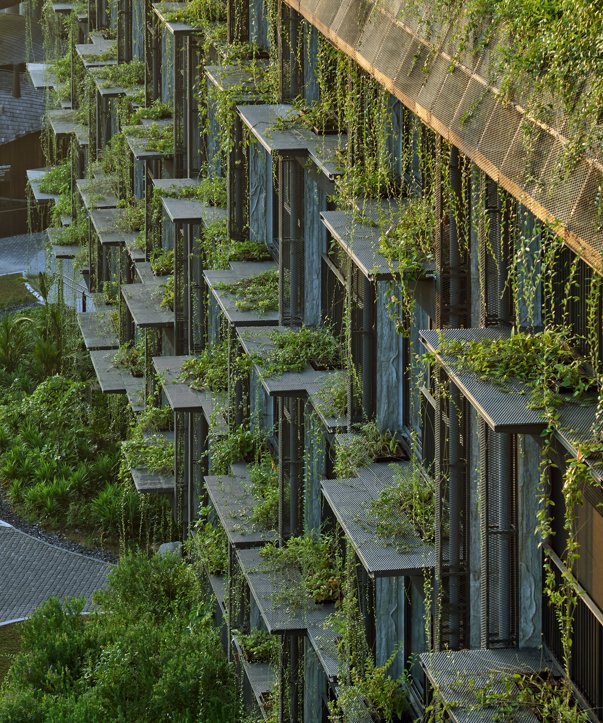
Returning to Mandai, Tan showed the façade doing more than remembering: cultivating an ecology of coexistence. The planting was driven by ecology rather than aesthetics, sun-loving species on the upper levels, shade-tolerant ones lower down near the forest floor, so that the façade becomes a vertical extension of the rainforest, a habitat for birds, butterflies and pollinators. The trailing vegetation does double duty, shading the building passively while making the glass visible enough to reduce bird strikes. Beneath it lies a shift in the question architects ask: not only how to serve human comfort, but who else are we designing for, an acknowledgement that people are only one species within a much larger community.
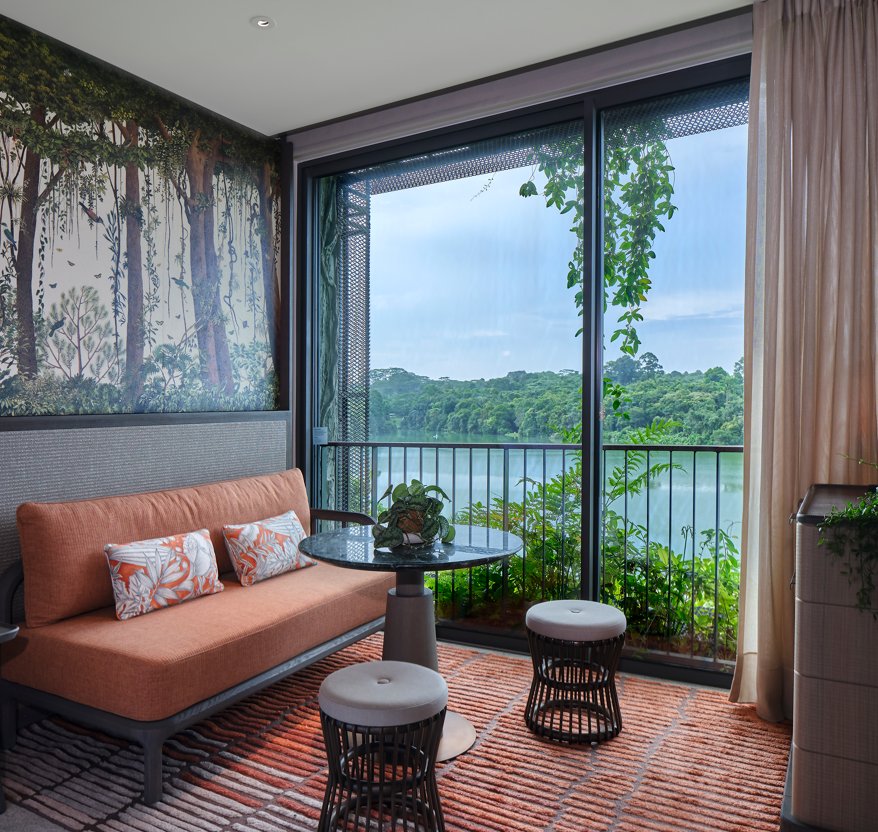
Its clearest expression is the guest room’s fully openable façade. Behind an automated mosquito mesh, the whole wall opens to turn part of the room into a semi-outdoor veranda over the rainforest, more than a feature, a restoration of the relationship modern architecture had largely lost, between people and climate, letting guests feel the breeze, sound and rhythm of the forest in complete comfort. True luxury, Tan suggested, is not about controlling nature but about reconnecting with it.
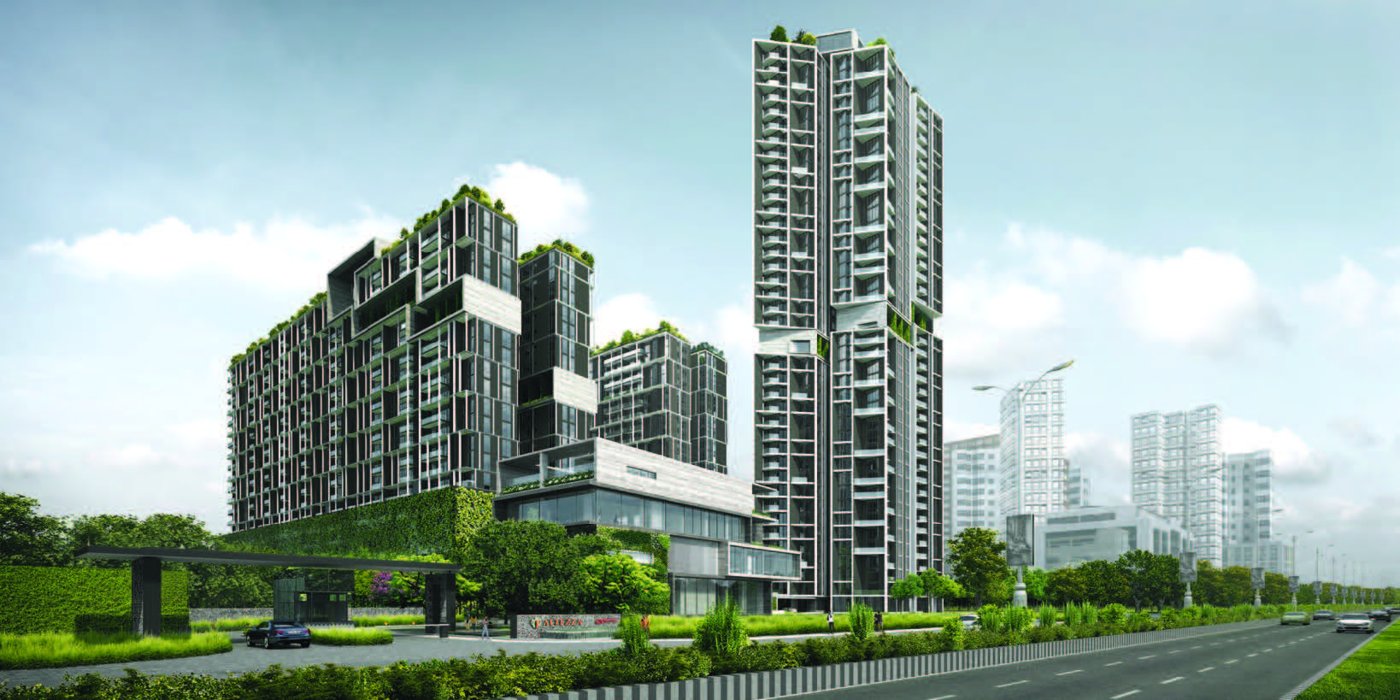
Coexistence, he argued, is not confined to the wild. At Alteasa on OMR in Chennai, WOW asked whether a façade could cultivate it inside a dense city, and turned the building’s edge into a vertical landscape of shared gardens. Stepped terraces, each with its own purpose, learning, wellness, urban farming, celebration, distribute communal life up through the façade rather than parking it on the ground floor or the roof, so that moving through the building becomes moving through community, with a green spine weaving nature into everyday high-rise life.
And what does all of it achieve? Regeneration. A living façade, Tan said, is not completed when construction ends; it begins its life when nature, people and time start sharing it. He pointed to Singapore’s reframing of its own ambition, from a city with nature to a city in nature, in which nature is no longer an amenity but the organising framework for the city itself. The question he left for architects and designers was the one his whole talk had circled: not merely how a building can sit more lightly on the world, but how it can give back to the ecosystems it inhabits, so that the skin of a building becomes, at last, a place where life is exchanged rather than shut out.