


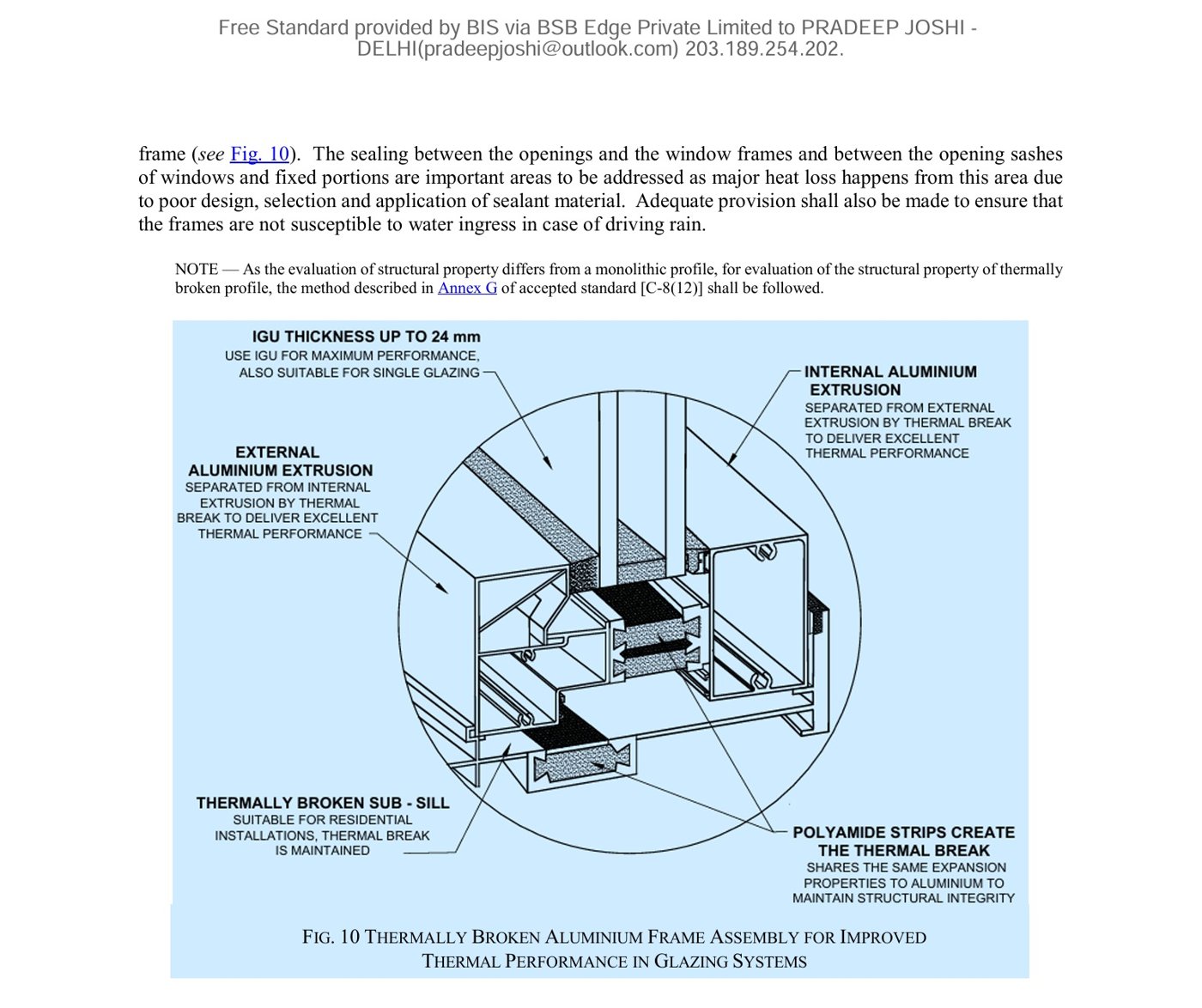
Abhishek Shukla made the case that a building loses much of its energy not through the centre of the glass but through the frame, where, on a thermal image, the edge of the frame is where most of the heat penetrates. His answer is two low-conductivity interventions: a polyamide thermal break that insulates the aluminium frame, and a warm-edge spacer that replaces the aluminium at the edge of the glass. He showed a simulation taking a curtain wall from a U-value of 3.15 to 1.59, and the news that, after two and a half years of work with the standards body, the thermal-break concept has now been written into India’s updated building code.
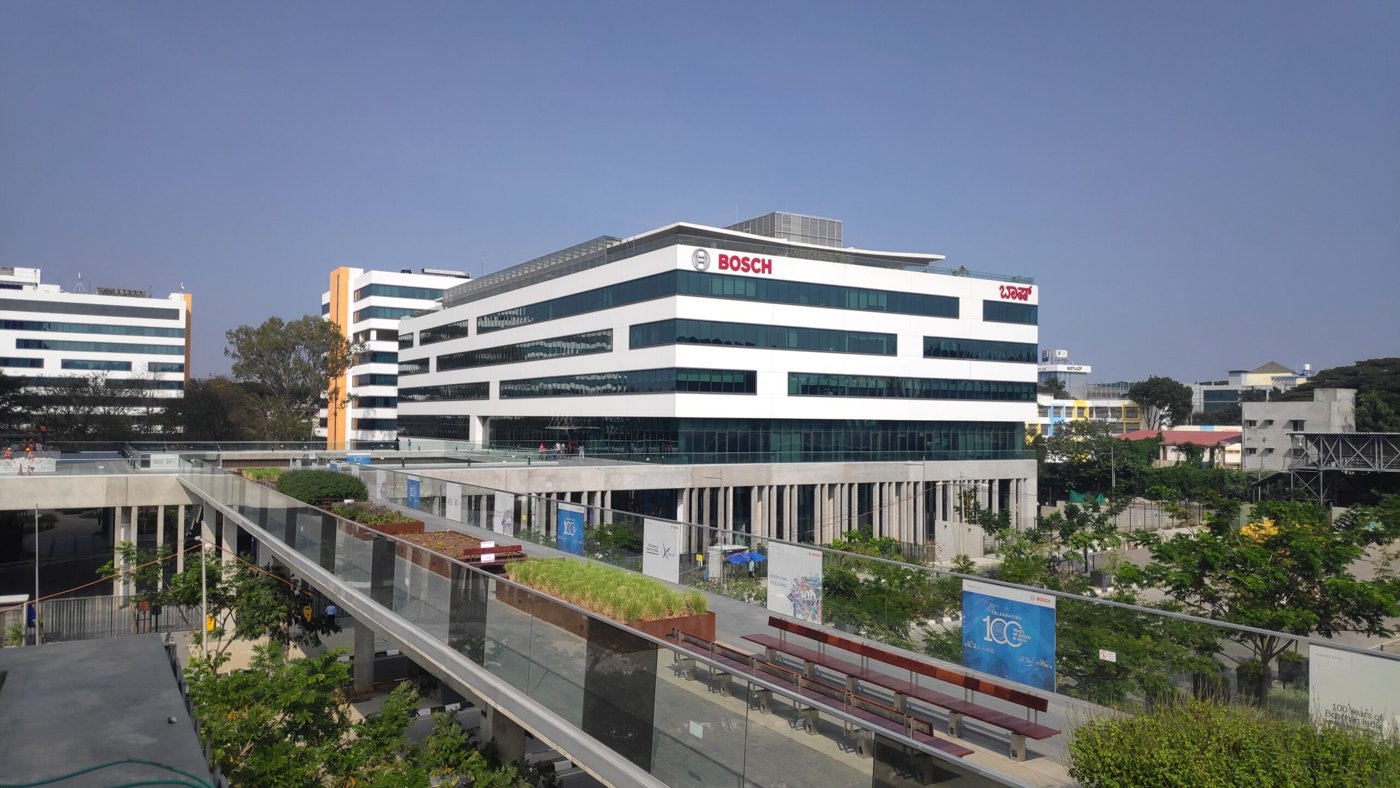
He deals in one idea, the thermal break, and framed his account as what Technoform does, how, and why it matters for India, against a backdrop of rising heat and energy costs. Two concepts underpin it: a thermal break, the polyamide strips that insulate an aluminium frame; and a warm-edge spacer, aimed at the condensation that troubles coastal projects in particular, in cities such as Chennai and Mumbai. The company, he was careful to say, prefers to work through the solution with consultants, clients and architects rather than pitch a product.
His central point was about where the heat actually gets in. Everyone talks about the centre of the glass, he noted, but the frame is the real culprit. On a thermal image with three markers, SP1, SP2 and SP3, it is the edge of the frame, SP3, where roughly 85 per cent of the energy penetrates into the building. A client can spend a great deal on a fine office façade and never once consider that the energy is coming in through the frame.
The insulation is polyamide, specifically a glass-reinforced PA 66, and he ran through why. As a material it insulates about 500 times better than aluminium: aluminium conducts at 160 watts per metre-kelvin, polyamide at 0.21 to 0.3. It expands and contracts at the same rate as aluminium, so it moves with the frame through temperature swings where other materials cannot; it survives the 250-to-260-degree heat of powder-coating; it is fire-resistant, in step with the code’s new attention to fire; it is compatible with bi-colour profiles, so the inner face can be matched to the interior; it holds tolerance to five-hundredths of a millimetre; and it is fully recyclable.
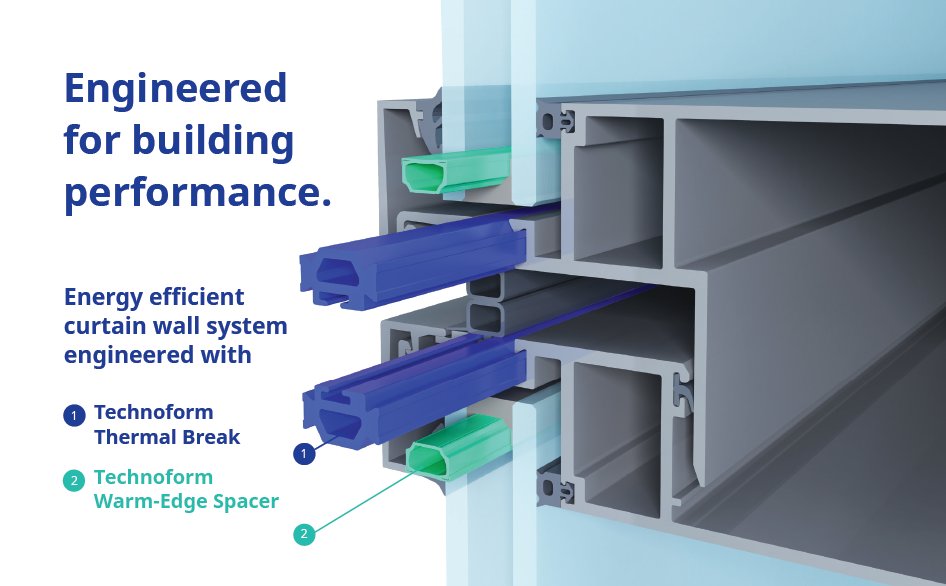
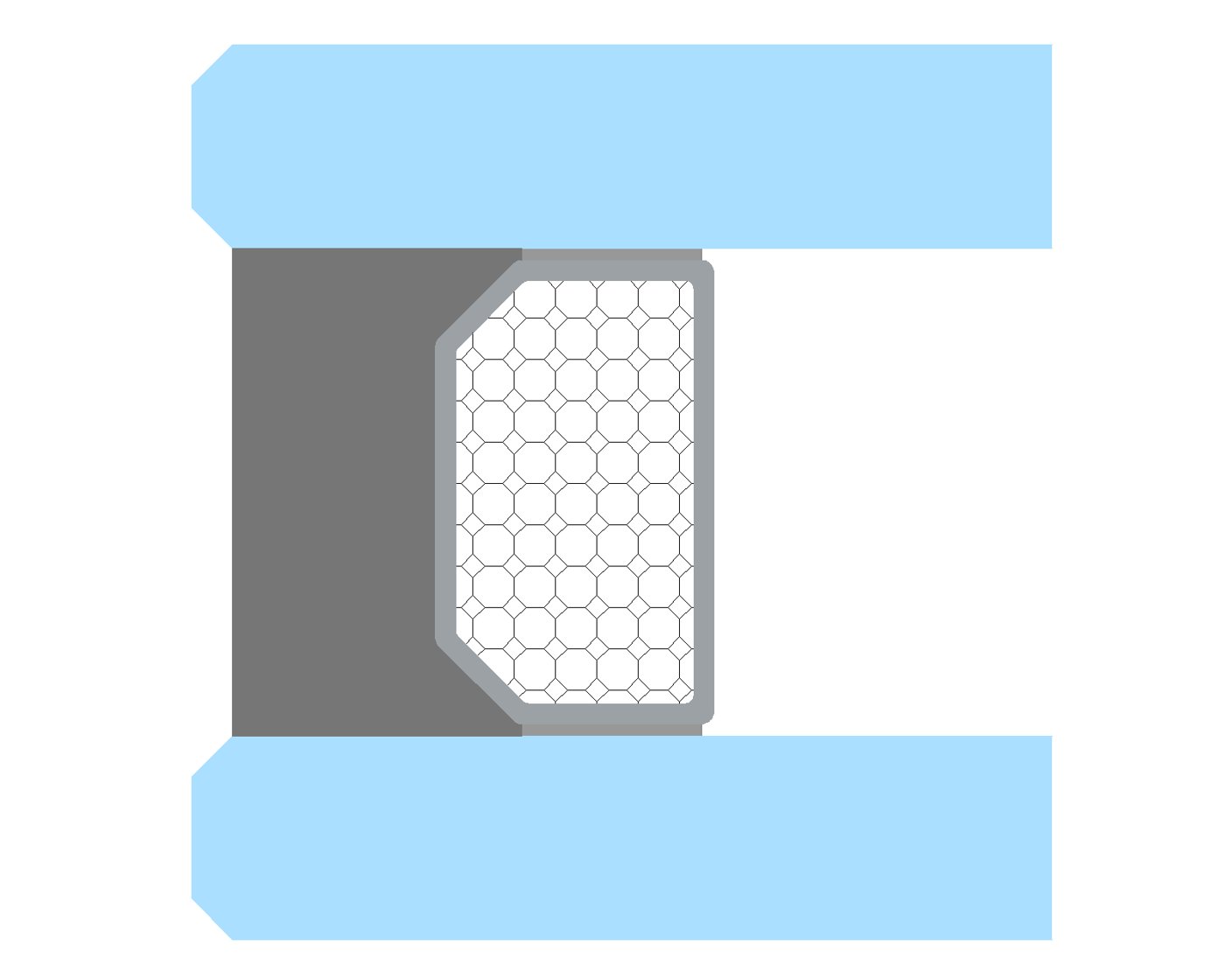
The second concept turns to the edge of the glass. In an insulated glass unit, the traditional spacer is aluminium, conducting, again, at 160 watts per metre-kelvin, which drives condensation and load, a particular problem on the coast. Technoform’s warm-edge spacer is a hybrid, co-extruded from polypropylene with a low-conductivity stainless-steel barrier, and it replaces that aluminium spacer. Its linear thermal transmittance falls from the aluminium spacer’s 0.16 to 0.09 watts per metre-kelvin, a 44 per cent improvement, almost twice as good, cutting both the condensation and the heating and cooling load behind it.
To show how the calculations reach a client, Shukla walked a case with a target of an overall curtain-wall U-value of 1.6 or less. Introducing a 30-millimetre C-shaped polyamide thermal break brought the average U-value to 3.15; adding the warm-edge spacers to the same system pulled the whole assembly under target, to 1.59. A separate study across a 500-villa sample in Bahrain compared the energy loss of non-thermal-break windows against thermal-break ones, holding a comfort temperature of 23 degrees, to quantify the saving.
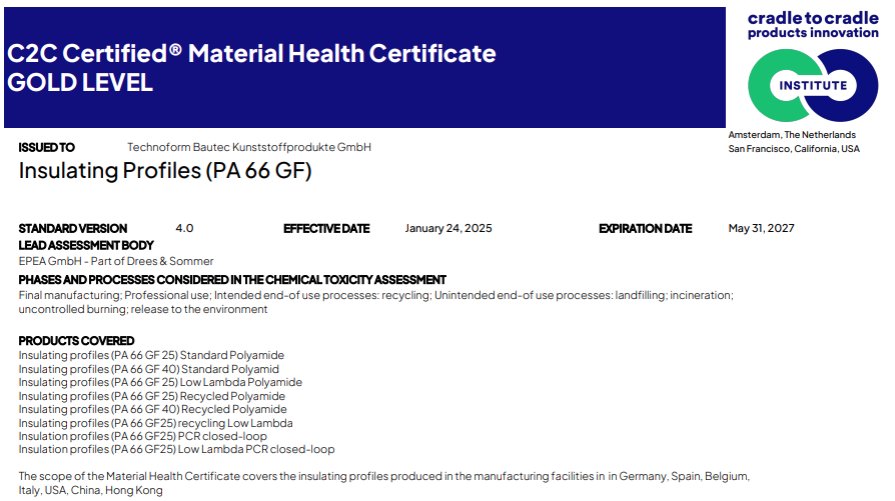
On sustainability he had certification to point to: the products are EPD-compliant and Passive House certified for both Class A and Class B, spanning temperate to arctic climates, and Cradle to Cradle Gold, one of fewer than thirty products in the building-materials category worldwide to hold that grade. The company also sits on Indian code and glazing committees, which led to his headline, a regulatory one: after roughly two and a half years of work with the standards body, the polyamide thermal-break concept, previously absent from the national building code, has now been written into the updated code, as it shifts toward sustainable construction standards.
Beyond the products, he noted, Technoform offers the consultancy around them, thermal calculations, specifications and the BOQ for façade submissions. The argument, in the end, was a simple correction of emphasis: energy conservation in a façade is decided as much at the frame and the edge of the glass as at the centre of the pane, and a thermal break and a warm-edge spacer, now backed by the code, are how a building stops leaking the energy it paid to keep out.