


Marco Casamonti treats material as a carrier of identity rather than a finish selected at the end. Across projects using corten steel, fibre-reinforced concrete and adaptive reuse, the façade is shaped by how materials age, how they are made and what they say about place.
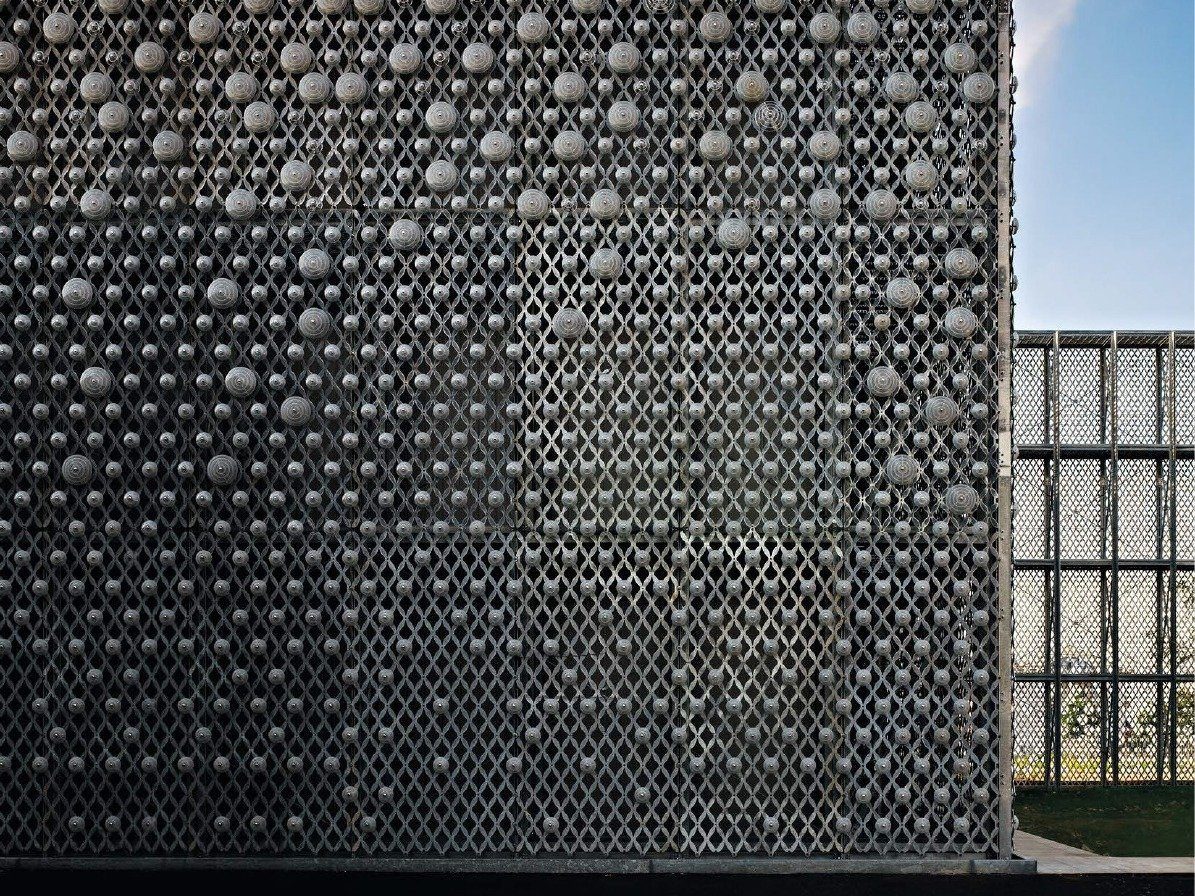
Marco Casamonti begins with a civic proposition: the inside of a privately financed building may be private, but its exterior is part of the city. That gives the façade a public responsibility. For Archea Associati, material is one of the main ways architecture answers that responsibility because it can carry the identity of a place, an institution or even the activity inside a building.
Stop classifying architecture by style
Casamonti says his office is less interested in labels such as minimalist or maximalist than in whether a project is made of glass, concrete, ceramic, metal or timber. The material is not a finish applied after the form has been decided. It shapes the form, the way a surface ages and the association people build with it. One early example is the Perfetti Van Melle factory. Rather than give the industrial building a neutral wrapper, the façade was covered with roughly 40,000 coloured glass elements that read as sweets. The envelope becomes a gallery of what the factory produces: corporate identity is communicated through material and repetition rather than signage alone. Casamonti connects that identity to the people around the factory as well: many inhabitants of the nearby village worked there, so the building became part of a shared local memory rather than an anonymous industrial object. He says that memory remained vivid two decades later and influenced how he thought about communicating place and identity on later Albanian work, including Tirana airport.
Invent a material when the brief contradicts itself
A residential project in Lugano began with a client's apparently incompatible requests: the richness and variation of marble, the colour of gold, and a surface that would not absorb dirt like stone. Archea's response was a composite glass panel. A brass fabric was stretched by hand and laminated inside the glass, while the back surface was painted in five different colours so that adjacent units would vary rather than read as an industrially uniform sheet.
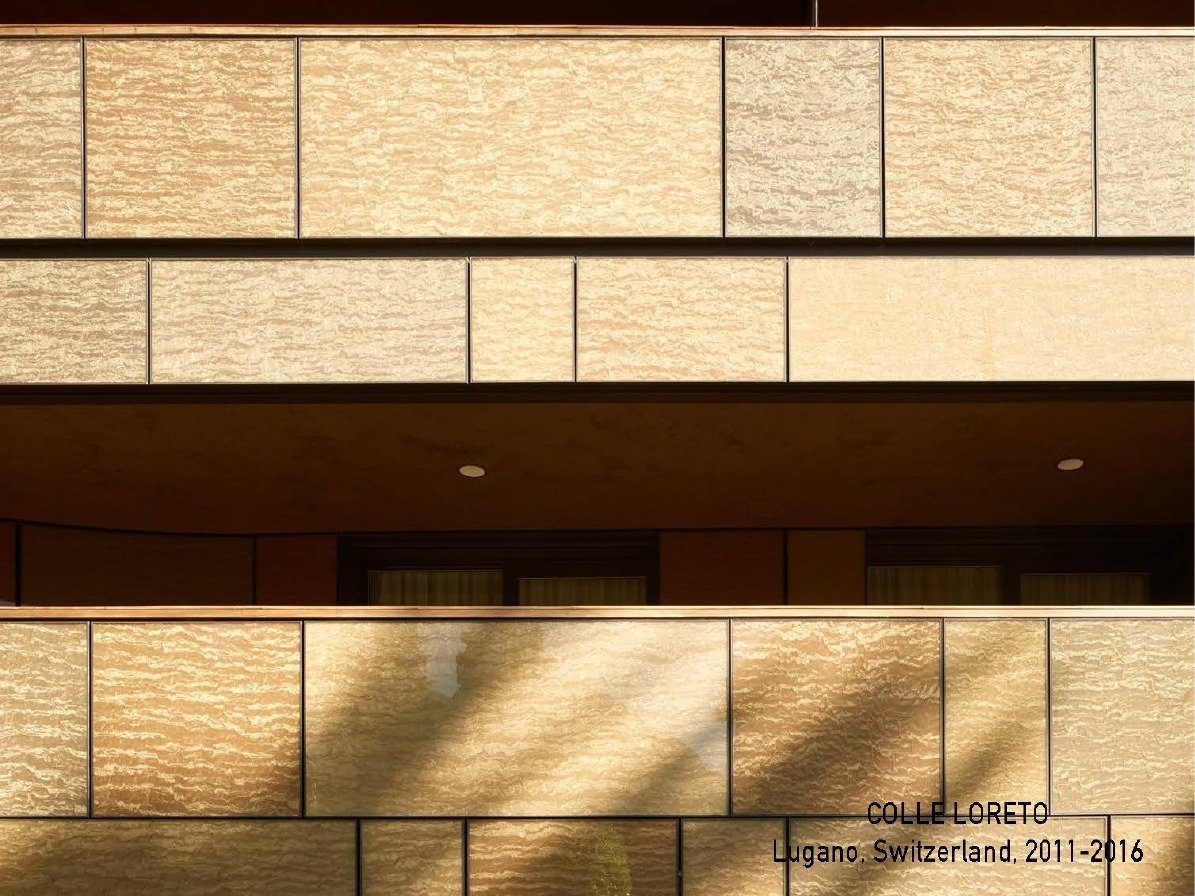
That example captures Casamonti's broader point: materials can be designed, not merely selected. The architect can combine industrial production with hand processes to achieve a quality associated with something more natural or local, while preserving material variation that mass production normally erases.
Let the place enter the material
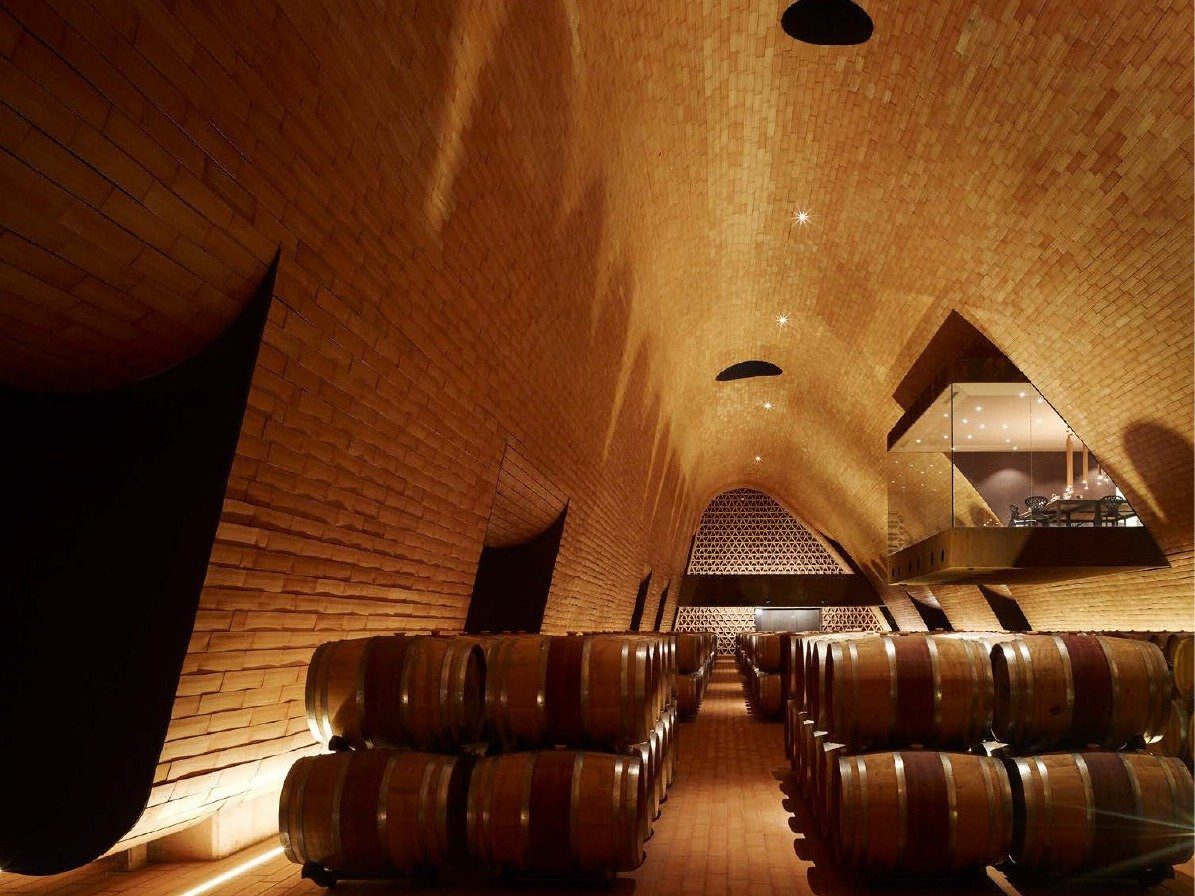
At Antinori in Chianti Classico, the relationship becomes geological. The winery is embedded in the Tuscan landscape, and the project treats earth and fired clay as part of the same architectural story. Rather than impose a disconnected façade palette, the material development takes cues from the colour and matter of the excavation and from the region's long ceramic tradition.
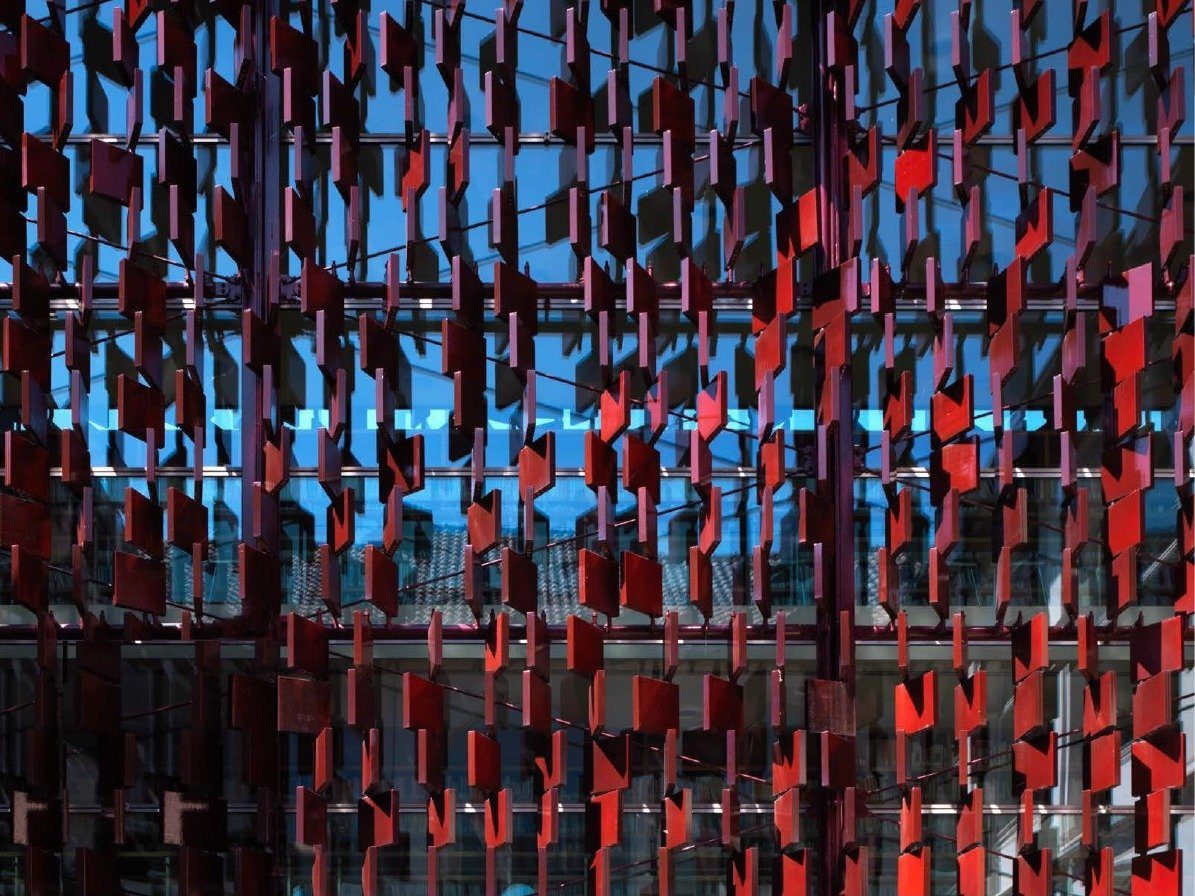
The Nembro Public Library makes the material narrative more literal. Terracotta elements are shaped and arranged as a field of "books", giving a public building an identity that can be understood before a visitor enters.
Performance can also be cultural expression
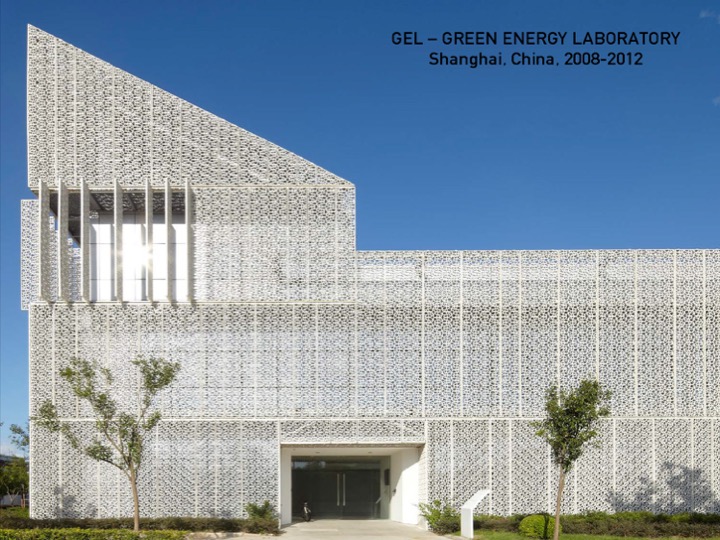
At Jiao Tong University in Shanghai, Casamonti describes a green-energy laboratory protected by an external ceramic skin. The ceramic layer shades aluminium panels behind it, reducing solar heating while allowing the building to avoid treating environmental performance as invisible engineering. The screen is therefore not an ornamental second layer: it protects the aluminium envelope behind it from direct sun and heat while remaining the most legible public face of the laboratory. Chinese characters are integrated into the ceramic screen, so the same layer performs climatically and culturally.
Casamonti's examples move between glass, clay, metal, fibre-reinforced concrete and reuse, but the method is consistent. A material should answer more than a specification line. It should explain something about what the building is, where it stands and how it will age. When that happens, the façade does not need a stylistic label to be memorable; its identity is carried in the matter itself.