


Over 100 metres, a wind-tunnel analysis is now compulsory in Gujarat. Mitul Gajjar, of Façade Engineering Services, showed what one did to a design already drawn, and what else a tall building in Ahmedabad now has to satisfy.
Mitul Gajjar started in 1995 as a fabricator and has consulted since; in Gujarat, where he began in 2012, he has done more than four hundred projects, including every airport in the state. His subject was narrow: what a high-rise façade now has to satisfy in Ahmedabad and GIFT City, and what the authorities have started asking for.
The wind tunnel is not only for the structure
Any project over 100 metres in the state must now go through a wind-tunnel analysis, and the assumption was that this was a structural exercise with nothing in it for the façade. One completed building settled that. His own analysis, to the standards, gave a design pressure of 2 kPa, and the concept drawings were done on that basis. When the wind-tunnel report came back and was applied to the façade, the figure was 2.75 kPa, and every corner had changed.
Designing the whole envelope to 2.75 would have been indefensible when seventy per cent of the building sees 2. So the field was designed at 2 kPa and the corners were given additional inserts to carry the extra pressure. That is the value of the analysis: not a single number for the building, but where on the building the number is different.
Fixing to a slab with cables in it
Clients want flat slabs and fewer columns, which means post-tensioned slabs; Gajjar has detailed façades against slabs of 300, 250 and even 150 millimetres with the tension cables in them. A fixed bracket cannot be drilled into that. So the structural team has to settle how the façade will be held before anyone details it.
The practice he recommends is a cast-in channel installed during construction, or locally strengthened concrete to bracket into. The channel costs flexibility: it buys 25, 30, perhaps 50 millimetres of adjustment, but a 1.5-metre grid cannot become a 1.2-metre grid afterwards, and it has to be executed on site by the façade engineer, the channel supplier and the contractor together. What it buys back is that the floor finish and the transom sit at level zero with no upstand, so that area stays inside the developer's FSI, which on a 120-metre building is worth counting.
Loads work the same way: they go to the structural consultant early enough for him to design for them, or a seven-metre canopy has nowhere to transfer to.
Chosen for fifty years, not for this year
Material choice is the part that cannot be revisited. Ahmedabad is at 120 and 150 metres, the tallest now approaching 165, with a 100-metre public view gallery coming. Nothing on an occupied building at that height gets repaired or replaced, so a cheaper material swapped out at ten years is not a saving. Of three of his own, one uses glass box fins rather than laminated glass, with digital printing doing the daylight control; another aluminium fins; the third clay tile, designed for 3.6 kPa with a proof load of 5.26, which passed and is now being installed.
Unitised, tested by somebody else, and then built properly
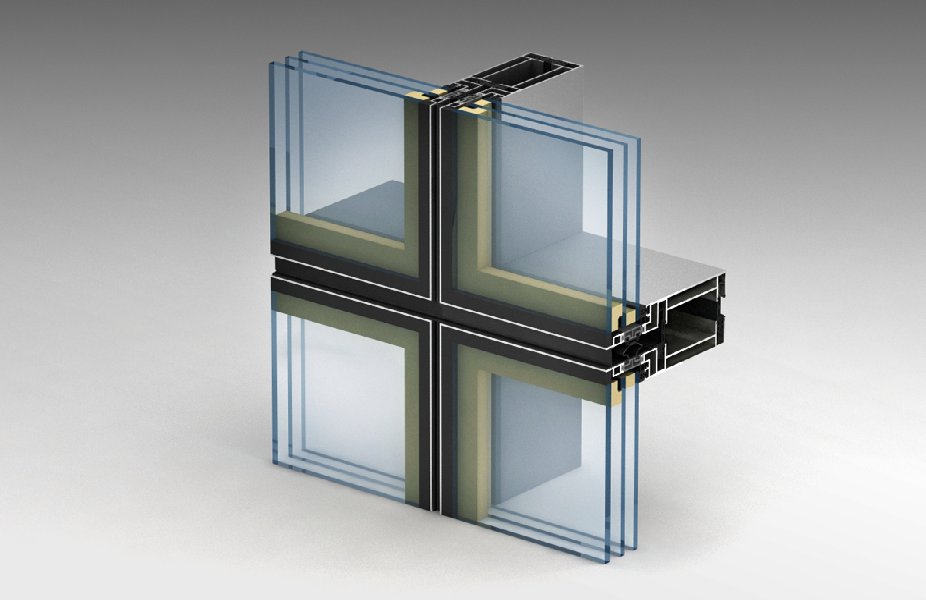
For a high-rise the first preference is unitised: prefabricated in a controlled factory environment and installed fast. Fabricators now compete on panels per day, and buildings that took eighteen months go up in six. Most of GIFT City is unitised, and in the past year Ahmedabad's residential towers have begun to follow, for the view out, as Mumbai's did. A stick system is not bad, but it needs scaffolding or gondolas and a programme a tall building does not have.
Third-party laboratory testing is now compulsory in GIFT City, with the state moving the same way: mock-ups tested against the consultant's parameters by an independent laboratory before anything is installed, because a leak at 120 or 160 metres cannot be chased afterwards. Ahmedabad tests air and water at around 200 to 250 pascals where Bombay works at 450, since the rain here is ten or fifteen days a year and the air is the constant. GIFT City has also begun inspecting façades and recording fire and smoke tests.
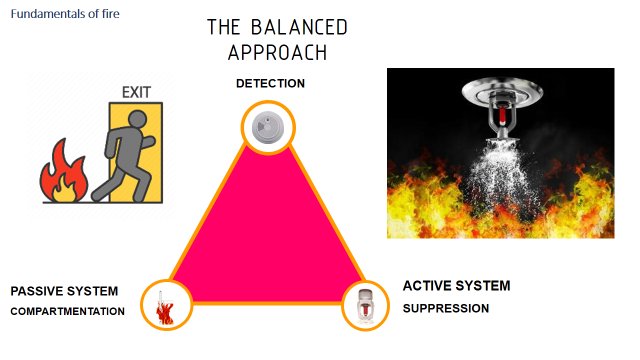
Fire is where the guidance stops being uniform. NBC 2016 is a guideline; the no-objection certificate comes from the local fire authority, and what it asks for changes by region and even within Mumbai, where one area wants side-hung openable windows and another top-hung. Get the authority's letter before the design starts and implement from day one. Above 70 metres the guidelines now reach past floor-to-floor sealing to compartment-to-compartment fire and smoke seals.
All of which is undone by poor work on site. A third-party certificate means nothing if the glazing is badly fixed, the expansion joints are missing and the joints open: the water comes in anyway, the heat comes with it, and the elevation looks wrong from close up. The repair for that is not a bead of silicone.