


TS Aditya reviewed the evolution of dry cladding systems that follow ventilated-façade principles and presented a sustainable semi-unitised sintered-stone cladding system for high-rise work.
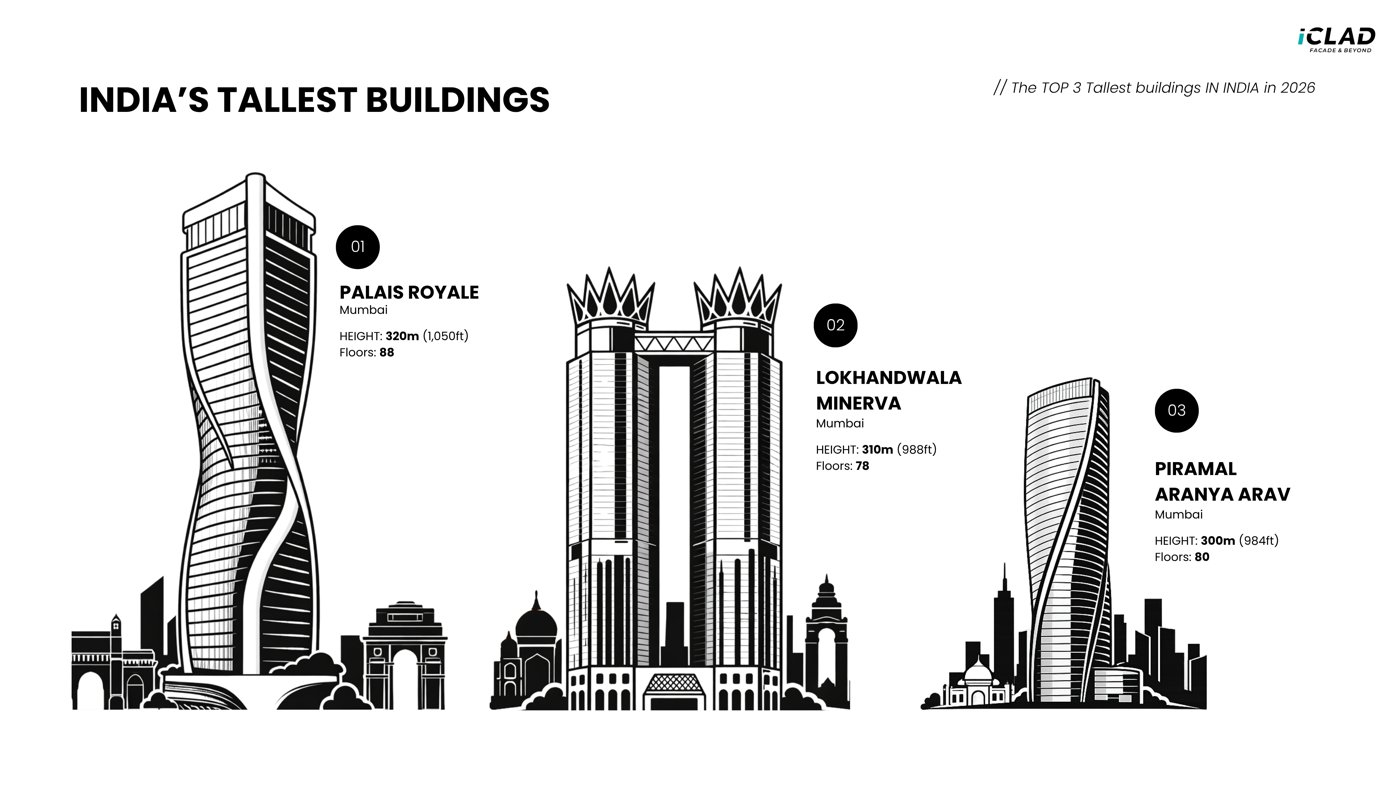
TS Aditya, of iClad, the façade division of Qutone Ceramics, opened with a definition: a high-rise is a building with an occupied floor more than 75 feet above the lowest level of fire-department access. His question was narrower than sustainability in general: how do you know the cladding you picked is the right one?
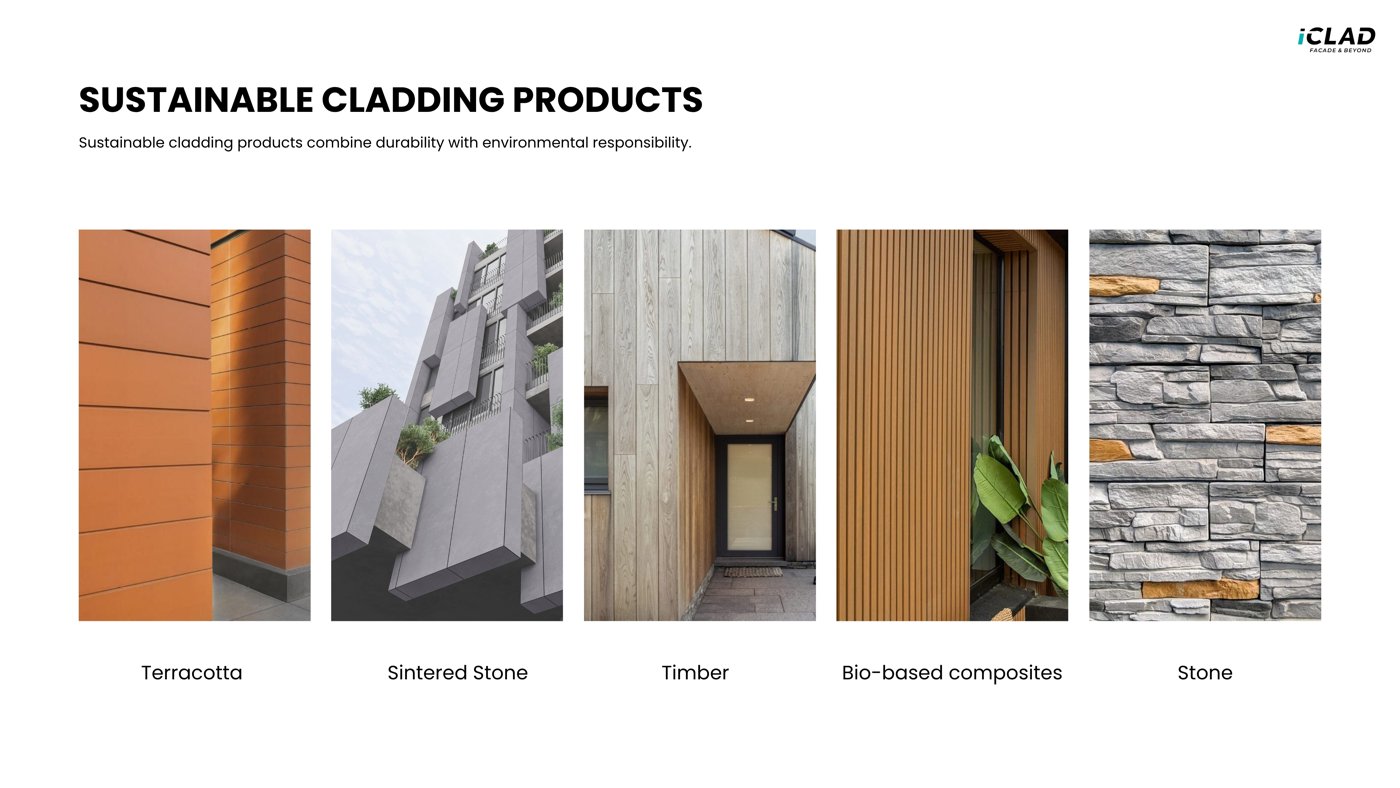
The instinct is to reach for terracotta, engineered stone, timber, bio-based composites or natural stone, on the grounds that nothing is coated on top. That is not an answer. A tropical climate turns season every three months and the ultraviolet is unforgiving, so the material has to come through many cycles still looking as it did on the day it went up.
Two numbers to ask for
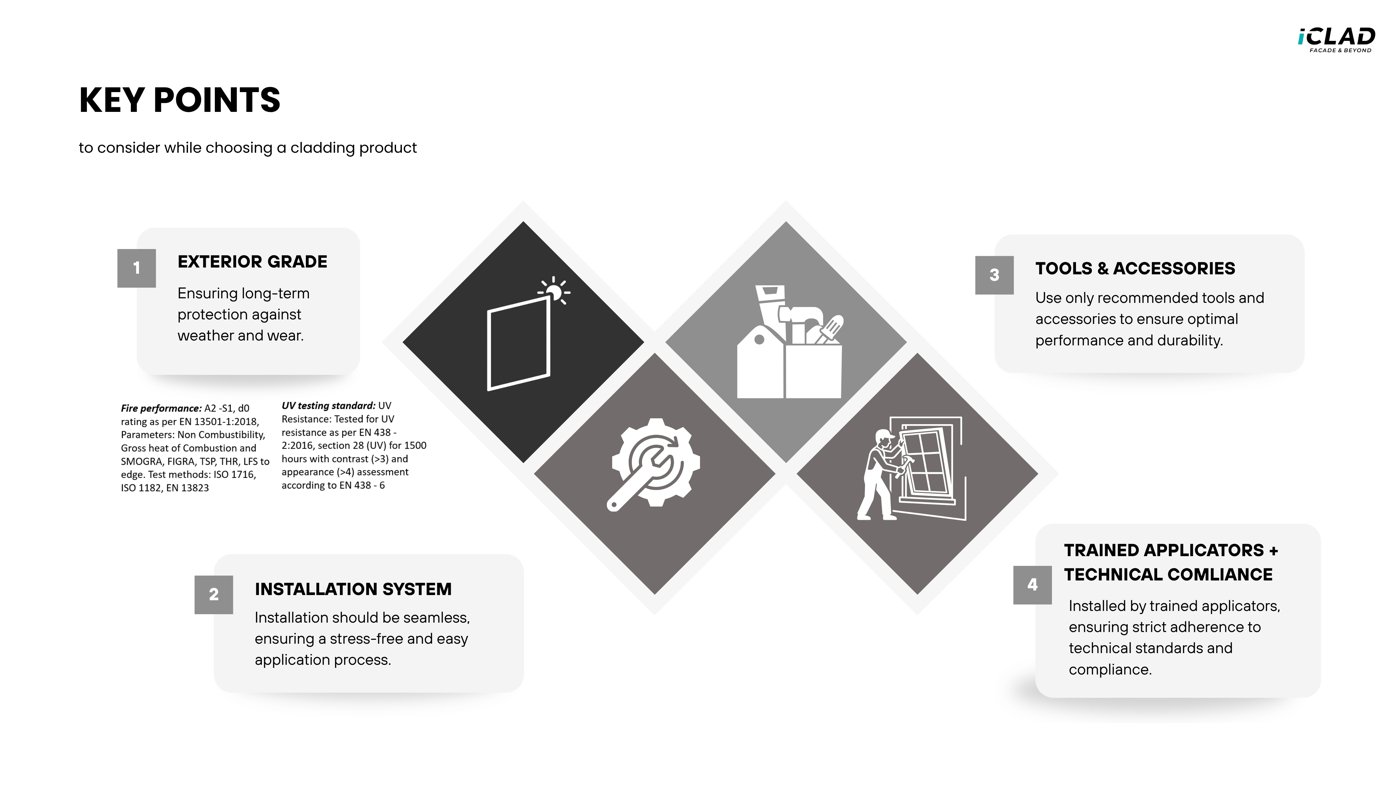
For an exterior-grade product he named two thresholds. Fire: class A1, A2 or B to EN 13501-1. Ultraviolet: a pass to EN 438 parts 2 and 6, with contrast and appearance better than three and four. A product that cannot show both may not belong on a façade.
The UV number is the concrete one: a greyscale of one to five, five being no fading and one nearly white, run on an Atlas machine for 1,500 hours. Their panel comes out at four and four, above which even a spectrophotometer will not separate the colours.
The fire classes, in three sentences
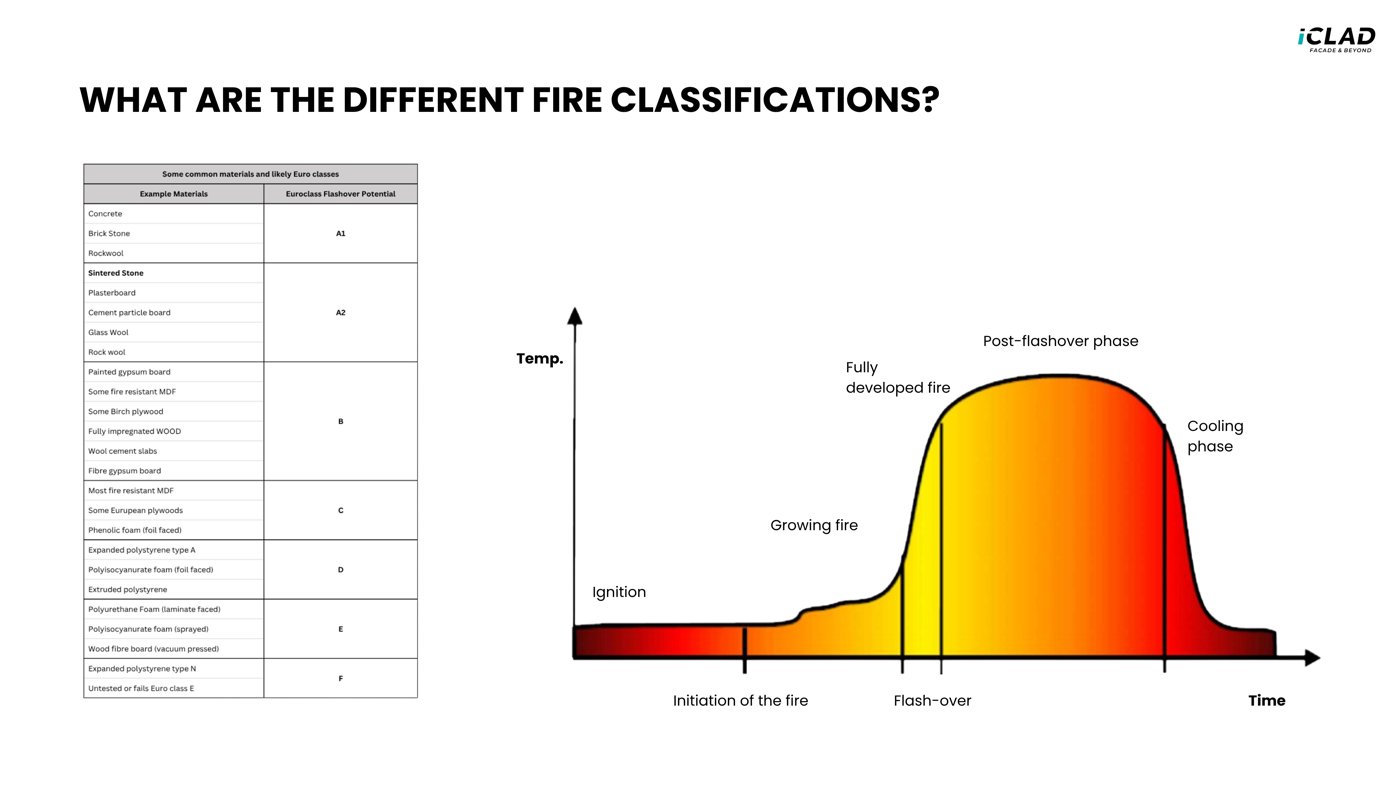
A1 never reaches ignition: no component of it can burn. A2 lets parts degrade thermally without the panel losing integrity: in glass wool the adhesive can go while the material stays. Class B is flame retardant: it burns while a flame is held to it and retards itself once the flame is removed.
Below that the arithmetic turns. From class C to F the interval between a growing fire and flashover potential is five to ten minutes, which means the façade can fail before the interior it is protecting has fully caught. Their panel is classified A2-s1,d0, and after the test there was soot on the surface but neither panel nor substructure had come away.
Why 25,000 tons matters
Sintered stone is clay, feldspar, silica, titanium dioxide and bentonite. An ordinary tile is pressed at 8,000 tons with a binding agent to fuse the clay; a porcelain slab at 15,000, which is why it survives a kitchen counter. Add bentonite and press above 25,000 tons and three things change: the binding agent is unnecessary, porosity falls to almost nothing, and flexural capacity roughly doubles. The last is why it works as dry cladding up high: flexural capacity is what takes the deflection under wind load, where an ordinary exterior tile is brittle and cracks.
The titanium dioxide in the glaze does a second job. Ultraviolet starts a photocatalytic reaction that lifts dirt off a superhydrophilic surface and converts the sulphur and nitrogen oxides from traffic and refrigeration into harmless polyatomic ions. Clad 10,000 square feet, he said, and the effect is equivalent to planting 68 poplars over 20 metres tall.
The cavity, and the training nobody budgets for
Behind the panel the system is rear-ventilated: a cavity of about 20 millimetres, vented top and bottom, so air enters low, warms, grows less dense and leaves through the top, on the principle of a hot air balloon. That buys a thermal barrier that takes real load off the air conditioning, hides cracking in the wall behind, braces it, and cuts noise. Fire stops at the dead-wall openings expand in a fire and compartmentalise the cavity, so flames coming out of a window cannot climb to the next compartment.
His last point was about people. Installation belongs to a trained façade contractor working to shop drawings the consultant and architect have approved. But the crews doing the fixing are usually not on that contractor's payroll, and a subcontracted team can arrive without knowing the product at all, which is why he argues manufacturers should train those teams too.