


Olin McKenzie explores two projects in which façade character comes from disciplined structure and a limited material palette, showing how restraint can turn concrete, precast and perforated metal into environmental and architectural systems rather than applied decoration.
Removing cladding changes priorities
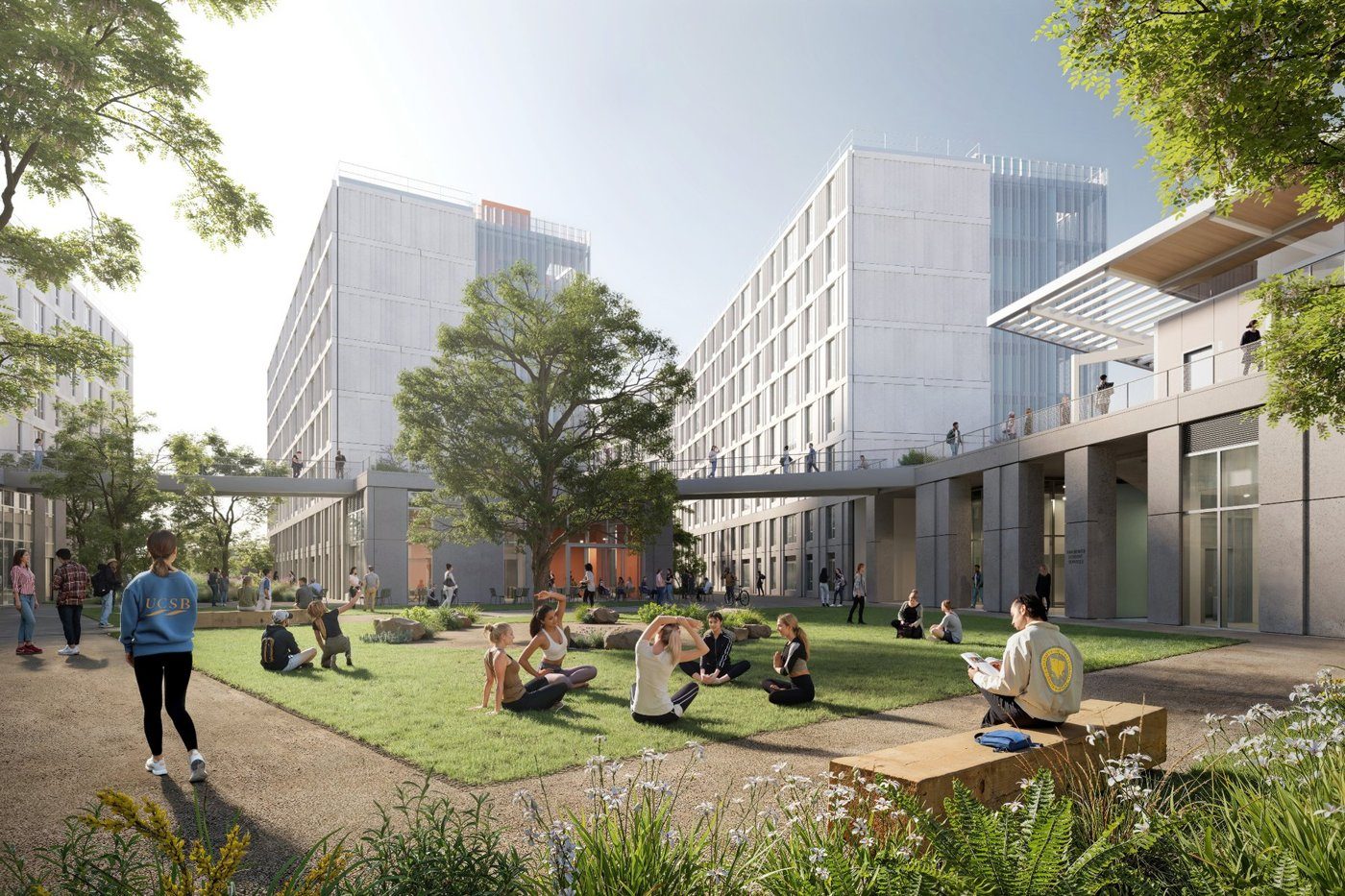
For a trophy office project developed after the pandemic, the team questioned the assumption that a premium building needed an all-glass skin. Framed views were treated as potentially more valuable than uninterrupted panoramic glazing, and the design explored whether the cast-in-place concrete structure itself could become the exterior expression. That move collapses the usual separation between frame and cladding: proportions, formwork quality, joints and weathering all become façade design decisions.
Limited palettes create depth
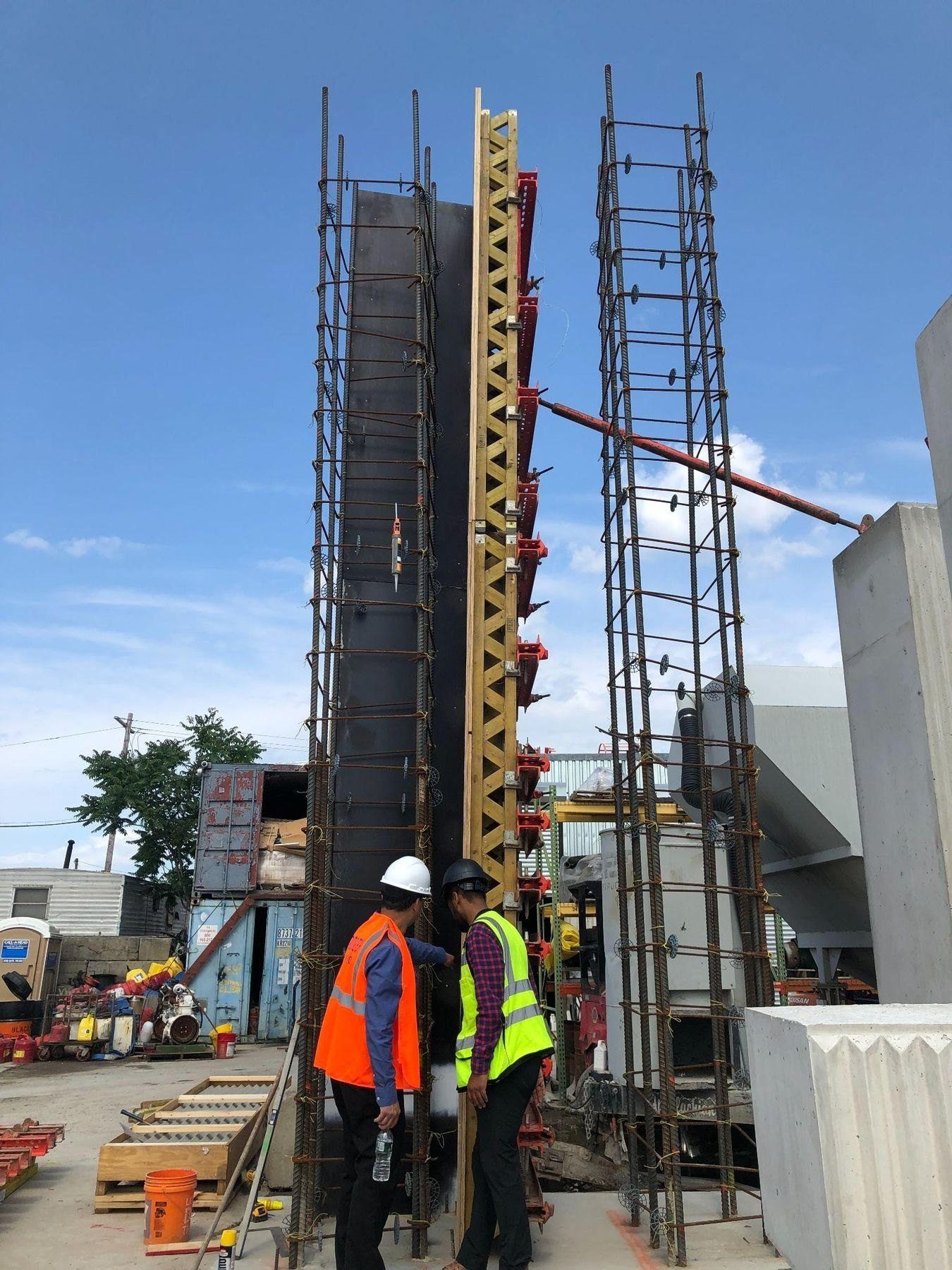
A second project uses large precast 'mega panels' across most of the envelope, with perforated corrugated aluminium at stair towers. The limited number of components creates discipline, but panel depth and joint placement prevent the repetition from becoming flat. Working with the precast fabricator, the team pushed for greater relief so that shadow would become an active part of the elevation.
Restraint supports performance
Reducing the number of materials can simplify interfaces and make performance responsibilities clearer. Exposed structure eliminates some secondary cladding layers, while precast mega panels reduce joint count. Those benefits are not automatic, concrete still needs weathering, thermal and water-control strategies, but they show how an architectural decision can also change the technical risk profile.

Depth replaces surface novelty
McKenzie's examples show that a façade can remain expressive when the palette is deliberately narrow. Once multiple claddings, colours and feature systems are removed, small changes in structural depth, opening proportion and shadow become more important. Concrete, precast elements and perforated metal can create variation through repetition rather than through a collection of unrelated finishes. This places more pressure on the underlying grid: if the rhythm is weak, there is little decoration available to disguise it. The benefit is a clearer relationship between façade and building. Openings correspond more directly to structure and programme, and depth can be used to shade glazing or protect circulation while also giving the elevation character. Restraint is therefore not simply an aesthetic preference for minimalism. It can reduce the number of interfaces, simplify maintenance and make environmental devices legible as part of the architecture.
Repetition can do work
A repetitive façade is often criticised as monotonous, but McKenzie treats repetition as a framework within which performance can be tuned. A standard bay can establish the basic construction and then vary in porosity, projection or infill where orientation and use require it. The key is to keep those variations within a family so that procurement and installation remain controlled. The architecture gains depth without turning every panel into a bespoke component. This approach also makes ageing easier to understand. Fewer materials mean fewer differential weathering patterns, sealant interfaces and replacement cycles. A robust concrete or metal element can acquire patina while the overall composition remains coherent. The lesson is useful for projects under cost pressure: design quality does not depend on adding another layer. It can come from deciding which layers are unnecessary, then using structure, shadow and repetition more precisely.