Reza Kabul took four decades at once: postmodern cornices to AI-controlled louvres, what the industry in India actually installed along the way, and a stainless steel samadhi where no two pieces of marble are the same.
Reza Kabul ran through four decades of his own practice, and his premise was that a façade is not an independent layer but the result of a building's inner logic. The story starts inside and comes out, or starts outside and works in; either way it is the first thing anybody sees.
Four decades, in order
The 1980s were postmodern: cornices and classical ornament brought onto the elevation, precast concrete cladding, granite or stone set against glass, and a symbolic reading attached. The 1990s brought high-tech glass and structural glazing, with the services pushed outside and expressed, as at Lloyd's in London in 1986. The 2000s brought the digital tools, BIM and parametric form, and with them the diagrid, as at the Gherkin. From 2010 came double skins, planting and deep overhangs for shade, as at the Parkroyal in Singapore. The 2020s are smart and biophilic with a net-zero ambition: AI-controlled louvres, living walls, mass timber cladding, skins that open and close with the light and the heat, recyclable cladding, and embodied carbon as a number somebody checks.
What pushed it along was partly conscience and partly capacity. The climate crisis arrived once the industry had built enough to notice the damage; computational power grew exponentially; material science produced aerogels and films; research into occupant well-being made the biophilic argument; and digital fabrication made the drawings buildable.
The Indian version of that history
The typologies moved with it, single skin single glazing first, which took in a great deal of heat but was all there was, then curtain walls. Kabul was blunt about how that went here: the curtain wall was copied, but with annealed glass, because clients were not prepared to spend. It stayed that way until there were accidents, and only then did double glazing and the rest get adopted. Double skins followed in the 2000s, then active and adaptive skins.
Which leaves an architect choosing on four things: whether the design is climate-responsive, whether the design intent is coherent, budget and life-cycle cost, since developers here are price-conscious and price-sensitive, and performance, because the glass has to deliver what was specified.
His forecast for the next decade is specific enough to be checked later: self-healing materials, concrete carrying bacteria that precipitate calcite into cracks on their own and take a façade past a hundred years; algae bioreactor skins; printed and robotic façades; photovoltaic façades; AI deciding how much light a building admits in order to optimise its energy; and façades built to be taken apart.
What is on the boards
The fintech hub in GIFT City is the argument in built form: a modular pixelated skin over shifting volumes, solid played against void, with sky gardens and deep recesses that make the silhouette and do the shading. Auditoriums and shared amenities, startups, accelerators and the GIFT offices each get their own zone and their own recesses, which matters when Gujarat reaches 48 to 50 degrees, and green terraces on intermediate floors take heat out of the building.
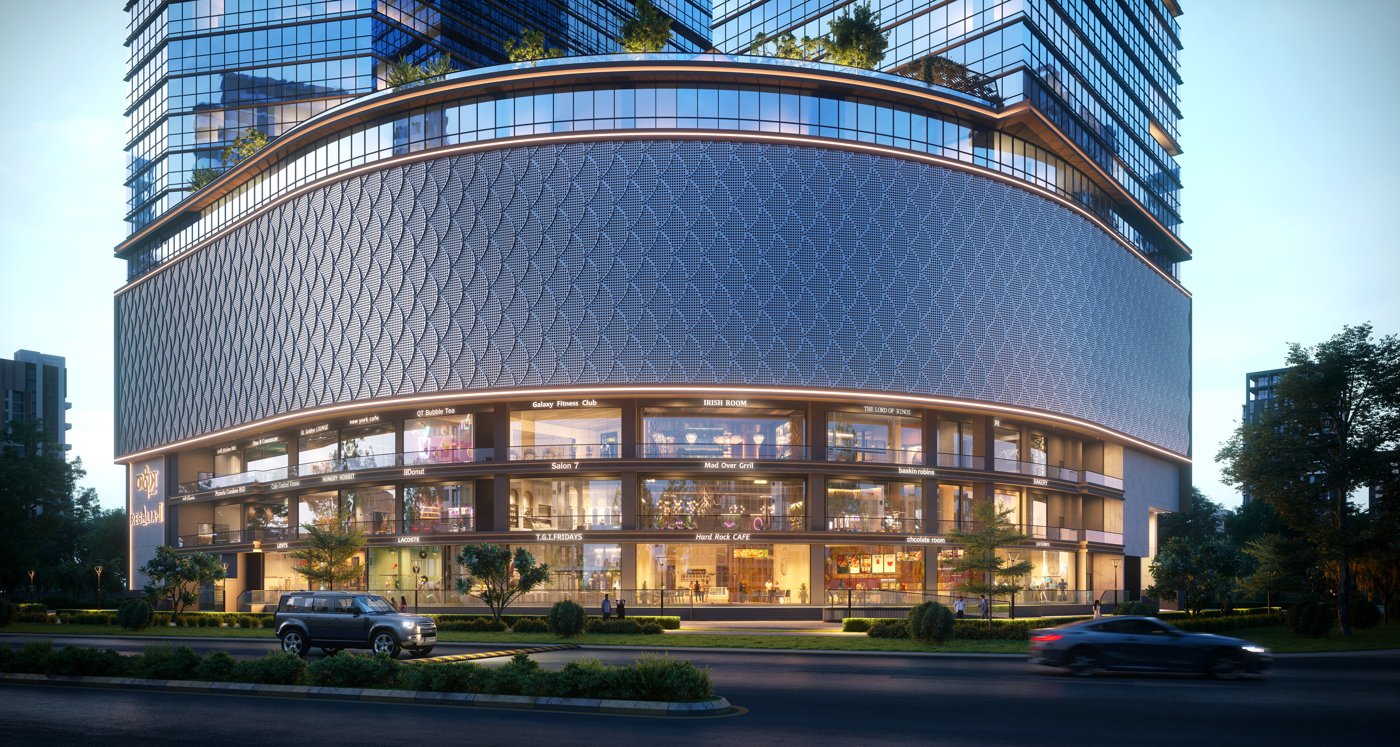
A multi-level car park in the same city carries five basements of public parking, retail above, and a perforated mesh screening the tower parking, with two towers and a globe between them holding a restaurant and an observatory. The two towers move independently, so the globe is fixed on one side and sits on a movable joint on the other, and the whole steel sphere is being fabricated at ground level to be lifted into place.
The one that was not about glass
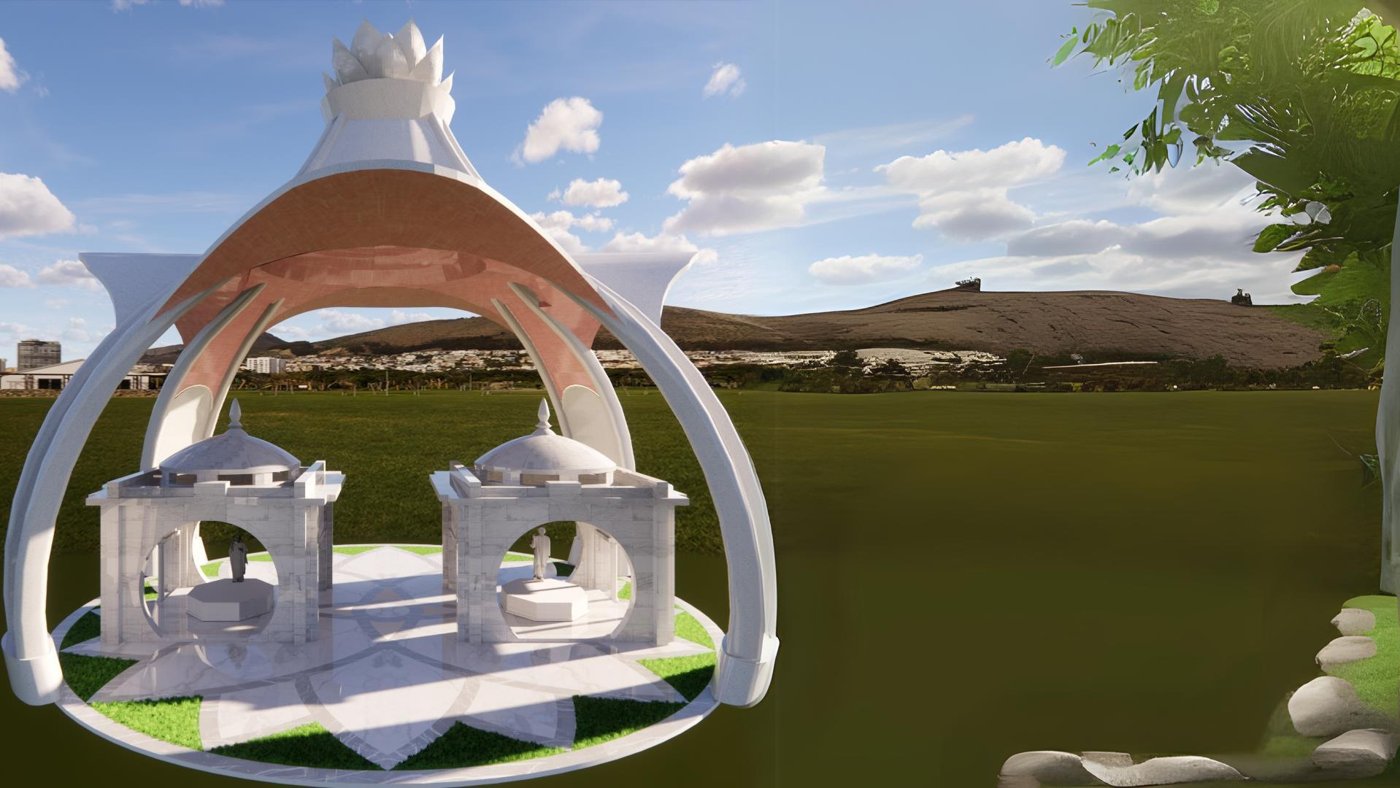
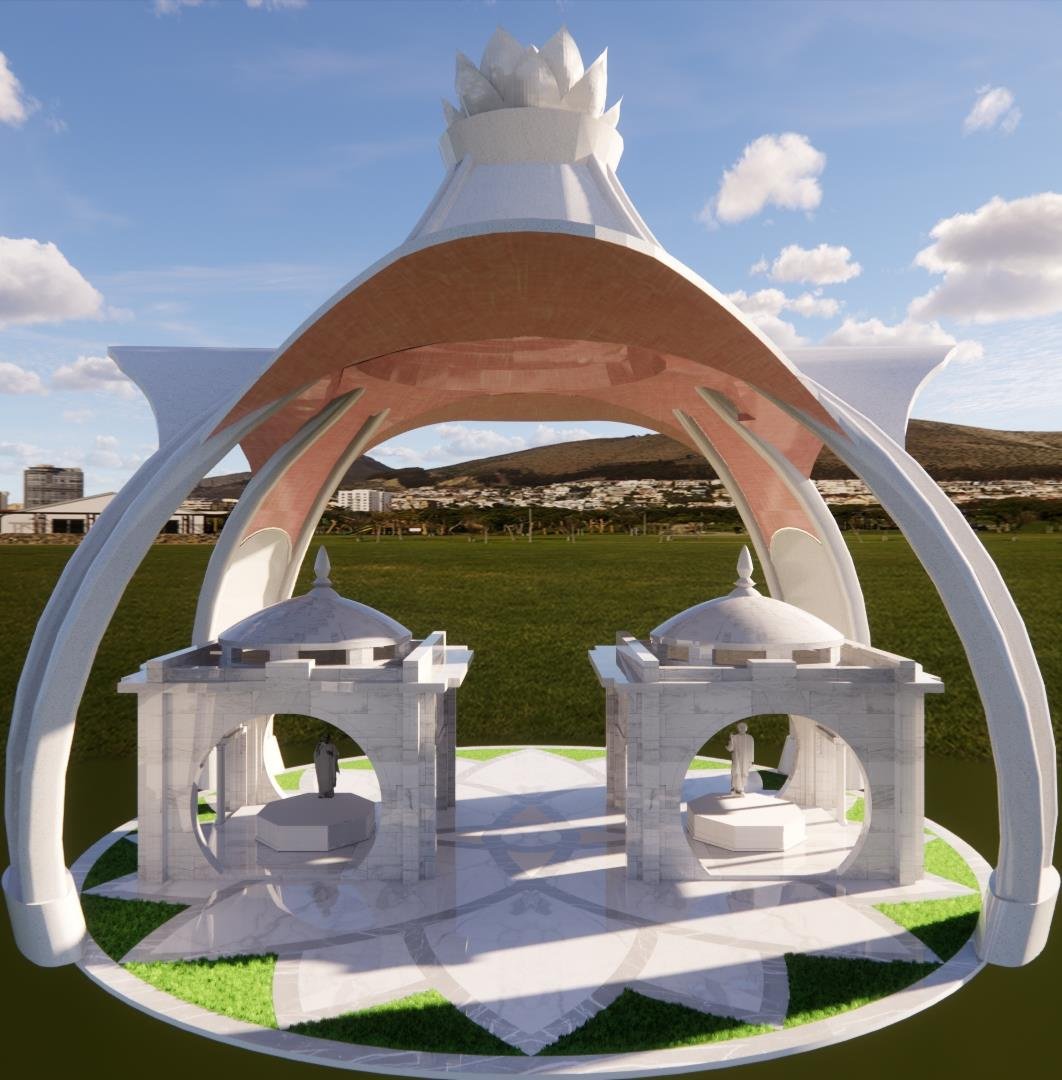
The last project has no curtain wall in it at all. For the Sadhu Vaswani Mission in Pune, two samadhis had to become one, and the design took the mission's own terms, equality, unity, peace and love resolving into oneness, as its geometry, with a lotus on top: 19 metres tall and 20 across.
It had to look thin, so it is a steel structure, and because steel has a lifespan the trustees chose stainless throughout. It is clad in Makrana marble, sourced specially. The difficulty was that the geometry is parametric and runs in four directions, sometimes five, so no two pieces are alike: every marble panel is its own size, curve and shape, 75 millimetres thick, cut and then cleated into stainless steel plates on angles, with a male-female joint holding it. Marble on the underside of the roof would have been a fight, so the roof is Corian instead, with the marble kept where it is seen. Grasshopper, the parametric model and BIM are what made it possible to fix at all.