


Russell Cole and Neville Grunwald argued that the Building Safety Act is not a narrow fire-compliance exercise: it changes duty, evidence, competence and the way every project team must coordinate.
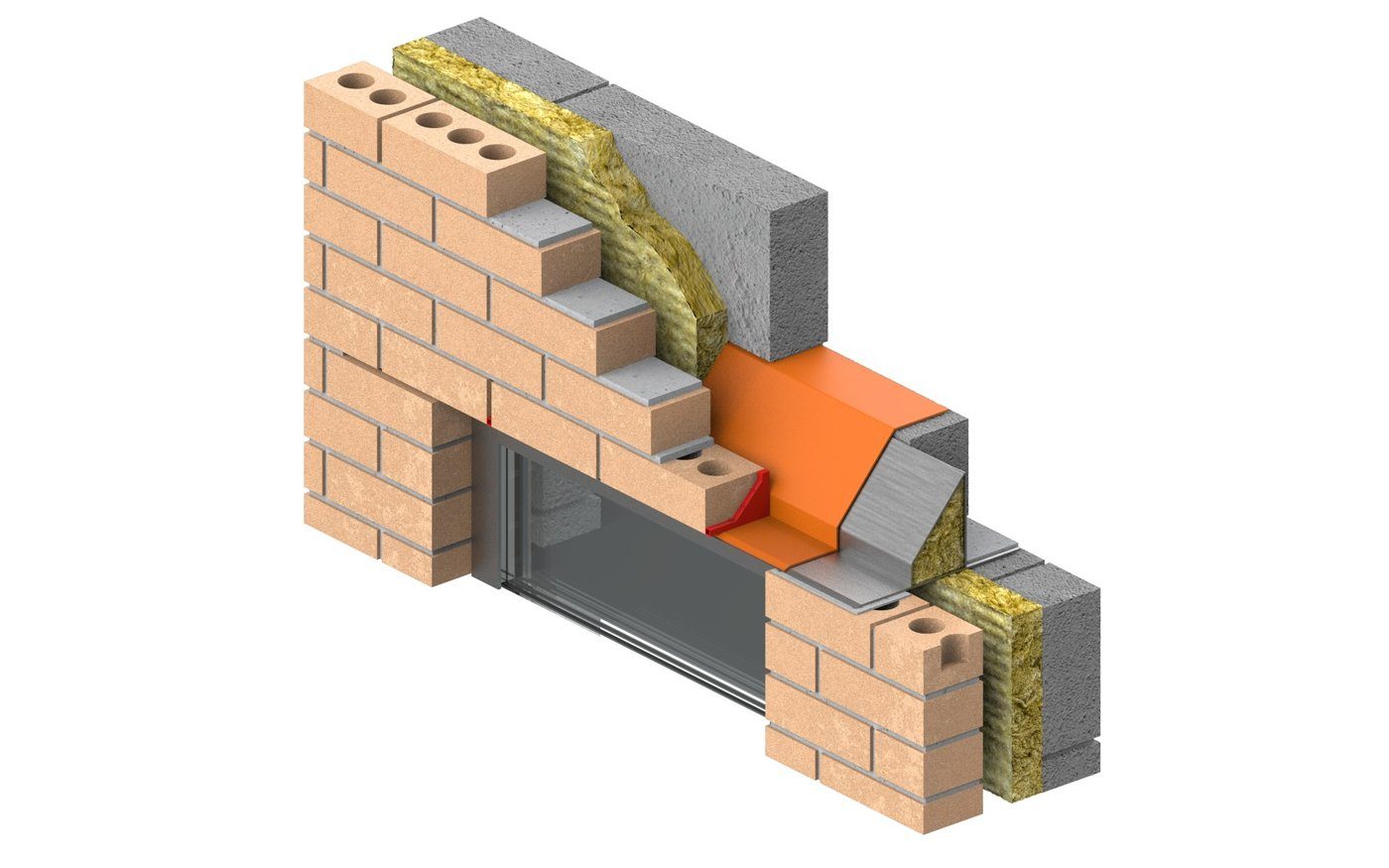
Russell Cole and Neville Grunwald treated the Building Safety Act as a change to project behaviour rather than a specialist fire-safety topic. Their argument was that the new regime reaches into design responsibility, procurement, competence, evidence and the way teams record what is actually built. Façade specialists may feel its effects particularly strongly because envelope performance depends on multiple products and interfaces, but the underlying duty is broader: projects have to demonstrate that compliant decisions were made by competent people and then carried through into construction.
The Act changes ordinary project routines
Cole set out the duty-holder structure, the gateway process and the golden thread as parts of a single shift towards demonstrable responsibility. The Building Safety Regulator may be most visible on higher-risk buildings, but the speakers stressed that competence duties and Building Regulations obligations do not stop at that boundary. The practical consequence is earlier engagement with compliance. Designers, contractors and specialists need to know which requirements they are satisfying, who owns each decision and what evidence will survive after the meeting where the decision was made.
Gateway 2 exposes unresolved design
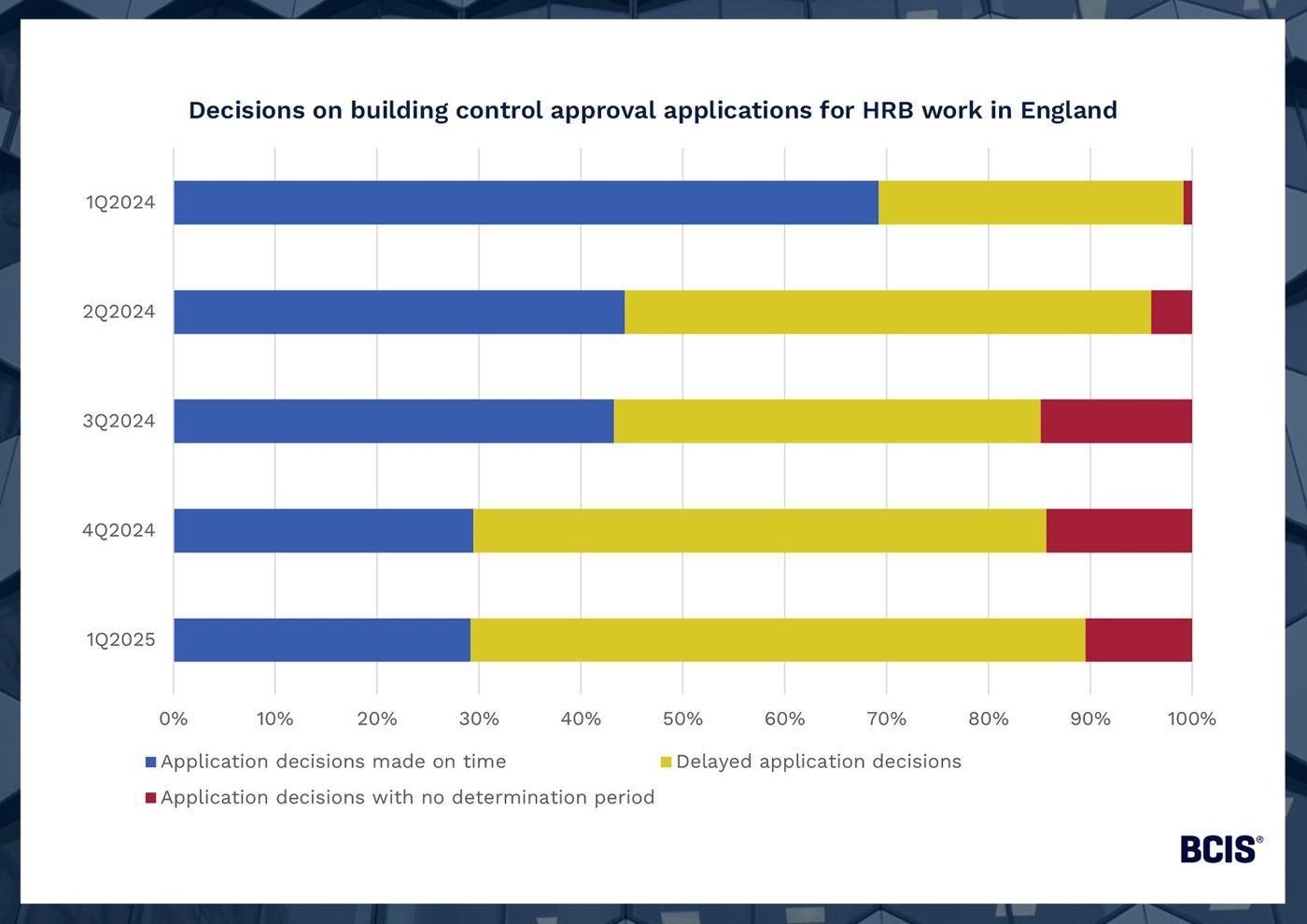
The pair used published regulator data to show the effect of incomplete submissions. Between October 2023 and March 2025, the figures he cited showed 2,108 applications, 1,091 decisions and 331 approvals, with an average decision time of 25 weeks and 36 weeks for new-build schemes. Those delays are not simply an administrative inconvenience: they can reshape construction programmes and procurement. Cole's message was that teams cannot rely on resolving essential design information after approval. A Gateway 2 submission needs a coherent compliance case, supported by sufficiently developed drawings, specifications and change-control thinking.
Competence belongs to the whole chain
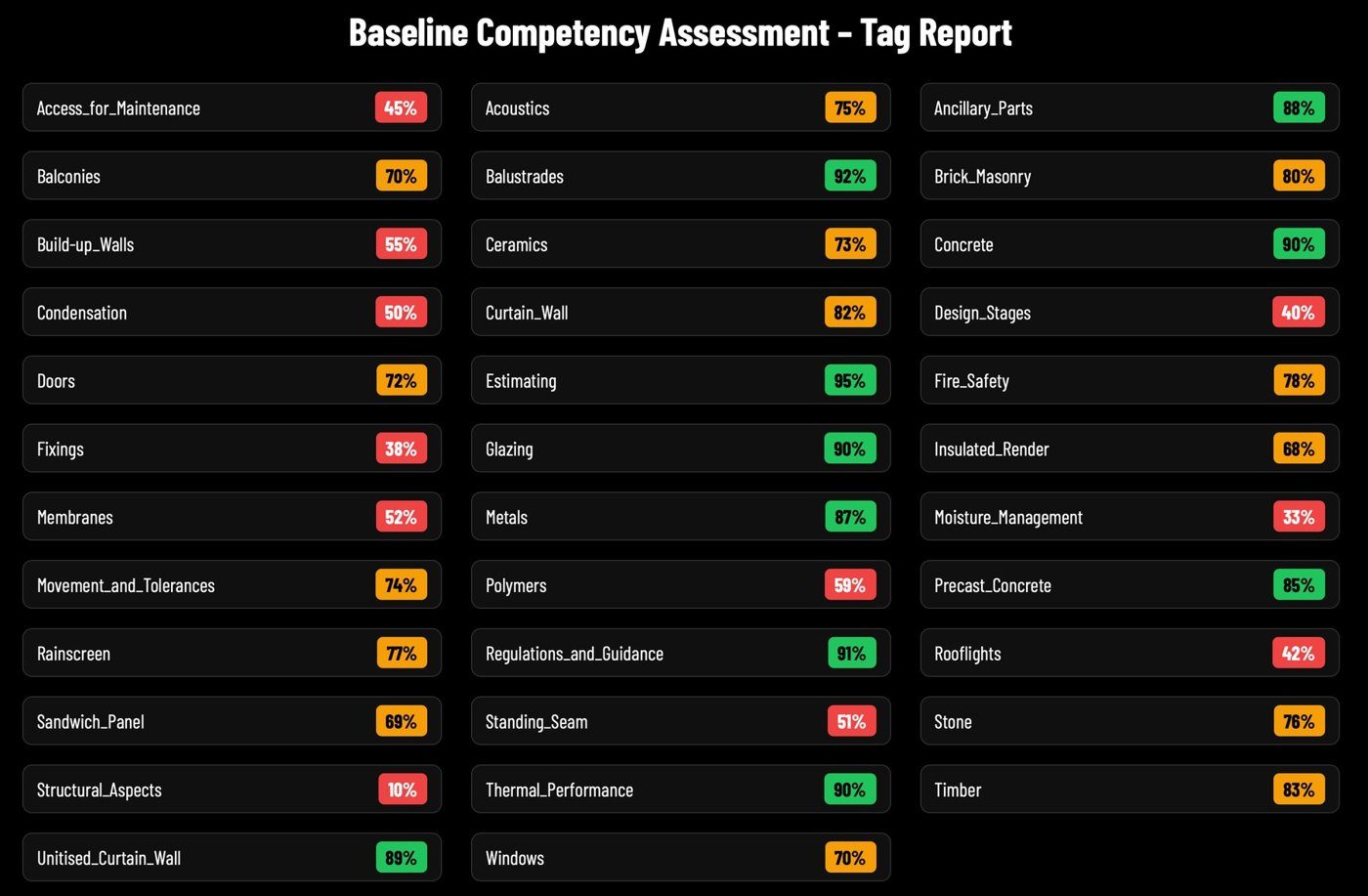
Grunwald focused on competence as skills, knowledge, experience and behaviour. He also made a sharper behavioural point: competence includes being able to pause when a request exceeds what you know and give a responsible “no” rather than carrying on because the programme demands an answer. That is particularly relevant in façades, where a design manager may understand coordination without being the structural, fire, thermal or acoustic specialist. Knowing where one discipline ends and another must be brought in is part of the competence evidence the new regime expects. He rejected the idea that a single training card can prove competence for an entire façade package. Design, estimating, sales, procurement, manufacture, site work and project leadership all require different evidence, and competent practice also includes knowing when a task is outside one's expertise. The emerging competence work he described uses levels from trainee to expert so organisations can identify what a role actually requires instead of assuming that long service alone is sufficient.

Quality assurance must describe the building that exists
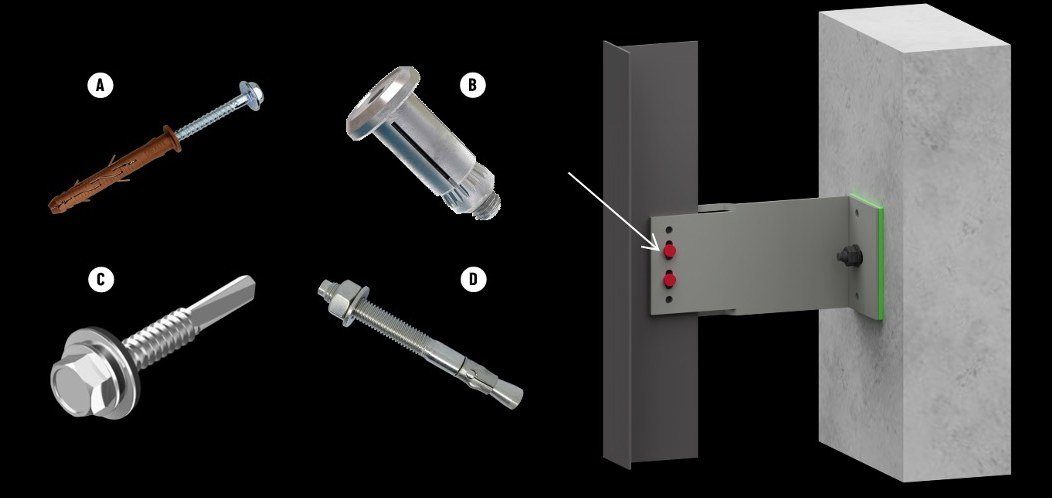
The strongest criticism was reserved for tick-box quality systems. Grunwald noted how often intrusive investigations reveal construction that does not match the nominal as-built drawings. Under a regime built around traceable information, simply changing a drawing status from construction issue to as-built is not enough. Records need to capture changes, products and interfaces as they are installed. The same principle applies to certificates and specifications: information from different parts of the supply chain has to align rather than creating contradictory evidence.
For Cole and Grunwald, competence is also the ability to say no when a task sits outside a person’s skills, knowledge, experience or behaviours. That matters because a compliant submission is only one milestone; the information has to remain credible through construction. They were particularly critical of “as-built” records that simply reproduce intended drawings. QA should prove what was installed, capture departures and leave the next dutyholder with evidence that adds value rather than another unchecked document set.
Cole and Grunwald's conclusion was not that the industry needs more documentation for its own sake. It needs fewer gaps between design intent, competence, procurement and reality on site. The Building Safety Act makes those gaps harder to ignore, but closing them can also reduce the cost of rework and defects. Compliance becomes most useful when it improves the building rather than merely proving that a form was completed.