


Robert Weitlaner made a practical case about closed-cavity façades, they are coupled thermal systems, not just a g-value. Solar radiation, the perforated blind, the glass and convective airflow create temperature stratification and local hot spots that simplified calculations miss, so the design must specify both energy performance and component temperature limits.

Weitlaner, who runs Hella’s innovation laboratory, was blunt: in a closed-cavity façade, good optical performance or a good g-value does not automatically mean low thermal risk. What matters, he argued, is understanding where heat builds up, when temperature peaks occur and which simplified calculations can hide local risks, a subject Hella, he noted, studies with research partners and technical institutions, because it demands façade engineering, building physics and simulation together. Closed-cavity venetian blinds are already in real buildings at scale, such as 22 Bishopsgate in London, which turns assumptions about glass, shading, colour and airflow into real design risks.
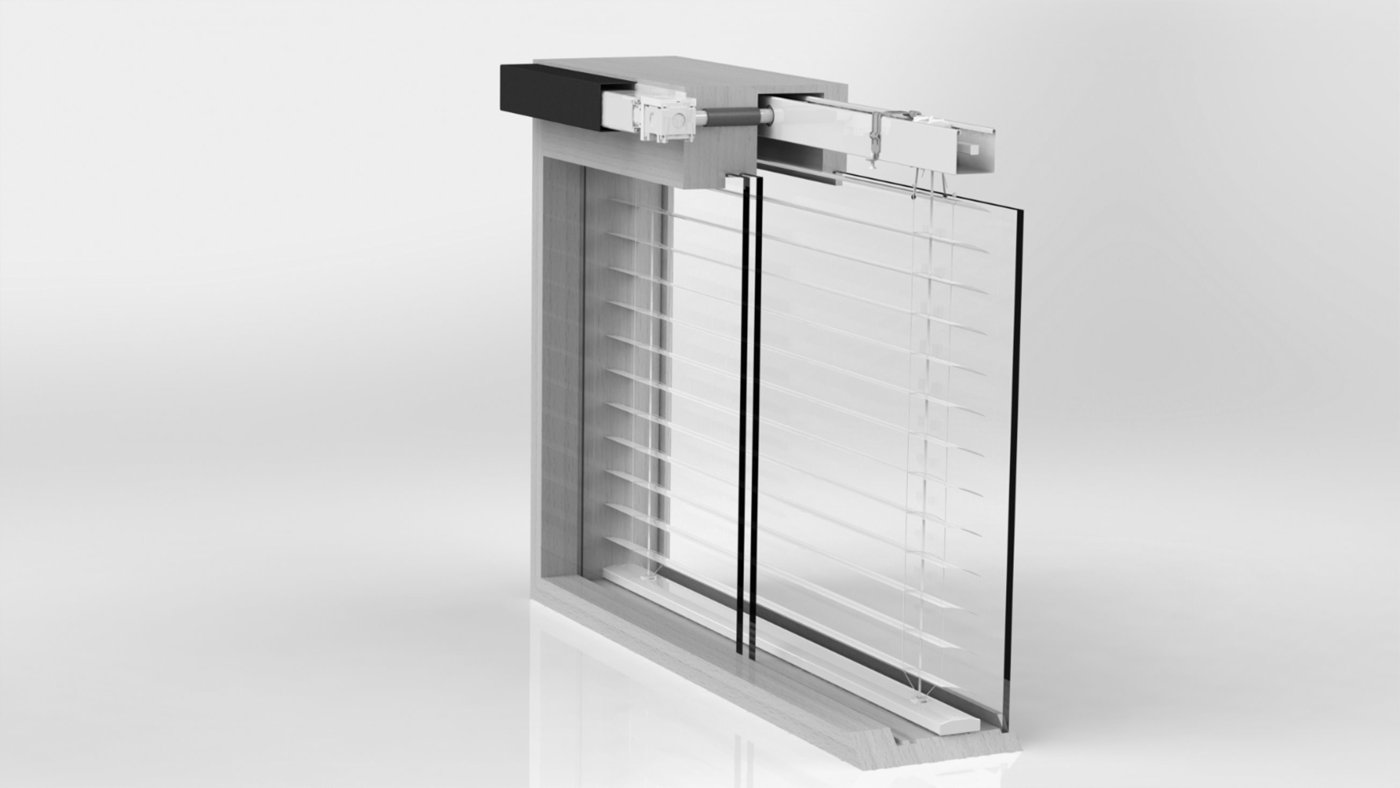
First, the type of system. Composite windows, closed cavities and double-skin façades are related but behave differently: in a closed cavity, exchange with indoor and outdoor air is limited or controlled, which makes the thermal behaviour less intuitive and more dependent on internal heat build-up and airflow.

Simulating it properly, he said, starts with three inputs. The perforated blind comes first, slat geometry, perforation, reflectance, absorptance and transmittance are not decorative details but define how much radiation is transmitted, reflected or turned into heat inside the cavity. The glazing system is second, glass make-up, coatings, ventilation state, interior blinds and profile colour shape the outcome, and if they are over-simplified you get a good-looking g-value but miss a local overheating risk. The simulation method is third, steady-state or pseudo-dynamic tools are useful for screening and centre-of-glass values, but they do not capture stratification, local profile or spandrel effects, or transient heat storage, and that is where detailed CFD and finite-element methods become relevant.
Three findings followed. Temperature stratification evolves over time: solar absorption heats the blind and adjacent glass, warm air rises and temperature peaks move to the top of the cavity, where a COMSOL model predicted local maxima significantly higher than simpler tools, which do not resolve the vertical temperature distribution. Airflow is active, not passive: a buoyancy-driven recirculation forms, shaped by temperature gradients, cavity depth, slat angle and permeability, changing where heat is stored and which surfaces receive it. And the g-value itself can mislead, a low g-value on the indoor side is good, because less solar heat reaches the room, but the heat does not disappear; it can stay inside the cavity.
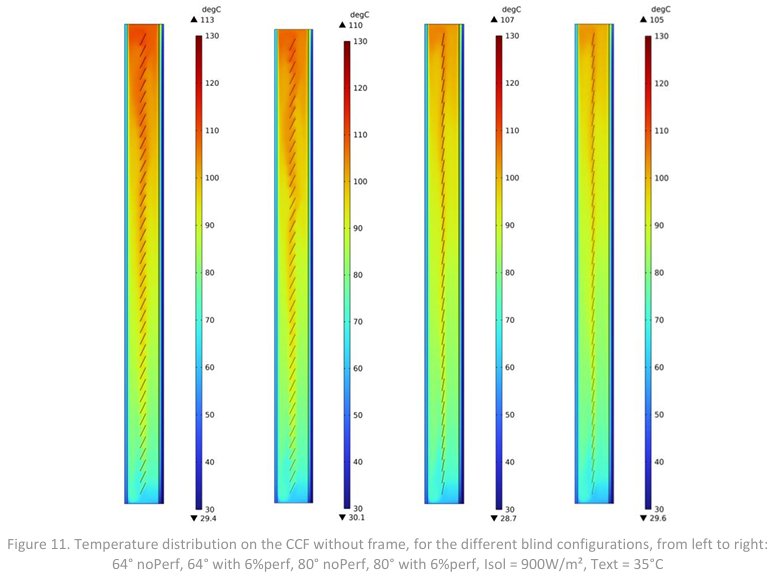
The tools question, he stressed, is not which is good or bad, but matching the method to the decision’s risk: simplified tools for quick screening and g-value assessment; detailed CFD or finite elements when local maxima, dark spandrels, profile details or transient overheating risks are at stake.
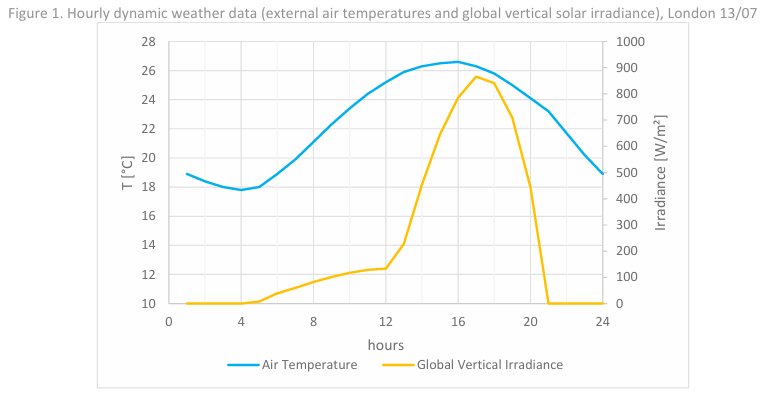
The practical implication was simple: specify both energy and temperature requirements. A low g-value reduces solar gain on the room side, but component temperatures and local maxima are distinct acceptance criteria, and hot spots at the top of the cavity and near the profiles cannot be hidden behind average values.