


Ashwanii Khanna made the case for exterior high-pressure laminate in a city that runs from 45 degrees to four, arguing that the ventilated cavity behind a panel does as much of the work as the panel itself, in heat and in fire alike.
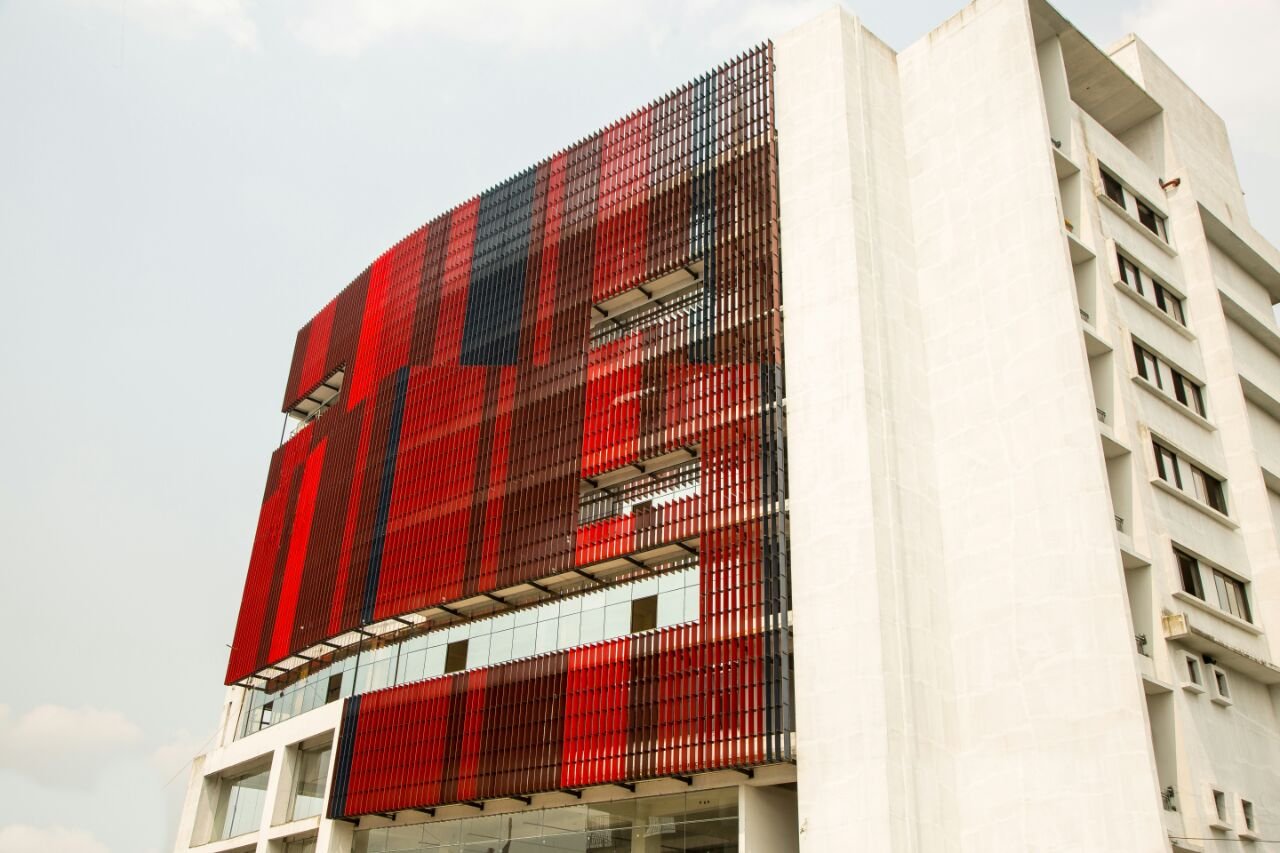
Laminate was an indoor material. Khanna dates the shift to roughly twenty years ago, when the industry was offered a laminate meant to sit outside and meet weather it had never been asked to meet. The panels are 65 per cent kraft paper, sourced from FSC and PEFC certified wood. Four fifths of the plant's energy comes from biomass, carbon is down 30 per cent against a 2005 baseline with 50 per cent targeted by 2030, and production waste either returns to the line or becomes heat for more than 100,000 households. Khanna's own test is blunter than any of those figures. Sustainability in construction, as he puts it, means not having to build the thing twice, and he reaches for the Taj Mahal.
What the city actually does to a skin
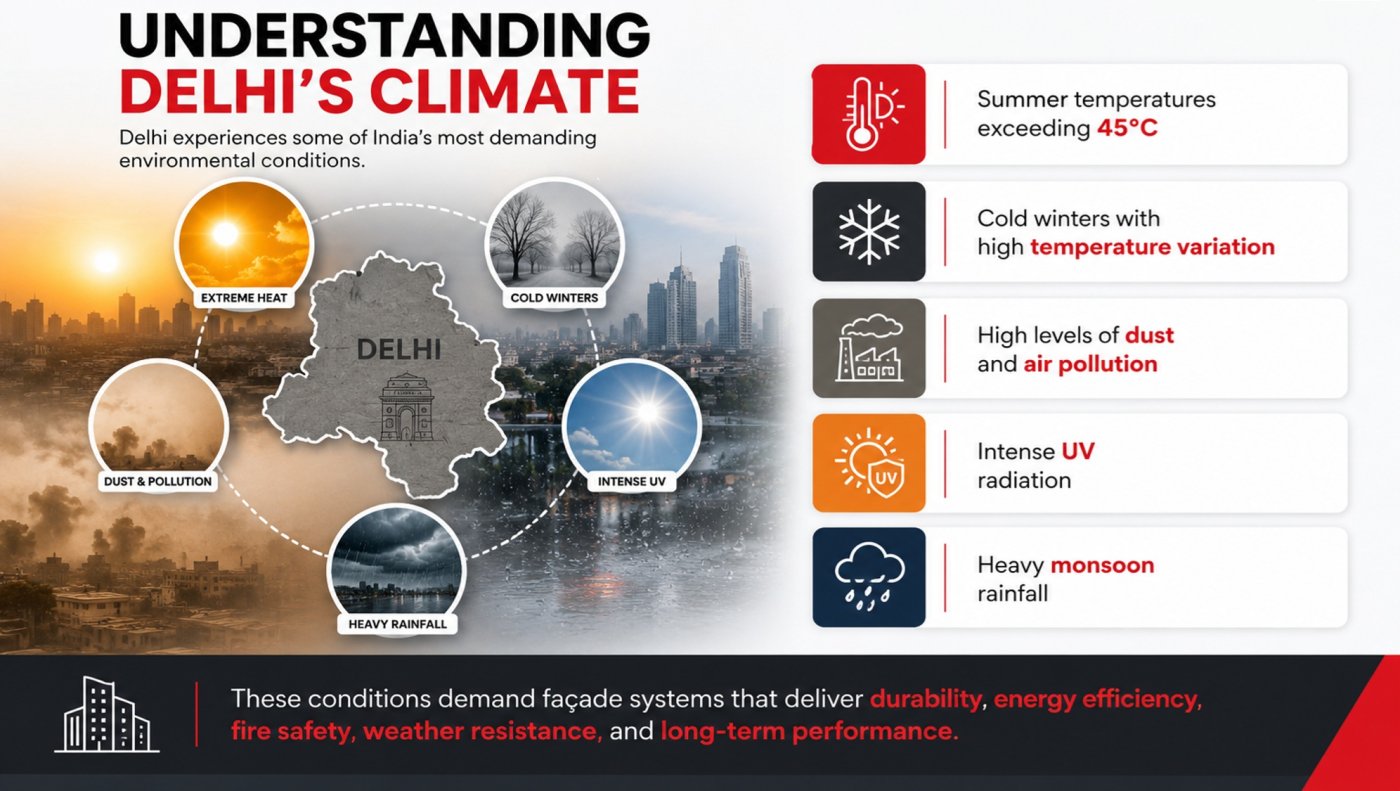
Delhi is the harder half of the argument. Summers pass 45 degrees, winters drop to four or five, and between them sit dust, air pollution, intense ultraviolet and a monsoon. Khanna offers the laboratory range against it: the panels are tested from minus 80 to 180 degrees, well outside anything habitable, and carry 1,500 hours of ultraviolet exposure behind a ten year warranty against fading. A faded elevation is, after all, the failure an owner sees from the street long before anything structural goes wrong.
The cavity is the system
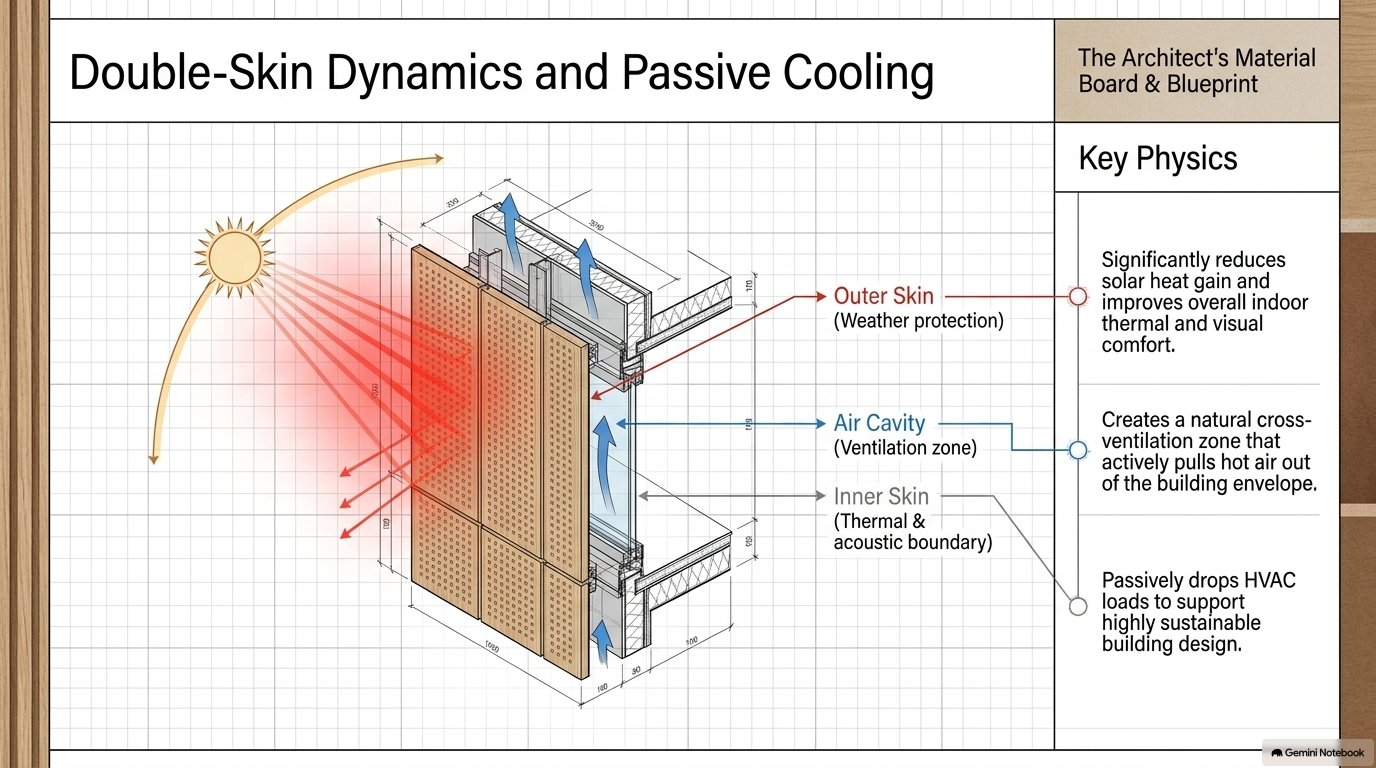
What makes the panel work is the gap behind it. In a rear ventilated installation the skin stands off the wall, open at the bottom and at the top, so air moves continuously through the cavity and carries heat out rather than letting it accumulate against the building. The same arrangement runs in reverse in winter, holding warmth in, and the cavity buys acoustic performance too: the panel alone is rated at 0.15 NRC, which the build-up improves on. Shading is handled as a second layer in front of the glass, either a perforated panel or louvres, with the angle set by sun path analysis rather than by eye.
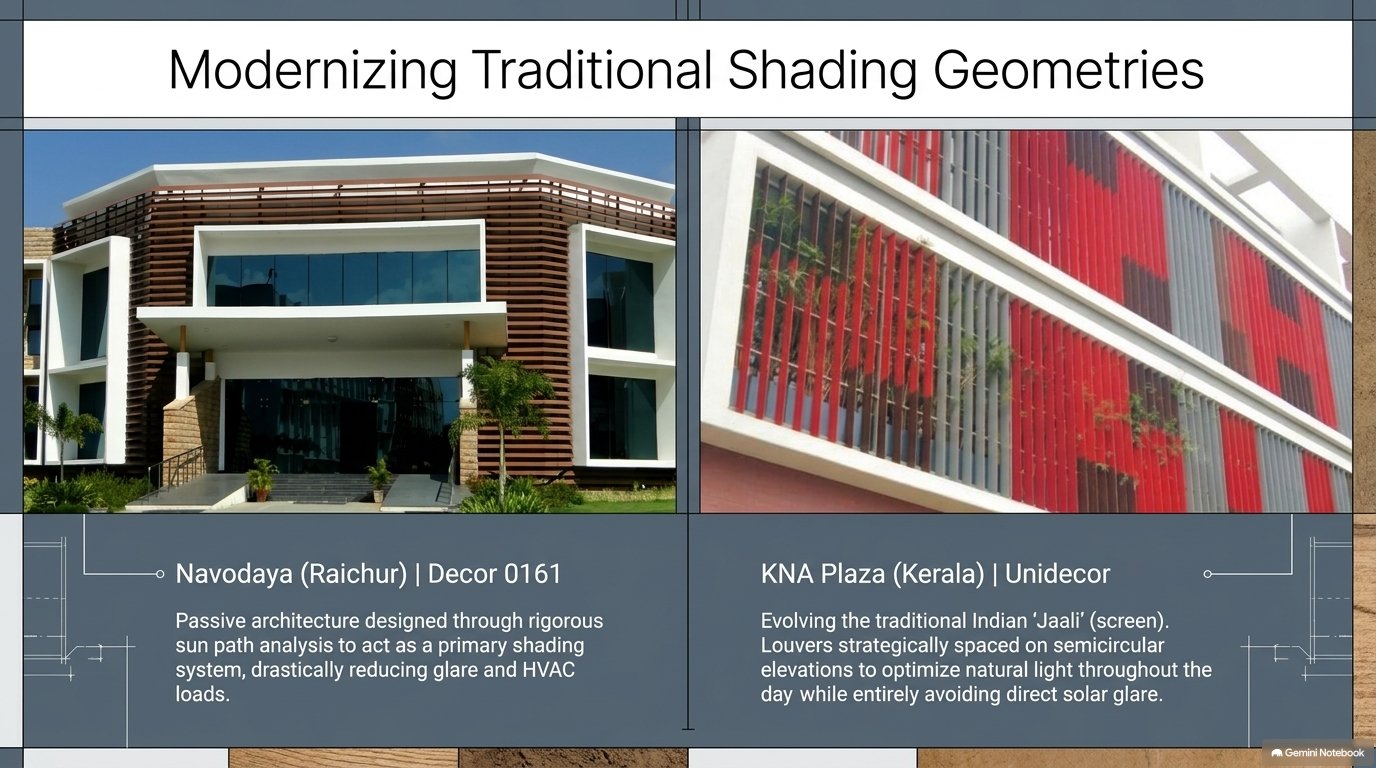
Two projects carry that idea. At Navodaya in Raichur the screen is tuned to cut glare and HVAC load; at KNA Plaza in Kerala, where the elevation is semicircular and faces tropical sun through the day, the louvre angle differs from one side of the curve to the other because the sun does not meet the two sides the same way.
And the cavity is also the risk
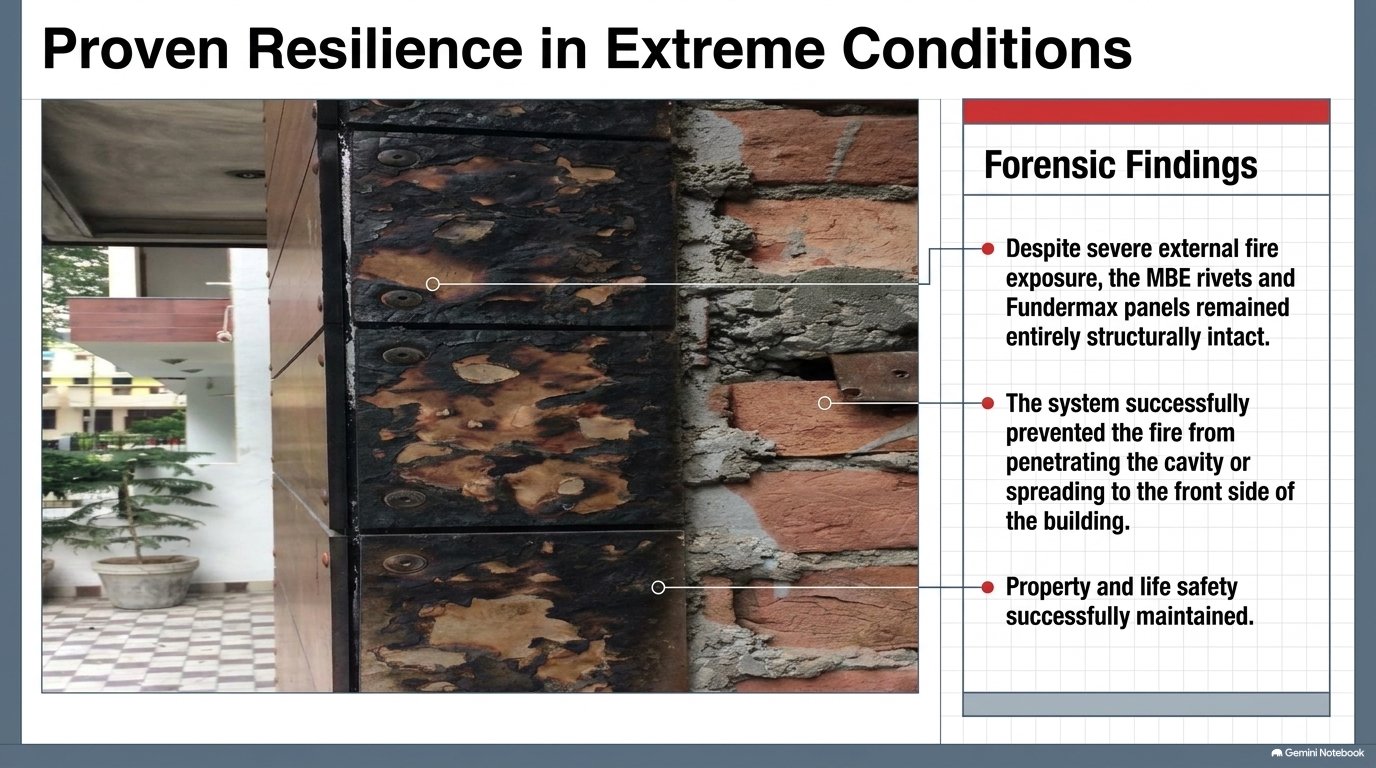
An open cavity is a chimney, and Khanna does not dodge it. Fire stops are set on the horizontal and the vertical; on contact with fire they expand and compartment the void, so a fire is held where it starts instead of running the height of the building. He separates two ideas that are often merged. Flame retardant is a property of the material: the class B panel that is 95 per cent of what the company sells in India stops burning once the flame is taken away. Fire resistance is a property of the system, measured in the half hour or hour it holds. The point of either is time to get people out, and he names the Uphaar cinema fire as the reason the subject is not abstract in this city.
The evidence he offers is a residential building that burned. The fire was held at the level where it began, the cavity did not carry it to the front of the building, and the panels and the rivets came through intact. The classification behind it is B-s2,d0: a smoke index of two on a scale of five, and no flaming droplets, which in a tall building is the part that matters to whoever is underneath.