


Four years ago one or two hands went up when the panel asked who had used an AI tool; this year almost every hand did. Seven architects, educators and developers on what the tool is good for, and what still has to come from the person holding it.
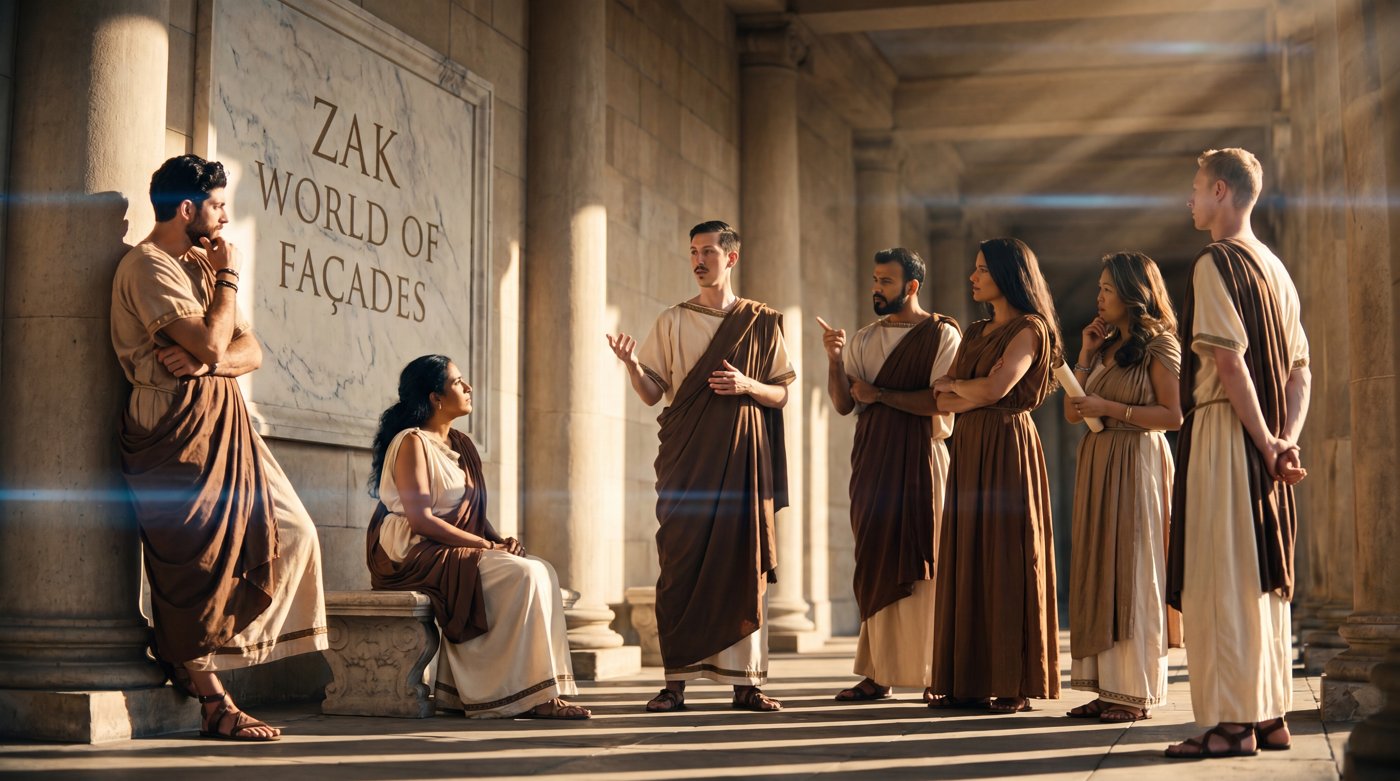
Drew Gilbert chose the wording of the first question carefully: AI as a creative partner, not a designer. His own position was that AI is a tool, which can be used correctly or incorrectly, and that the work worth doing is finding out how it helps what you already do. Khaled Iskandar made the change concrete with a show of hands: four years ago one or two had used an AI tool, and this year almost every hand went up.
The intern that never sleeps
Alina Valcarce put it in the same class as electricity and the internet, then supplied the caveat everything else returned to: the first idea has to be yours. Her practice studies the site, settles what it is trying to achieve and what story the project carries, reaches an initial massing and even initial 3D models, and only then uses AI to push it, to see how far the thought goes and which materials or details can be changed quickly.
If you have a very bad idea you will boost that very bad idea. If you have an amazing idea, you will go exponentially.
Alina Valcarce, Valcarce Architects
Christine Espinosa-Erlanda had the image of the afternoon. Of the options it produces, she reckons 90 per cent are usable and 10 per cent are valuable, and the value she adds is not in generating them but in scrutinising them.
I see AI as a very enthusiastic intern. An intern which will pitch out 10,000 options right before I finish my coffee.
Christine Espinosa-Erlanda, Godwin Austen Johnson
Her instruction to her own team is that AI can be the creative partner for as long as it is not designing for them: they dictate the output, and they are the puppet master rather than the puppet. Nic Holmes described the same abundance from the delivery side. The traditional route of sketch, CAD, model and render takes over a week; now the cadding, sketching and modelling happen in a day and the next day belongs to AI, which returns hundreds of options, each one suggesting the next.
You almost have to manually shut off this tap of creativity, because it continuously gives you ideas.
Nic Holmes, LW Design Group
Amir Shurafa's framing was that the profession has waited for this tool since it drew by hand, and that the gain comes from embedding it in the workflow rather than bolting it on at the end. Used that way it changes the order of thinking: instead of proceeding step by step to something that has to be redone, you sketch, bring it to life and research the technical questions as you go. A superpower added to human skills, not a replacement for them.
What actually differentiates you
Then Gilbert asked the awkward one: what happens when your client starts generating the images? Iskandar's answer was that it is the same conversation as a client arriving with a Pinterest board, only sharper, because clients are intelligent and can now produce exactly the images the architect produces. What separates the professional is what comes before the prompt.
If your input is going to be junk, expect the output to be junk.
Khaled Iskandar, ZKANDAR
Espinosa-Erlanda had lived the case. A chairman arrived with a full AI image as the brief for a luxury residential building. She calls it Instagram architecture: lovely for three seconds, shimmery, the mood there, and under scrutiny not buildable. The high-rise carried 12-metre-deep balconies, which the structural engineers said was impossible, or possible at a certain cost. So the practice tested the brief and went back to ask whether that was really what was wanted. The value architects add is not more images; it is the executive decision about what gets built, made on experience and technical skill.
A training process, and a people problem
Shurafa was blunt about what the shift asks of individuals: it is a training process, and nobody can join in the middle of it and expect to be among the best. That means daily research and trial and error, and training yourself not only in architectural technique but in research technique, in the tools and in new materials.
Holmes described how a firm institutionalises that: internal master classes on a structured schedule, someone whose actual job is to research, develop and upskill everyone rather than carry project work, every new tool written down and tested, and, before any of it, permission to be playful. Iskandar's addition was that the investment belongs in people rather than licences, since the leaders buying the tools have no time to experiment with them.
How do you take your team members from fear to fluency?
Khaled Iskandar, ZKANDAR
Valcarce pushed back usefully on the idea that everyone should work the same way. A team holds creative people, technical people, 3D people, interior and architecture people, and the ones working in Revit on technical drawings do not care how the others are dreaming. They are also the ones who tell the dreamers where the line is, because the building has to get built. Leading the work, she argued, is knowing who should be using what, and where.
Intelligence, not efficiency
Maya Cochrane moved the conversation off options altogether. This is the dawn of a revolution on the scale of the industrial or the dot-com one, and its promise is not variety but amplified intelligence, which still requires discernment about what that means. The questions she wants AI turned on are whether a façade will perform better, whether it relates climatically, and whether the impact of what is being built now can be estimated at all.
Efficiency and workflow without care and real understanding and projection for the impact of the future isn't intelligence.
Maya Cochrane, RIBA Gulf
The technical limit she and Iskandar identified is that these tools work on pixels. Once they are given dimensions, an XYZ and gravity of the kind a Revit model already carries, the work changes character. Gilbert's forecast was adjacent: once coding with AI is dependable, capable software stops being something a practice buys and becomes something it prompts into existence, putting simulation and panel optimisation within reach of anyone who can describe what they want. Asked what they still cannot do, the answer came in unison. Technical drawings.